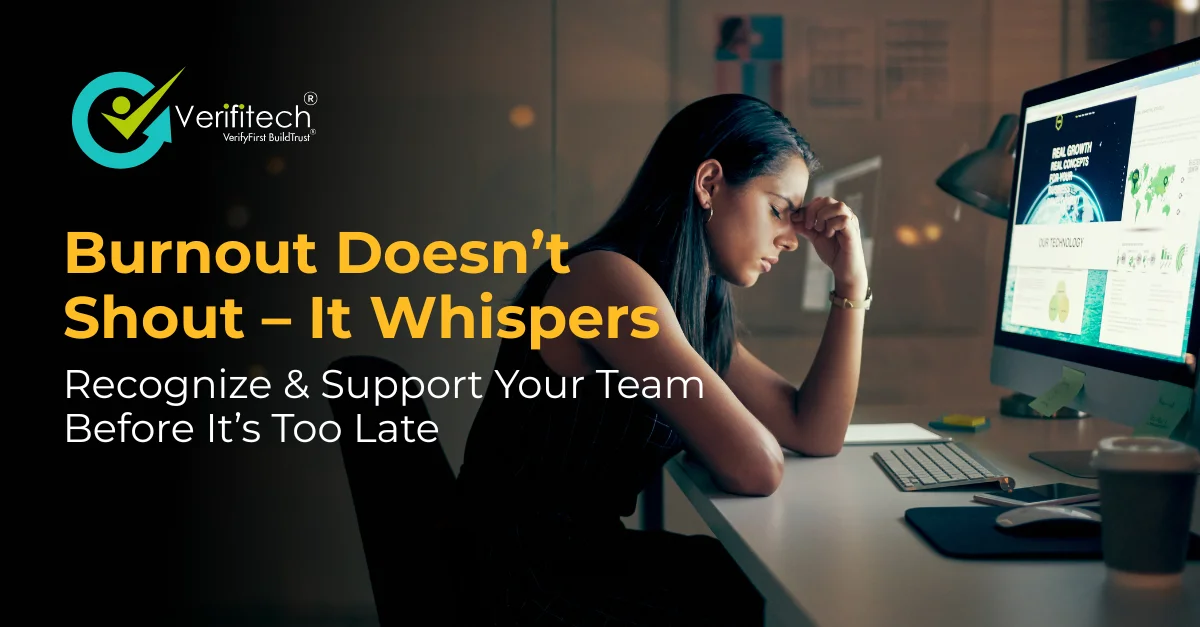
Supporting Silent Struggles: How HR Can Recognize and Prevent Hidden Burnout in High-Performing Teams
Unexpected exhaustion can be one of the clear warning symptoms of burnout, but it’s not always evident.
Your relationships, employment, sleep, and overall mood have already started to suffer when you realise you have a problem.
On this very day in 2009, our journey began not with headlines or fanfare, but with a quiet resolve in a 150 sq ft shared space in PARSN Complex, Chennai.
The Story of Priya: When High Achievement Masks the Struggle
For instance, consider Priya. On paper, she was doing well: managing a fantastic team, reaching her goals routinely, and succeeding as a manager.
She had a skill of problem solving and was a trustworthy person in the environment.
Behind the successes, she faced so many difficulties. Pushing harder was the solution, she had confident herself, and it was only short-term. She started to miss lunches, sleep less, and distance herself from friends and interests.
Her smile was intensified hurry and forced, hardly reaching her eyes. She became increasingly critical of herself and aloof from her coworkers.
During the meeting she was not well, which was the peak of everything. She was unable to identify the issue. She admitted in hospital, “I just felt I had to keep going.I didn’t want to disappoint anyone.”
Priya is not unique. Many top achievers hide their tiredness under a commitment. The unsettling reality is that burnout steals your spark, your creativity, and your flexibility without asking for assistance.
What’s Going On? Understanding Silent Burnout
Being exhausted from working so many hours is only one aspect of burnout. When the demands of your job consistently exceed your capacity to handle them.
How are you aware that it’s taking place? Keep an eye out for these subtle indicators:
Even after taking getting a full night’s sleep at weekend, you’re always exhausted.
You feel disengaged from both your job and others around you.
You now feel glut and take longer to complete tasks that you used to complete with facility.
You become upset when losing your temper over minor matters that used to annoy you.
The hobby that used to make you happy now seems pointless.
What We Can Do – Together
Burnout isn’t just an individual struggle – it’s shaped by our environments and engage. That’s why we preventing it requires both personal care and organizational support.
If you’re experiencing it:
-
Set clear boundaries. Turn off notifications after the work hours and schedule a time during the work hour itself.
-
Prioritize sleep & nutrition. Doing Small habits consistent make a ripple effect on mental resilience.
-
Practice micro-breaks. Don’t sit regularly work, Take stretch Stretch, breathe deeply, or go outside for a few minutes every one or two hours.
-
Talk openly. Feel free to share the things to your friend, peer, or counsellor to feel lightens the load.
If you’re a leader:
-
Create safe spaces. Encourage conversations with everyone about mental health without fear of judgment.
-
Redefine productivity. Celebrate feasible work habits instead of cheer hustle culture.
-
Acknowledge the work as much as a result. Respect everyone’s effort and there commitment, don’t expect the outcome only.
Accept adaptability. When it is feasible, trust your staff by allowing them to work remotely with flexible schedules
Let’s Make a Change -Together