
How exit-interview analytics cut attrition by 25 in a manufacturing firm
Imagine walking into your plant on a Monday morning and realizing three experienced technicians won’t be coming back. Again. You didn’t lose them to a competitor with flashy perks—you lost them quietly, one resignation at a time. If you’re in HR or leadership, this situation probably feels uncomfortably familiar. High attrition in manufacturing doesn’t just affect morale; it disrupts production schedules, inflates hiring costs, and drains hard-earned expertise.
This is where an exit analytics case study, employee turnover reduction, HR insights, retention strategy becomes more than just a buzz phrase it becomes a lifeline. Understanding why employees leave is the first step toward fixing what’s broken. And when done right, exit interview analytics can turn painful goodbyes into powerful lessons that reshape your workforce strategy.
The Hidden Cost of Attrition in Manufacturing:
Manufacturing firms often accept attrition as “part of the industry.” Long shifts, physically demanding work, and tight margins make turnover feel inevitable. But inevitability is a dangerous assumption.
In this exit analytics case study, employee turnover reduction, HR insights, retention strategy, the firm was facing a 38% annual attrition rate far above industry benchmarks. Replacements were expensive, onboarding took months, and supervisors were stretched thin. Yet exit interviews were treated as a formality. Forms were filled, files were stored, and insights were lost.
The problem wasn’t a lack of data—it was a lack of analysis.
Why Traditional Exit Interviews Fail:
Most exit interviews ask generic questions:
“Why are you leaving?”
“What could we have done better?”
Employees often give safe answers. “Personal reasons.” “Better opportunity.” These responses feel final but reveal very little.
The firm realized that without structure and analytics, exit interviews were just polite conversations, not decision-making tools. That realization became the turning point in this exit analytics case study, employee turnover reduction, HR insights, retention strategy.
Turning Conversations into Data:
The HR team decided to redesign the exit process. Instead of unstructured interviews, they introduced:
- Standardized questionnaires with rating scales
- Clear categories (pay, supervision, safety, growth, work-life balance)
- Anonymous digital submissions to encourage honesty
More importantly, they aggregated the data. Patterns began to emerge.
This is where HR insights truly came alive. Over 60% of exiting employees cited shift scheduling and supervisor communication as key frustrations. Surprisingly, compensation ranked much lower than expected.
The “Aha” Moment: What Employees Were Really Saying:
When HR layered exit data with tenure, department, and manager-level information, the picture became clearer. Attrition wasn’t random—it was concentrated.
New hires under specific supervisors were leaving within six months. Certain production lines had double the turnover of others. This exit analytics case study, employee turnover reduction, HR insights, retention strategy proved that people don’t leave companies—they leave experiences.
The firm shared these findings with leadership, not as blame, but as opportunity.
From Insight to Action: Building a Retention Strategy
Armed with real data, the company implemented targeted changes:
- Supervisor training focused on communication and feedback
- Predictable shift rotations to reduce burnout
Early check-ins at 30, 60, and 90 days for new hires These actions weren’t expensive. They were intentional. And they were guided directly by exit analytics. This is the heart of any successful retention strategy—listening, learning, and acting.
Measuring the Impact
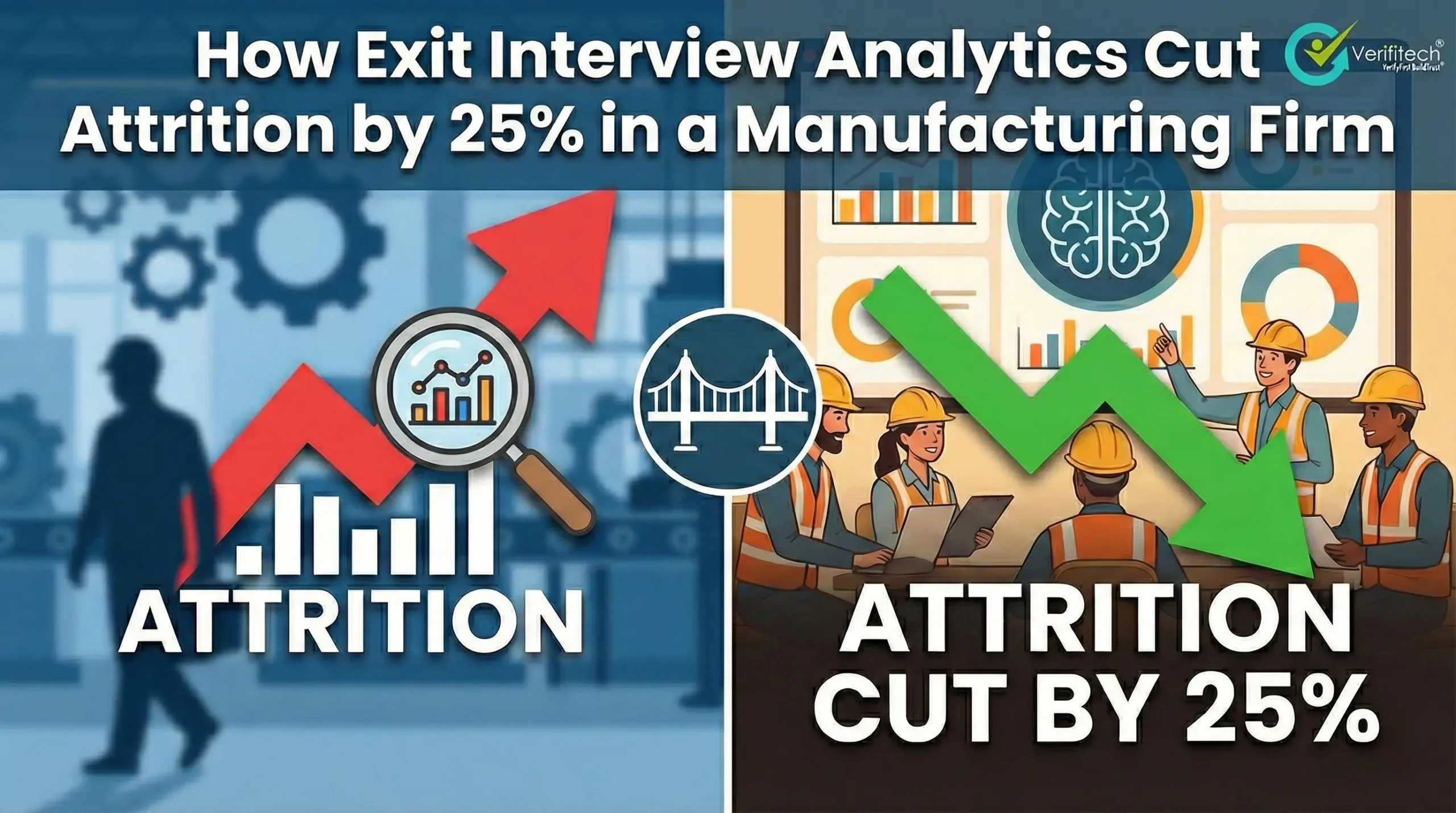
- Within 12 months, attrition dropped from 38% to 28%. By the end of the second year, it reached 25%. That’s a 25% reduction in turnover—without increasing salaries across the board, In this exit analytics case study, employee turnover reduction, HR insights, retention strategy, the ROI was clear:
Lower hiring and training costs
Improved productivity
Higher morale on the shop floor
More importantly, employees felt heard—even those who left.
Why This Approach Works for You
You don’t need advanced AI tools to start. What you need is commitment. Exit interview analytics work because they replace assumptions with evidence. They help you stop guessing and start fixing.
If you’re struggling with churn, ask yourself:
Are we actually analyzing exit data?
Are we connecting insights to action?
Are we using exits to protect those who stay?
This exit analytics case study, employee turnover reduction, HR insights, retention strategy shows that answers are already in your organization—you just need to listen differently.
Conclusion:
Attrition will always exist, but unmanaged attrition is a choice. This exit analytics case study, employee turnover reduction, HR insights, retention strategy proves that when you treat exit interviews as strategic assets—not paperwork—you can transform loss into learning.
By capturing honest feedback, analyzing patterns, and acting with intention, the manufacturing firm didn’t just reduce turnover by 25%. It rebuilt trust, strengthened leadership, and created a more resilient workforce.
If you want real employee turnover reduction, start where the story ends—with your exits. Because every goodbye carries a lesson, and every lesson is a chance to build a stronger retention strategy for your future.