
How Psychometric Tests Help HR Solve Culture Mismatch & Reduce Attrition
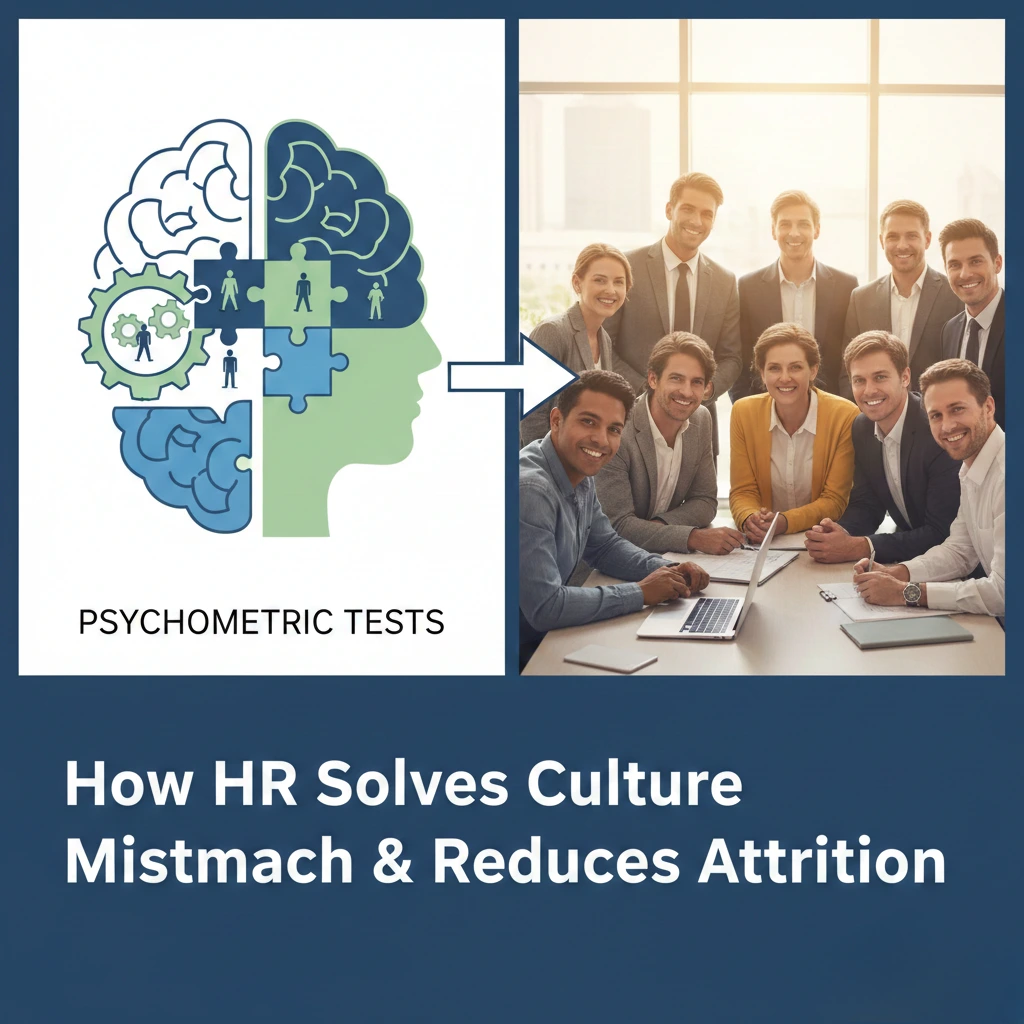
You hire someone who looks perfect on paper. Great resume. Solid interview. Impressive references.
Three months later, they’re disengaged. Six months later, they resign.
Sound familiar?
For many HR leaders, this isn’t a one-off problem—it’s a pattern. The real issue often isn’t skill gaps or compensation. It’s culture mismatch. When employees don’t align with how your organization thinks, works, and behaves, performance drops and attrition rises.
Traditional hiring methods rarely uncover this risk. That’s where psychometric assessment, culture fit hiring, employee behavior analysis, and predictive hiring tools are quietly changing the game. These tools help you see beyond resumes and interviews—into how people actually behave, adapt, and thrive at work.
And in today’s high-attrition market, that insight matters more than ever.
Why culture mismatch is costing you more than you realize
Culture mismatch isn’t always loud. It doesn’t show up as immediate conflict or poor performance reviews. Instead, it appears subtly—missed collaboration, resistance to feedback, lack of ownership, or quiet disengagement.
An employee may be competent, even talented, but if their values, working style, or decision-making approach clashes with your organization’s culture, friction is inevitable. Over time, that friction turns into burnout, poor morale, and eventually attrition.
The hidden cost?
Recruitment expenses. Training time. Team disruption. Lost productivity. Employer brand damage.
This is exactly why many HR teams are rethinking how they define “the right hire.”
The limitation of resumes and interviews
Resumes tell you what someone has done.
Interviews tell you what someone says they’ll do.
Neither reliably tells you how someone behaves under pressure, responds to authority, collaborates with peers, or adapts to change.
Interviews are especially vulnerable to bias—conscious and unconscious. Candidates present their best selves. Hiring managers rely on gut feel. Culture fit becomes a vague judgment rather than a measurable insight.
This is where psychometric assessment, culture fit hiring, employee behavior analysis, and predictive hiring tools offer a structured, objective alternative.
What psychometric tests actually measure (and why it matters)
Psychometric tests are not about intelligence alone. Modern assessments focus on behavioral tendencies, personality traits, emotional intelligence, motivation, and work preferences.
They help answer questions like:
Does this person thrive in structured or flexible environments?
Are they naturally collaborative or independent?
How do they respond to stress, conflict, or ambiguity?
What motivates them—recognition, stability, autonomy, growth?
When used correctly, employee behavior analysis reveals patterns that interviews simply can’t uncover.
For example, a fast-growing startup may need employees who are comfortable with ambiguity and rapid change. A highly regulated industry may require individuals who value structure, compliance, and consistency. Hiring against these realities—without realizing it—is a recipe for early exits.
Culture fit hiring without the bias
Culture fit hiring often gets misunderstood. It’s not about hiring people who “look like us” or “think like us.” That approach leads to homogeneity and limits innovation.
True culture fit is about alignment with values, behaviors, and ways of working—not personality cloning.
Psychometric tools help HR teams define culture objectively. Instead of vague labels like “team player” or “self-starter,” you get measurable traits and behavioral indicators. This clarity reduces bias and supports fairer, more inclusive hiring decisions.
In the middle of the hiring journey, psychometric assessment, culture fit hiring, employee behavior analysis, and predictive hiring tools act as a reality check—confirming whether a candidate’s natural tendencies align with your actual work environment.
Predicting attrition before it happens
One of the biggest advantages of psychometric testing is its predictive power.
By analyzing behavioral data across high-performing, long-tenured employees, organizations can identify patterns linked to success and retention. These insights then feed into predictive hiring tools, helping HR anticipate which candidates are more likely to stay, grow, and perform.
For instance:
A role with high customer interaction may require emotional resilience and patience.
A leadership role may demand assertiveness combined with empathy.
A sales role may succeed with competitiveness balanced by adaptability.
When candidates lack these core behavioral drivers, the risk of disengagement—and eventual attrition—rises sharply.
Real-world impact: from reactive to strategic HR
Organizations that integrate psychometric testing early in hiring report measurable outcomes:
Lower early-stage attrition
Faster onboarding and role adjustment
Improved team dynamics
Stronger leadership pipelines
HR teams move from reactive hiring—constantly replacing leavers—to strategic workforce planning. Decisions are backed by data, not just intuition.
Most importantly, employees feel understood. When people join roles that align with how they naturally think and work, engagement increases. And engaged employees don’t leave easily.
Making psychometric tools work for you
Psychometric tests aren’t magic bullets. Their value lies in how they’re used.
Best practices include:
Combining assessments with structured interviews
Using them as decision support, not decision replacement
Aligning test frameworks with your actual organizational culture
Communicating results transparently with candidates
When implemented thoughtfully, psychometric assessment, culture fit hiring, employee behavior analysis, and predictive hiring tools become a long-term investment in people—not just a hiring filter.
Conclusion:
Skills can be trained. Culture alignment is harder to fix. In a competitive talent market, reducing attrition isn’t about hiring faster—it’s about hiring smarter. By understanding how candidates think, behave, and adapt, HR teams can prevent costly mismatches before they happen.
That’s why psychometric assessment, culture fit hiring, employee behavior analysis, and predictive hiring tools are no longer “nice to have.” They’re essential for building teams that stay, grow, and perform.