VERIFITECH – Background Verification Company

Global Redirect Menu

Author name: Marketinguser1

News Events

Change is Not a Threat: Takeaways from the Session by Mohan Kumar

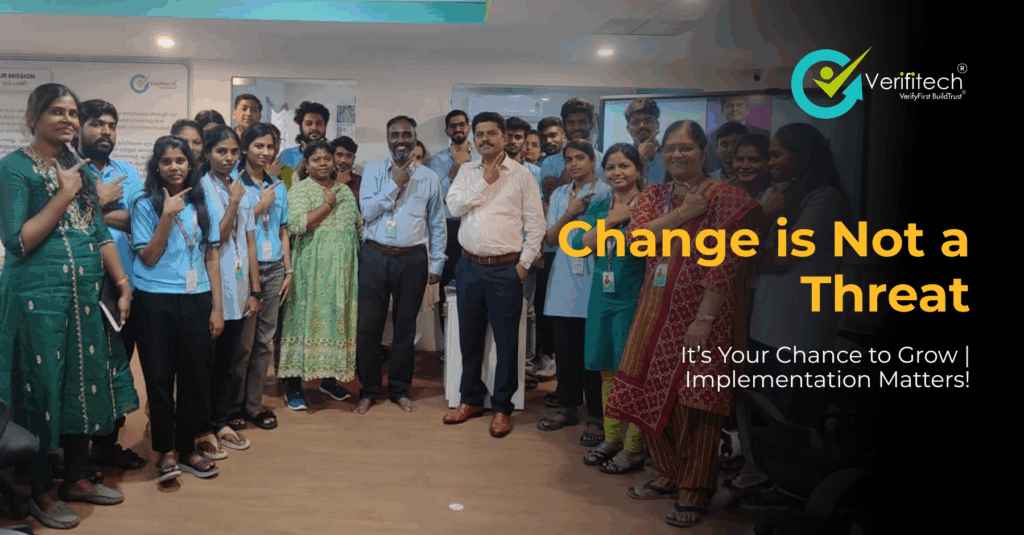
Change is Not a Threat: Takeaways from the Session by Mohan Kumar We recently had the privilege of hosting Mr. Mohan Kumar, Executive Vice President of  Human Resources at Koantek, for a session titled “Change is Not a Threat.” Having 24 years of HR experience, Mohan blends business strategy with human insight. In this session, he spoke about how aligning individual aspirations, accountability, and innovation can drive personal and organizational growth.  Early on, he engaged the room by asking, “What will be your aspiration for the next five years?” One colleague dreamed of a world tour, another aimed for a promotion to Finance Manager and Mohan smiled, saying that our aspirations are the fuel for growth. In fact, career experts note that “aligning personal aspirations with company growth opportunities… increases job satisfaction,” showing how our goals can energize both ourselves and our company  Mr. Mohan Kumar leads a discussion on career aspirations and growth. During the discussion, Mohan said that as an employee we have to bring value into the business and nurture our own careers. He shared a story from his early days as an HR when after hiring someone, he would document the cost-savings that a hire brought to the company. He also spoke about standing up for employees when they face challenges, repeating that HR has to support management and individuals. To Mohan, every hire and every employee is crucial for growth just as leadership thinkers like Vineet Nayar have famously written, “Employees First, Customers Second.” According to him, the main job of the manager is “to do everything they can to maximize the efforts of employees who work in the value zone“(the front line where real value is created).Likewise, Mohan urged us to empower our colleagues: when each person is enabled to succeed, customers and the business benefit.   Key Principles for Growth   Mohan talked about three simple but essential ideas during the meeting. It can drastically change how we grow as a team and as individuals if it is adopted by every employee. He used them as reminders that making thoughtful choices is the first step towards progress rather than as strict rules.   1. Identify your objectives.  We’ve all been asked the “where do you see yourself” question before but Mohan framed it differently.He encourages us to set our goals precisely, which will benefit the company as well as for our growth. Knowing what we want makes us make better decisions and without any distractions.   2. Add real value.  Whatever your role, Mohan said, approach it like you own the outcome. Every task, even the routine ones, is a chance to make a difference.It will be applied to simplify a process, to help with quality, or simply because someone would spot something that could be done better. It is this mindset that transforms everyday work into real impact.   3. Own your journey.  We recently had the privilege of hosting Mr. Mohan Kumar, Executive Vice President of Human Resources at Koantek, for a session titled “Change is Not a Threat.” Having 24 years of HR experience, Mohan blends business strategy with human insight. In this session, he spoke about how aligning individual aspirations, accountability, and innovation can drive personal and organizational growth. Early on, he engaged the room by asking, “What will be your aspiration for the next five years?” One colleague dreamed of a world tour, another aimed for a promotion to Finance Manager and Mohan smiled, saying that our aspirations are the fuel for growth. In fact, career experts note that “aligning personal aspirations with company growth opportunities… increases job satisfaction,” showing how our goals can energize both ourselves and our company Mr. Mohan Kumar leads a discussion on career aspirations and growth. During the discussion, Mohan said that as an employee we have to bring value into the business and nurture our own careers. He shared a story from his early days as an HR when after hiring someone, he would document the cost-savings that a hire brought to the company. He also spoke about standing up for employees when they face challenges, repeating that HR has to support management and individuals. To Mohan, every hire and every employee is crucial for growth – just as leadership thinkers like Vineet Nayar have famously written, “Employees First, Customers Second.” According to him, the main job of the manager is “to do everything they can to maximize the efforts of employees who work in the value zone”(the front line where real value is created).Likewise, Mohan urged us to empower our colleagues: when each person is enabled to succeed, customers and the business benefit. staying adaptable, and most importantly, lifting the people around us. He used the  phrase “fight for the team,” and it stuck.It’s about stepping up when it’s hard, giving credit where credit is due, and holding yourself accountable without waiting to be asked. In his words, “That’s the foundation of trust and strong culture.”  After making those points, Mohan turned the spotlight on us with a reflective question: “What are three things you could do starting now to help this organization grow?”  The answers ran the gamut from automating workflows to reduce cost to creating recognition programs that celebrated the small wins we often tend to overlook. It was a good reminder that growth doesn’t necessarily always have to be huge. Sometimes, it starts with small, consistent contributions and efforts.   He returned to a theme that surfaced repeatedly throughout the session: accountability and shared success. When things go wrong, it’s easy to look outward and assign blame. But Mohan pushed us to pause and ask a harder question: “What could I have done differently?“ And when things go well, Give credit freely. Put the spotlight on your team. That mindset doesn’t just build goodwill-it creates momentum and a sense of psychological safety. People feel trusted, and trust is what sparks real innovation.  Adapting in the Age of AI  As we discussed the future, Mohan reminded us that change is inevitable . He stated the fact that businesses like Databricks are investing millions in training their employees in AI and data, which is an obvious indication of what direction the workplace is heading. In fact, according to the World Economic Forum, nearly 40% of today’s job skills could become extinct in just five years—a statistic that undoubtedly causes you to pause and think . However, Mohan encourages everyone to view adapting to  change as a step forward in the fast evolving world and people should embrace change without being afraid. We all should  continue to learn, adapt, and try new things.   “Change,” he said, “is not a threat…”  It’s a promise.” A promise of new ways to grow, to work smarter, and to deliver more value.   One of the moments most resonant in this session came when Mohan mentioned something: the Verifitech Pledge is our commitment to invest in people who, in turn, invest in the company. Every employee, in some fashion, is in HR. Whether you onboard a teammate, help someone through a difficult time, or build culture in your own pocket of the office, that is considered HR work too.  He even joked-with a bit of pride, actually-that one day, he wants to look back and say to a future CEO, “I helped build that. I made a difference you’d recognize.”  At the end of the day, don’t we all just want to look back and know we’ve made a positive contribution to the growth of the organisation?   Conculsion  What really stands out in Mohan’s message is that growth is about being purposeful in what we want, showing up every day to add value to whatever we do, and remaining open to new possibilities even if they feel strange rather than about the title or the next promotion.How people grow with the change and make them and the world better Whether your work is small or large, always find ways to make it matter. Share your victories, take responsibility for your mistakes, and adapt to the growing changes. There has already been change. The question is, “how will you grow to adapt  with it?”      
Case Studies

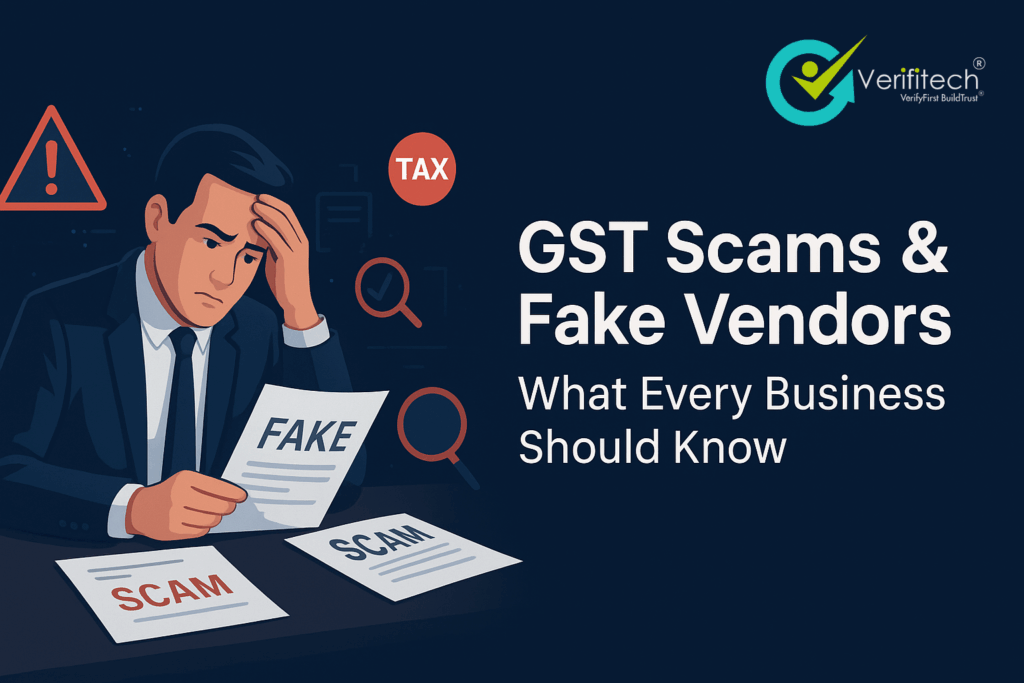
GST Scams and Fake Vendors: What Every Business Should Know

In India, over ₹19,690 crore of fake input tax-credit (ITC) claims were detected by the Directorate General of GST Intelligence (DGGI) in FY 2023-24 (till January alone), a surge of nearly 49% over the previous year’s ₹13,175 crore. Behind that colossal figure are hundreds of “vendors” that exist only on paper issuing invoices for no goods, no services, yet helping real buyers claim fake credits. For companies like yours and ours at Verifitech this poses a critical risk. Because when you engage a vendor who turns out to be a shell, you don’t just lose money you lose trust, face compliance scrutiny, and potentially trigger liability you never anticipated. How the Scam    Works: Let’s walk through the typical fraud chain 1: Fraudsters create a shell company that has a fake address, a bogus PAN/Aadhaar with no real operations. 2: They register under GST, get a GSTIN, and start issuing invoices showing sales of goods or services to buyers. 3: The buyer claims Input Tax Credit based on those invoices, although no genuine  supply took place. 4: Whereby, the shell disappears, or is cancelled, thus leaving the buyer exposed when the tax authorities audit. 5:The government loses out, legitimate business suffers, and confidence in the system wears down. It is a business and compliance issue, not just purely a tax one. If you purchase from a vendor who is black-listed, you may find your ITC reversed or your registration suspended, and face inquiries despite having acted in good faith. Real-World Case: When a Trusted Vendor Was a Phantom Following is a recent example to show just how subtle these schemes can get: In July 2025, the DGGI Bengaluru Zonal Unit busted a fake invoicing racket involving six shell companies. These firms had no actual business activity but generated ₹266 crore in fake invoices and enabled illegal ITC claims of around ₹48 crore. Imagine you’re a mid-sized manufacturing business: you onboard one of those vendors because they seem legitimate on paper, you take their invoices and claim the ITC — only to discover months later that the vendor was non-existent. The knock-on effect: your ITC gets reversed, the tax authorities issue notices, your working capital is tied up, and your reputation suffers. Another case: In Madhya Pradesh, criminal investigations uncovered a scam worth ₹512 crore with fake invoices and ITC of ₹130 crore, operated via over 23 shell companies and more than 150 bank accounts. These aren’t outliers. They show the lengths to which fraudsters will go, and how the victims are often legitimate businesses that simply didn’t verify their vendor adequately. The True Cost of Negligence Being taken in by a shady vendor does not just mean losing a bit of money; it might shake your business from the ground up. 1: Your tax credits can disappear: If the vendor has not filed his or her GST returns appropriately, the tax credit claimed will be invalidated. 2: You could still be fined: Even when you are completely unaware that the vendor was fake, the liability usually falls on you. 3:You might attract unwanted checks: Whenever something doesn’t look right, the tax department opens an audit or even holds up your GST number. 4:Your reputation is compromised: If your name happens to appear in association with a fake invoice, then it becomes difficult to win back clients’, auditors’, or investors’ trust. It takes only one bad partnership to often undo years of great effort-not because you broke the law, but because you didn’t see the red flags in time. In short, a fake vendor doesn’t just cheat the system, they quietly damage every business that touches their invoice trail. How Verification Protects You Verification isn’t just paperwork, it’s your early warning system. a): When done right, it helps you identify inconsistencies such as vendors with unmatched GST returns or non-filers. b:) Confirm business legitimacy by checking address, ownership, and activity before collaboration. c:) Avoid shared liability     ensuring your ITC claims are clean and traceable. d:) Establish trustworthy partnerships because a due diligence process drives honest trust in the supply chain. Think of it this way:  A five-minute verification step can save months of legal headaches and financial   uncertainty later.  The Larger Picture  The Centre has introduced AI-driven checks, e-invoicing, and analytics to track fraud,   but most of these measures react after the scam is committed.That’s why every   company, big or small, needs to create a culture of verification, rather than just   compliance. When every organization takes responsibility in vetting who they work with, the space  for fraud is reduced naturally. Invoices may be convincing, but no fraud stands the test of scrutiny. Before you trust a vendor, stop and check. Because in today’s business world, trust is not immediate-it’s earned through verification. References: Indianexpress.com/articles

Balancing Innovation and Integrity in Justice
Case Studies, Others

 AI in Judiciary: Why Courts Are Being ‘Cautious’ 

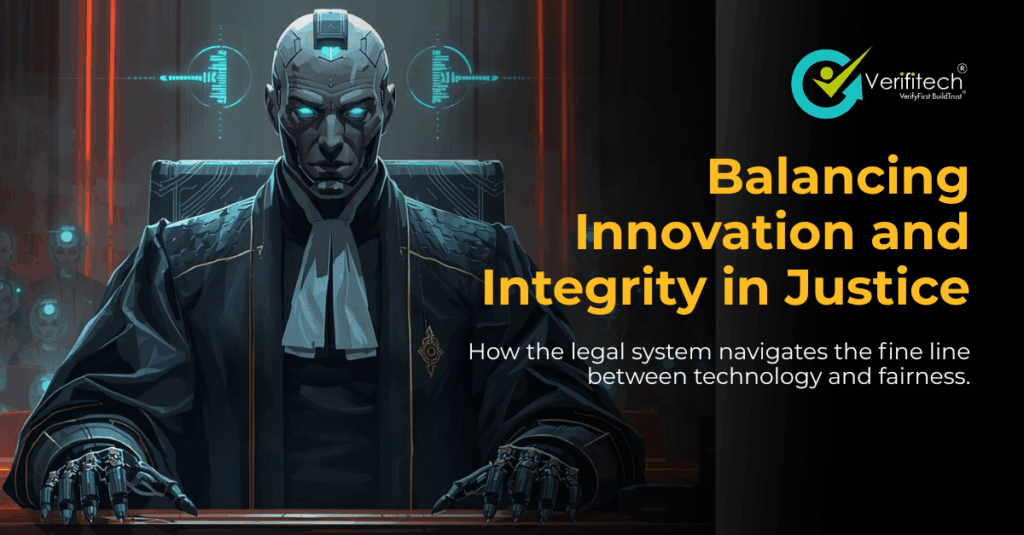
 AI in Judiciary: Why Courts Are Being ‘Cautious’  Can AI Write a Court Order?  What Bengaluru’s Strange Case Teaches Us About Responsible TechnologyWhen Machines Obey, But Humans Forget to Lead. A few months ago, the idea of AI drafting a court order would have sounded absurd, something straight out of a sci-fi movie. But in Bengaluru, that’s exactly what happened. The Income Tax Appellate Tribunal (ITAT) discovered that an order had been written using artificial intelligence. When the case reached the Karnataka High Court, judges called it “an extraordinary instance.” Not because the machine went rogue but because humans allowed it to happen.The question isn’t “Can AI write a court order?” It’s “Why did someone let it?”  When Convenience Replaces Caution  AI was built to assist human judgment, not replace it. But somewhere in our pursuit of convenience, we began to forget where assistance ends and dependence begins. In this Bengaluru case, it wasn’t the machine making a choice. It was a person deciding that a task meant for a judge could be handled by a tool. Maybe it was an innocent shortcut. Maybe it was negligence. But it revealed something big and deep. How easily we allow convenience to take the place of caution. The problem isn’t with AI. It’s that people who misuse power without responsibility.And Mistakes become ethical catastrophes when technology is used as a way to avoid human accountability.  A Case that reflects everyday choices  Imagine a taxpayer who has been anxiously awaiting a decision that could affect their future for months.When it does come, the language is clear and the logic remains sound but something feels odd. It wasn’t written by a person. It was written by a program. No empathy. No context. No understanding of what that decision truly meant. That isn’t an AI failure.It’s a human one. And this pattern extends far beyond the courtroom. From hiring to compliance, from finance to verification — AI now quietly shapes decisions that touch real lives. Every report and algorithm has a person at its core, whose future could be altered by a single click. A biassed dataset, a single incorrect input, or a moment of human error can wrongfully harm someone’s reputation or turn down them an opportunity they deserve. In reality, technology is not biassed.The true risk, however, is in those who create it, train it, or abuse it. People, Not Just Algorithms, Are Needed for Trust AI lacks empathy and transparency, but it can think quickly. As a result, trust comes from responsible humans, not from machines.No matter how sophisticated, a system is only as reliable as its users. That where Background Verifications are essential because they verify that people using sensitive information or powerful tools are not only competent but also ethical, responsible, and reliable. Because technology doesn’t misuse itself. That choice is made by the people. Moreover, the first step to avoid technology misuse is to make sure the right people are in the right roles. The Bengaluru case isn’t a warning against AI. It’s a wake up call for us. Before questioning what machines can do, we must question who is using them and how.  What’s your take?  Should AI misuse be blamed on the tool or the people behind it?

Manfacturing

Preventing Insider Theft in High-Value Retail: Why Background Screening Is Your Strongest Security Shield  

Preventing Insider Theft in High-Value Retail: Why Background Screening Is Your Strongest Security Shield   No retailer wants to say that line. However, the greatest danger in high-value sectors like jewellery, high-end watches, and designer fashion frequently originates internally rather than externally. Industry studies indicate that 30–40% of retail shrinkage globally is caused by insider theft and fraud, with luxury goods and jewellery being particularly vulnerable. One unscreened employee can result in catastrophic losses in a setting where a single piece can be worth lakhs. Because of this, employee screening and background checks are not merely hiring procedures; they are necessary for survival. The Silent Risk Inside High-Value Retail   Hiring in retail usually creates pressure because managers may be forced to make high turnover rates, fast expansions, or holiday rushes. However, in upscale retail, speed without scrutiny can be dangerous. Common risks include: Employee theft – When staff members work with third parties to falsify invoices or returns.. Fraudulent transactions – When staff members work with third parties to falsify invoices or returns. Information leaks – Giving criminal networks access to customer lists, stock data, or security information. Reputational damage – Years’ worth of customer trust can be undermined by a single incident. Even the most secure store may be vulnerable if comprehensive pre-employment and retail background checks are not conducted. A True-to-Life Scenario: When Trust Turns Costly   Ravi, who owned a jewellery store in Chennai, took great satisfaction in operating a moral business. He employed more to control the crowds during the festival and holiday season. One of the new hires appeared to be a diligent and courteous individual—a perfect fit. However, Ravi discovered anomalies in the stock within a few weeks. Tiny bits disappeared. He attributed the disappearance of a whole diamond necklace to accounting errors. The CCTV footage showed that the new employee had been passing items to an outside accomplice while gradually pocketing them. The aftermath? Financial loss running into lakhs. A police case that scared loyal customers. a crisis in team morale. A decades-long reputation was ruined in a matter of days. What was most painful? A basic employee background check would have revealed that the individual had a history of fraud in a different city. Why Employee Screening Is Essential in Jewellery and Luxury Retail   In high-value retail, cameras and alarms aren’t enough. People are the first line of security and they must be thoroughly screened. A background check guarantees that the people on your team are actually reliable. Key aspects of fraud detection screening include: Identity verification: Ensures candidates are who they claim to be. Criminal record checks: Detect prior theft, fraud, or misconduct. Employment history verification: Confirms reliability and integrity. Financial background checks: Identifies monetary stress that could lead to unethical decisions. Reference verification: Provides deeper insights from past employers. When businesses invest in risk mitigation services, they don’t just prevent theft—they protect their brand’s credibility and customer trust. Building a Culture of Trust Through Screening   Effective of employee screening is not just about spotting the wrong hire; it’s about creating a transparent workplace culture where honesty is valued. When employees know their peers have been screened, accountability and professionalism increase, enhancing their value across the team. Turning Screening Into a Strategic Advantage   Here’s how retailers can strengthen their insider theft prevention strategy: Do the background checks early it possible in the hiring process – before training or access to work in the floor. Customize screening depth based on role sensitivity (for instance, inventory handlers to required indepth checks). Educate the hiring managers on recognising red flags during interviews. Use technology for continuous employee verification and document validation. Establish zero-tolerance policies toward dishonesty or fraud. These measures don’t just reduce theft, it reward a brand’s promise of unity. The Human Impact: More Than Just Loss Prevention   Customers won’t buy products; they buy value of the trust. When they walk into a high-value retail space, they expect more security, ethics, and professionalism. If the employees screening fails to do, not only losses of materials but emotional and reputational damage. Customers remember the brand that let theft happen more than the one that prevented it  A Final Thought for Every Retail Owner   Let an unverified stranger into your vault, why let one behind your counter? Prevention starts before hiring.With robust background verification makes safeguard your assets, your brand, and your peace of mind. Take proactive steps today. Implement thorough retail background checks and build a culture where trust is earned, verified, and protected.

Healthcare

Safeguarding Patient Safety: Why Comprehensive Background Screening Is Critical in the Medical Workforce  

Safeguarding Patient Safety: Why Comprehensive Background Screening Is Critical in the Medical Workforce : The scenario can be frightening to patients, but it presents a real risk to healthcare institutions. Over 10% of healthcare professionals have a red flag in their employment or credential history, that include fabricated licenses to past malpractice claims, according to industry studies. Even a single forgotten detail in a medical professional’s, nurse’s, or technician’s record can make the difference between safe treatment and irreparable harm when lives are on the line. Patient safety compliance is a commitment, not just a rule. And that promise starts with thorough medical workforce screening and thorough healthcare background checks, long before the first diagnosis is made. In order to assure that every hire meets the highest standards of trust, transparency, and responsibility, organisation such as Verifitech come into the picture. The Problem Statement: Hidden Risks in Healthcare Hiring: The Medical Industry is under enormous strain to recruit qualified professionals quickly. But in the urgency to fill critical roles, pre-employment screening often becomes a checkbox activity rather than a robust safeguard. The risks are alarming: Incomplete employee verification allows unqualified candidates into sensitive roles. Credential fraud is on the rise, with fake degrees and certifications slipping through without exact verification. Undisclosed criminal records can pose severe risks to patient safety and institutional reputation. Inadequate hospital staff verification creates vulnerabilities in both clinical and non-clinical roles. These gaps put patients at direct risk in addition to putting in risk organisational integrity. A single unchecked background can expose hospitals to financial losses, regulatory penalties, malpractice claims, and, worst of all. Because traditional hiring procedures lack the depth and speed required by modern healthcare, they frequently fail.  Background screening isn’t just about criminal history -it involves credential verification, employment history validation, reference checks, and risk management services tailored to the unique needs of healthcare institutions. To build trust with patients, families, and regulators, healthcare organizations must recognize that medical workforce screening is not optional—it’s a lifeline. The Emotional Narrative: A Real-World Lesson: Think about the tale of Dr. Anil, a surgeon employed by a reputable medical facility. His resume looked fantastic on paper excellent references, years of experience, and top medical school. But within six months, there was a serious incident: a procedure gone wrong left a patient permanently damaged. Investigation revealed startling information. Due to his repeated negligence, Dr. Anil had already been fired from another hospital. To conceal his past, references had been carefully chosen, and his credentials had been partially falsified. The hiring hospital had foregone a thorough background check in favour of a simple criminal check. The outcome? Trust in the healthcare system was shattered, the patient’s life was constantly changed, and the hospital was subject to legal action and harm to its reputation. This incident highlights a terrible reality: when patient safety compliance is violated, the result extend well beyond the individual. Hospital staff experience moral issues, families lose trust in the facility, and communities worry about the safety of their loved ones. Now consider an alternative result. Dr. Anil’s red flags would have been exposed before his arrival in the operating room with a comprehensive screening that included credential verification, employment history, and hospital staff verification. Both the patient’s safety and the hospital’s reputation have been safeguarded. These kinds of incidents serve as a reminder that background checks are obligation in the healthcare industry.  Building Trust Through Screening At Verifitech, we understand the stakes in healthcare hiring. Our mission is simple yet critical: to ensure patient safety through comprehensive medical workforce screening. Here’s how we do it: End-to-End Employee Verification We go beyond surface checks, validating every aspect of a candidate’s history—academic, professional, and personal integrity. Specialized Healthcare Background ChecksTailored to medical environments, our process covers credential verification, hospital staff verification, and pre-employment screening designed for clinical and non-clinical roles. Advanced Technology + Human ExpertiseCombining digital risk management services with expert review, we detect red flags faster and more accurately. Regulatory Compliance AssuranceOur screening ensures organizations stay aligned with patient safety compliance and industry regulations. Global Reach, Local ExpertiseWith experience across India, the USA, and the UAE, we deliver screening solutions that fits for both local laws and international standards. By partnering with Verifitech, healthcare institutions can reduce hiring risks, protect patient lives, and strengthen community trust. Because in healthcare, trust is earned through diligence—and diligence begins with screening.  Your Next Step Toward Safer Healthcare: Patient safety begins before the first appointment. Duty to protect lives through wise, moral hiring rests with every hospital, clinic, and healthcare provider. If you are a leader in the healthcare industry, ask yourself: Can I say with confidence that all of my team members have undergone ample of verification? At Verifitech, we help organizations turn that question into a confident Yes. With our comprehensive background screening and credential verification services, you don’t just hire employees—you secure trust.

Others

Diversity and Inclusion in Hiring: Using Background Checks to Foster a More Equitable Workplace

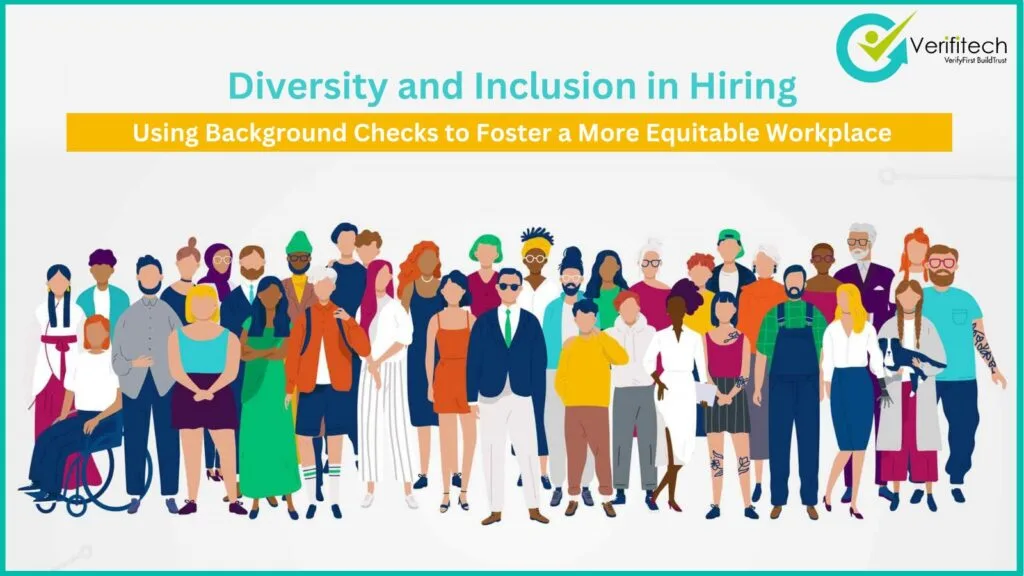
Diversity and Inclusion in Hiring: Using Background Checks to Foster a More Equitable Workplace In today’s increasingly diverse world, creating an inclusive workplace has become a top priority for organisations. A key aspect of diversity and inclusion is ensuring that the hiring process is fair, and unbiased, and promotes equal opportunities. Background checks play a crucial role in this regard, as they help organisations make informed decisions while fostering a more equitable workplace. Verifitech, a leader in background screening solutions, is committed to providing unbiased and fair assessments that contribute to building diverse and inclusive organisations. Here’s how: Promoting Fairness and Equal Opportunities: Background checks, when conducted properly, serve as a vital tool in promoting fairness and equal opportunities during the hiring process. By verifying qualifications, employment history, and other relevant information, background checks ensure that candidates are assessed based on their merit and suitability for the role, rather than factors such as personal biases or assumptions. Eliminating Bias and Discrimination: One of the significant challenges in hiring is the presence of unconscious bias and discrimination. Verifitech recognizes the importance of addressing this issue and has implemented robust processes to mitigate bias during background checks. By focusing on objective data and standardised evaluation criteria, We help organisations eliminate bias and create a level playing field for all candidates, regardless of their gender, ethnicity, or background. Enhancing Workplace Safety and Security: While fostering diversity and inclusion is paramount, organisations must also prioritise workplace safety and security. Background checks allow employers to identify any potential risks associated with an applicant’s criminal history or professional misconduct. Our comprehensive screening services ensure that organisations can make informed decisions while maintaining a safe and secure work environment for all employees. Supporting Diversity Goals: Background checks can be leveraged as a strategic tool to support an organisation’s diversity goals. Verifitech understands the importance of diversity and inclusion in driving innovation, creativity, and overall business success. By tailoring background screening processes to be inclusive and fair, we help organisations identify talent from diverse backgrounds, contributing to the creation of a dynamic and inclusive workforce. Ensuring Compliance with Legal and Ethical Standards: Verifitech takes great pride in adhering to legal and ethical standards while conducting background checks. With ever-evolving regulations surrounding data privacy and employment laws, Verifitech ensures that its processes align with industry best practices. By staying up-to-date with these regulations, Verifitech provides organisations with peace of mind, knowing that their hiring practices are compliant with the latest legal requirements. Building Trust and Reputation: Creating a diverse and inclusive workplace is not only the right thing to do, but it also enhances an organisation’s reputation and attracts top talent. By partnering with us, organisations can demonstrate their commitment to diversity and inclusion by utilising fair and unbiased background screening services. This builds trust among employees, stakeholders, and the wider community, ultimately positioning the organisation as an employer of choice. Diversity and inclusion are not just buzzwords; they are crucial elements of a thriving organisation. Verifitech recognizes the significance of background checks in promoting diversity, fostering inclusion, and creating a more equitable workplace. By providing unbiased and fair assessments, we enable organisations to make informed hiring decisions that align with diversity goals. This is done while ensuring compliance with legal and ethical standards. Embracing diversity and inclusion through background checks contributes to a vibrant, innovative, and inclusive work environment that benefits everyone involved.     Recent Verifitech News From 150 Sq Ft to a Growing Legacy: Our Foundation Day Reflection June 23, 2025 The Hidden Cost of Trust: Why Background Verification is Crucial for Retail Businesses June 16, 2025 ID Please? Why MeitY’s Scrutiny of Identity Verification Startups Signals a New Era for Background Verification Providers June 10, 2025 TECH ADOPTION PICKS UP IN CORPORATE, SO DO JOB FRAUDS May 30, 2025 AI SOLUTIONS FOR BACKGROUND SCREENING WITH PRIVACY & COMPLIANCE April 23, 2025 Why is Background Verification Important in Healthcare? April 16, 2025 Load More Leave comments on this post Please enable JavaScript in your browser to complete this form.First NameLast Name *Email *Comment * Submit

Scroll to Top
Consent Management Platform by Real Cookie Banner