VERIFITECH – Background Verification Company

Global Redirect Menu

Others

Others

The Human Side of Hiring: 5 Trends in Tech-Driven Talent Acquisition.

The Human Side of Hiring: 5 Trends in Tech-Driven Talent Acquisition In a casual conversation with one of my business acquaintances, something he said has stuck in my mind. It was about trends in Talent Acquisition, he said.   This left me thinking for a long time, and I wanted to streamline my thoughts on it. There are a few insights that I would like to share about Talent Acquisition.    Read to know more…   At Verifitech, we’re all about incessant refinement and learning from the pre-eminent in the industry. As the digital era continues to reshape the talent landscape, staying ahead of the curve in Talent Acquisition is not just a choice – it’s a strategic imperative. Let’s delve into the cutting-edge trends propelling the future of recruiting.   1. Decoding Talent with Data: Where Numbers Meet Narratives  In the realm of Talent Acquisition, data isn’t just power; it’s the compass guiding us toward top-tier talent. Leveraging advanced analytics enables organizations to decode patterns, anticipate needs, and refine recruitment strategies. Embrace the metrics and refine the approach with VerifiTech.   2. The AI and Automation Revolution  We are in an era where algorithms are talent scouts. AI-driven tools are transforming the recruitment game, from automating mundane tasks to predicting candidate success. It’s not about replacing human touch; it’s about augmenting it. Let AI handle the repetitive; let humans focus on the nuanced. It’s not only making it easy for HR professionals; it’s enhancing what they already do.   3. Crafting Experiences, One Candidate at a Time In a hyper-competitive market, the candidate is king. Elevate the candidate experience through personalized interactions, streamlined application processes, and transparent communication. The first impression is digital; make it resonate. Whether it’s your LinkedIn profile, your portfolio, or whatever it is, make it count.   4. Beyond Paychecks: The Power of a Compelling Story  Beyond perks and pay, top talent seeks a compelling narrative. Harness the power of storytelling to define your employer brand. Showcase a workplace culture that’s not just attractive but authentic. Let your brand be a magnet for those who share your vision. Talent gets attracted to the culture, positions, opportunities, benefits, and money.   5. Learning Together: Building a Growth-Focused Culture The quest for talent extends beyond recruitment—it’s about cultivating a culture of continuous learning. Investing in the professional development of your team not only attracts top talent but retains it. Upskilling is not a trend; it’s a commitment to growth. Isn’t it? In the tech-tinged landscape of Talent Acquisition, agility is not an option; it’s the norm. Embrace the tools, decode the data, and craft a recruitment strategy that not only finds the best but keeps them. What more would you like to add here? Recent Verifitech News The Human Side of Hiring: 5 Trends in Tech-Driven Talent Acquisition. January 4, 2024 Governing DEI initiatives for inclusive talent acquisition and hiring. December 13, 2023 Why is criminal background verification important in hiring? October 17, 2023 AI-Powered Identity Verification: The Future of Trust and Security September 19, 2023

Others

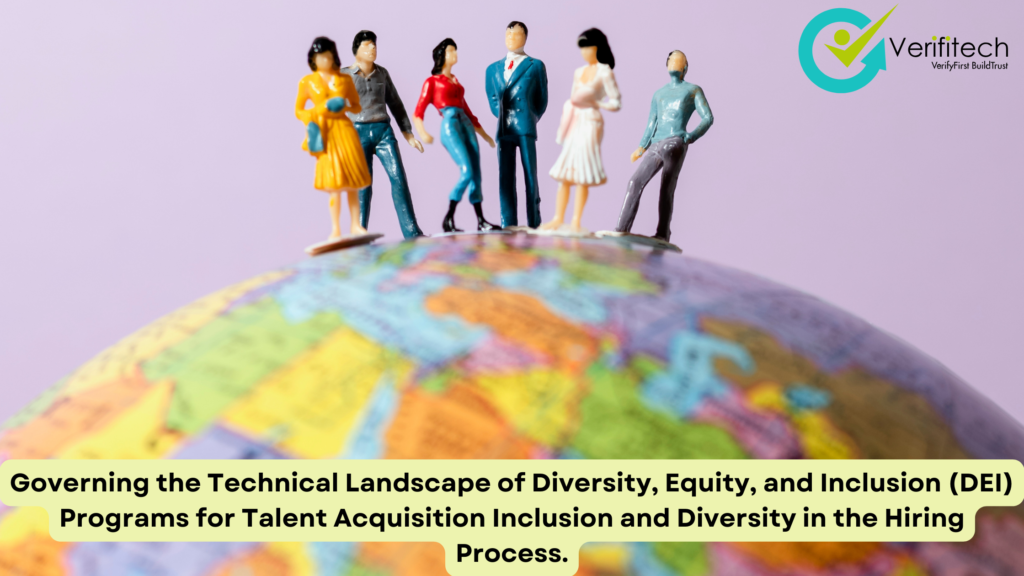
Governing DEI initiatives for inclusive talent acquisition and hiring.

Governing DEI initiatives for inclusive talent acquisition and hiring. Diversity, Equity, and Inclusion (DEI) is the foundation of a successful workplace, not just fancy terminology.   In today’s intricate corporate world, fostering an inclusive and diverse workplace is not only morally required, but also strategically vital.   According to a business survey, a diverse workplace culture increases an organization’s effectiveness by 28–33%. . Why do DEI Initiatives matter while Hiring? “Innovation is Fueled by Inclusion.” Have we not heard this before? It is a fact. And How to Do It? Various teams generate various opinions and innovation, which leads to problem-solving, by bringing a variety of ideas, skills, perspectives, and experiences to the table.  From a technical perspective, innovation, pushing the envelope, and guaranteeing resilient and flexible solutions are all made possible by diversity and inclusion. Businesses that made a profit out of Inclusion The real-world advantages of DEI Initiatives are astounding.  Let’s talk about Nykaa, the massive Indian e-commerce company for beauty and cosmetics, where a conscious effort to promote diversity resulted in a 25% rise in employee happiness and a 30% boost in productivity.  Their diversified team’s technological expertise changed the game when it came to overcoming the challenges presented by the cosmetics industry. The Inclusive team maintained the growth of Nykaa as a brand while making it appear easy.  Challenges as a Catalyst for Improvement Everything new is difficult! DEI initiatives won’t go without difficulties. Although there will inevitably be systemic obstacles and unconscious prejudices, each one presents a chance for technological advancement.  Open communication about these issues promotes continual progress, ensuring that the strategies change as the needs of the workforce do. Building an Inclusive Work-Culture Intentional planning is necessary for developing an inclusive workplace culture.  Employing individuals with a variety of backgrounds, including academic and professional, fosters diversity and increases creativity inside a business by introducing new ideas and viewpoints. Creating mentorship programs is usually beneficial for developing technological approaches. Metrics Matter: Quantifying DEI Impact Metrics are crucial from a technical perspective! Utilize innovation indicators, diversity ratios in leadership roles, and employee satisfaction scores to precisely monitor the effects of DEI programs. Measuring the effect helps to improve techniques for optimal effectiveness while also showcasing progress. DEI isn’t just a checkbox in the changing workplace; it’s a technological advantage that helps firms advance.  Accept variety for its own sake, but also for the creativity, resiliency, and quality it brings to the technical infrastructure of your company.  When hiring, are you taking DEI measures into account? Why not, if not? Recent Verifitech News Governing DEI initiatives for inclusive talent acquisition and hiring. December 13, 2023 Why is criminal background verification important in hiring? October 17, 2023 AI-Powered Identity Verification: The Future of Trust and Security September 19, 2023

Others

Top 5 Myths About Background Verification

Top 5 Myths About Background Verification Myths and misconceptions abound around the personnel verification procedure in the ever-changing world of employment and recruitment. Let’s dispel some myths and provide the truth regarding employee verification as a company attempting to assist with employee verification issues. Myth 1: Employee Verification is Invasive Employee verification is a common procedure to confirm the legitimacy and dependability of possible hires, not a privacy infringement. It entails verifying the veracity of data, including school background, work history, and professional credentials. Establishing a dependable and secure work environment is contingent upon this. Myth 2: Verification Delays Hiring Although some might think that using efficient verification techniques slows down the hiring process, they really make it faster. Verifitech is an expert in providing efficient verification solutions, guaranteeing a comprehensive yet quick procedure that doesn’t interfere with the hiring schedule. Myth 3: Only Big Corporations Need Employee Verification Every size firm needs to use employee verification. The hazards that could affect small and medium-sized businesses are the same as those that affect giant firms. Verifitech provides scalable solutions that can be customized to meet the needs of any size business, meeting a wide range of demands from various industries. Myth 4: Verification is Limited to Criminal background checks Although it is not the sole component of employment verification, criminal verification is an essential part of it. Verifitech takes a thorough approach, looking into a number of factors including work experience, professional certifications, educational background, and reference checks. This all-encompassing strategy guarantees a detailed analysis of a candidate’s past. Myth 5: Employee Verification is Cost-Prohibitive Employee verification, in contrast to public perception, is an investment in risk reduction and upholding a trustworthy staff. Value for money is offered by Verifitech’s affordable solutions, which come in customized packages that are designed to fit the unique requirements and financial limitations of various enterprises. Why is VerifiTech a trusted Verification Partner? Within the field of employment verification, Verifitech is a shining example of precision and effectiveness. Verifitech has established a solid reputation as a credible verification partner via its dedication to providing dependable outcomes and client-centric methodology. With the use of state-of-the-art technology and an experienced team of professionals, Verifitech makes sure that the verification process is not only complete but also quick, keeping up with the fast-paced nature of today’s corporate world. Their individualized solutions dispel the misconception that personnel verification is a one-size-fits-all procedure by meeting the specific requirements of each business. In conclusion, companies looking to develop a safe and reliable workforce must grasp the facts surrounding personnel verification. With its unwavering commitment to accuracy and efficiency, Verifitech emerges as a major participant in enabling this essential hiring process step. Together, we can debunk myths, accept reality, and give correct information top priority as we work to create dependable and resilient teams.     Recent Verifitech News From 150 Sq Ft to a Growing Legacy: Our Foundation Day Reflection June 23, 2025 The Hidden Cost of Trust: Why Background Verification is Crucial for Retail Businesses June 16, 2025 ID Please? Why MeitY’s Scrutiny of Identity Verification Startups Signals a New Era for Background Verification Providers June 10, 2025 TECH ADOPTION PICKS UP IN CORPORATE, SO DO JOB FRAUDS May 30, 2025 AI SOLUTIONS FOR BACKGROUND SCREENING WITH PRIVACY & COMPLIANCE April 23, 2025 Why is Background Verification Important in Healthcare? April 16, 2025 Load More Leave comments on this post Please enable JavaScript in your browser to complete this form.First NameLast Name *Email *Comment * Submit

Others

Why is criminal background verification important in hiring?

Why is criminal background verification important in hiring? Say you are running a company that involves a lot of confidential information and details regarding your clients. And suddenly you come across piracy of confidential information leading to chaos in your business. You came to know that this was done by one of your employees. Obviously the trust that the client has in you will be broken. How do you avoid this from happening? In today’s action-packed world, where talent acquisition is the linchpin of every successful organisation, making equitable hiring decisions is ascendant. After all, your employees are your most invaluable asset. One imperative aspect of hiring that often gets omitted is criminal background verification. At Verifitech, we acknowledge the significance of this crucial process in building a secure and reliable workforce. In this post, we’ll explore why criminal background verification is required and how it can help your organisation make acquainted hiring decisions. 1.Ensuring Workplace Safety: Criminal background inspection serves as a pivotal tool in protecting your workplace. By scrutinising an applicant’s criminal history, you can recognize prospective red flags that might present an ultimatum to your employees and company assets. Disdaining this decisive step could be the upshot of hiring individuals with a past of brutality or theft, putting your workplace at threat. Verifitech’s panoramic background checks help you alleviate these risks and create a trusting work environment. 2. Protecting Your Reputation: Your company’s notoriety is built on faith, and hiring individuals with a past of criminal behaviour can corrode that trust. Envision the vandalism of your brand’s image if an employee with a criminal past is involved in a workplace incident. Clients, partners, and stakeholders may mislay convictions in your organisation. Criminal background verification ensures that you hire candidates who coordinate with your company’s worth and honour, curtailing the risk of harm to your brand. 3.Legal Conformity: In many countries, including India, escorting criminal background checks are not only preferable but also legally required for certain roles. Lacking to comply with these directives can result in acute penalties and legal outcomes. Verifitech’s services are designed to ensure your hiring practices heed all pertinent laws and regulations, helping you dodge expensive legal issues down the road. 4. Besetting Confidential Information: In today’s digital age, companies steer substantial amounts of sensitive data. Hiring individuals with a rap sheet, especially in roles that necessitate operating confidential information, can pose a significant security threat. Criminal background verification plays a determining role in forbidding data breaches and protecting your organisation’s exclusive information. 5. Dwindling Employee Turnover: High turnover rates can be a drain on your company’s resources and productivity. By thoroughly evaluating candidates through criminal background checks, you can expand the chances of hiring individuals who are a good fit for your organisation. This, in turn, can lead to reduced turnover rates, saving you time and money on recruitment and training. 6. Building Trust Among Employees: When your employees know that you emphasise their safety and well-being, it stimulates a sense of trust and security within your organisation. This can lead to increased employee satisfaction, higher morale, and improved inclusive productivity. 7. Mitigating Liability: In the unlikely event of workplace incidents involving an employee with a criminal history, your company could face liability issues. By conducting criminal background checks, you speak due diligence in your hiring process, which can help protect your organisation from legal liabilities. 8. Making Informed Decisions: Eventually, criminal background verification provides you with the information needed to make informed hiring decisions. It permits you to assess whether a candidate’s past behaviour aligns with your company’s values and requirements for a particular role. In conclusion, at VerifiTech we solidly believe that criminal background verification is an essential part of the hiring process. It not only protects your workplace but also preserves your reputation, secures legal compliance, and assists you in building a trustworthy and efficient workforce. By making this key step a mainstream practice in your hiring process, you can make informed decisions that interest your organisation in the long run. Don’t depart from the safety and security of your business to chance trust Verifitech for exhaustive and authentic criminal background verification services. Do you believe in going through an Employee Verification Process before hiring?     Leave comments on this post Please enable JavaScript in your browser to complete this form.First NameLast Name *Email *Comment * Submit

Others

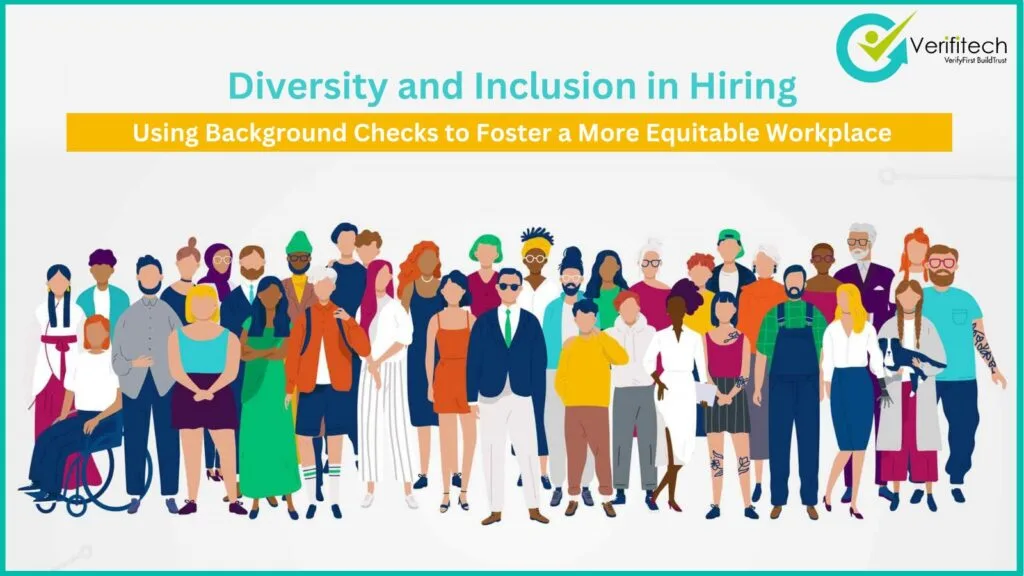
Diversity and Inclusion in Hiring: Using Background Checks to Foster a More Equitable Workplace

Diversity and Inclusion in Hiring: Using Background Checks to Foster a More Equitable Workplace In today’s increasingly diverse world, creating an inclusive workplace has become a top priority for organisations. A key aspect of diversity and inclusion is ensuring that the hiring process is fair, and unbiased, and promotes equal opportunities. Background checks play a crucial role in this regard, as they help organisations make informed decisions while fostering a more equitable workplace. Verifitech, a leader in background screening solutions, is committed to providing unbiased and fair assessments that contribute to building diverse and inclusive organisations. Here’s how: Promoting Fairness and Equal Opportunities: Background checks, when conducted properly, serve as a vital tool in promoting fairness and equal opportunities during the hiring process. By verifying qualifications, employment history, and other relevant information, background checks ensure that candidates are assessed based on their merit and suitability for the role, rather than factors such as personal biases or assumptions. Eliminating Bias and Discrimination: One of the significant challenges in hiring is the presence of unconscious bias and discrimination. Verifitech recognizes the importance of addressing this issue and has implemented robust processes to mitigate bias during background checks. By focusing on objective data and standardised evaluation criteria, We help organisations eliminate bias and create a level playing field for all candidates, regardless of their gender, ethnicity, or background. Enhancing Workplace Safety and Security: While fostering diversity and inclusion is paramount, organisations must also prioritise workplace safety and security. Background checks allow employers to identify any potential risks associated with an applicant’s criminal history or professional misconduct. Our comprehensive screening services ensure that organisations can make informed decisions while maintaining a safe and secure work environment for all employees. Supporting Diversity Goals: Background checks can be leveraged as a strategic tool to support an organisation’s diversity goals. Verifitech understands the importance of diversity and inclusion in driving innovation, creativity, and overall business success. By tailoring background screening processes to be inclusive and fair, we help organisations identify talent from diverse backgrounds, contributing to the creation of a dynamic and inclusive workforce. Ensuring Compliance with Legal and Ethical Standards: Verifitech takes great pride in adhering to legal and ethical standards while conducting background checks. With ever-evolving regulations surrounding data privacy and employment laws, Verifitech ensures that its processes align with industry best practices. By staying up-to-date with these regulations, Verifitech provides organisations with peace of mind, knowing that their hiring practices are compliant with the latest legal requirements. Building Trust and Reputation: Creating a diverse and inclusive workplace is not only the right thing to do, but it also enhances an organisation’s reputation and attracts top talent. By partnering with us, organisations can demonstrate their commitment to diversity and inclusion by utilising fair and unbiased background screening services. This builds trust among employees, stakeholders, and the wider community, ultimately positioning the organisation as an employer of choice. Diversity and inclusion are not just buzzwords; they are crucial elements of a thriving organisation. Verifitech recognizes the significance of background checks in promoting diversity, fostering inclusion, and creating a more equitable workplace. By providing unbiased and fair assessments, we enable organisations to make informed hiring decisions that align with diversity goals. This is done while ensuring compliance with legal and ethical standards. Embracing diversity and inclusion through background checks contributes to a vibrant, innovative, and inclusive work environment that benefits everyone involved.     Recent Verifitech News From 150 Sq Ft to a Growing Legacy: Our Foundation Day Reflection June 23, 2025 The Hidden Cost of Trust: Why Background Verification is Crucial for Retail Businesses June 16, 2025 ID Please? Why MeitY’s Scrutiny of Identity Verification Startups Signals a New Era for Background Verification Providers June 10, 2025 TECH ADOPTION PICKS UP IN CORPORATE, SO DO JOB FRAUDS May 30, 2025 AI SOLUTIONS FOR BACKGROUND SCREENING WITH PRIVACY & COMPLIANCE April 23, 2025 Why is Background Verification Important in Healthcare? April 16, 2025 Load More Leave comments on this post Please enable JavaScript in your browser to complete this form.First NameLast Name *Email *Comment * Submit

Experts speak on Human resources challenges
Others

Experts speak on Human resources challenges

Experts speak on Human resources challenges Welcome to Expert’s Speak, a column where we bring insights and knowledge from leading experts in various fields. Our experts are highly knowledgeable and experienced HR professionals who have dedicated their careers to advancing their fields. We have Mr.Iniyan, an HR expert working with a leading IT Consulting Firm. In a private conversation with Verifitech executives, he shared his insights on HR challenges in modern work place. Verifitech: Organizations are trying to balance productivity levels with the remote/WFH culture. How has COVID-19 impacted the work culture of your organization? The pandemic and the lockdown have given way to the work-from-home culture, and most people are not ready to work from the office after COVID. So while WFH doesn’t pose an issue with independent and individual contributors, it’s a challenge in cross-functional and collaborative tools. That said, we encourage hybrid work culture as far as possible. As the economy is reeling under recession and there are widespread layoffs even by IT majors, how has the recession affected your organization? Unlike other IT majors in the last 17 years, we have not grown exponentially, so we are not hit by the recession. In addition, we are not overstaffed and have proper workforce planning in place, making stakeholder management easy and recession-proof. Recession is not having any impact on our organization. Instead, we need help getting the right resources. Moonlighting is a topic that generated a lot of controversies. What is your take on moonlighting? How does it impact the employee and the organization? What is wrong with moonlighting? While many directors or senior management of the companies are on the boards of multiple organizations, why single out the employees? In fact, by moonlighting, they get a chance to upskill and enhance their knowledge in their domain or a related area, which is good for them and the organization. Moreover, in tough times like recession, their skillsets can help them to stay recession-proof while organizations can utilize their acquired skills from other domains. Those impacted by moonlighting are middle-classed employees who are either trying to make money or learn new things to climb the career ladder. Moonlighting is okay if someone is not defying any confidentiality clauses and agreements. Moonlighting enhances one’s knowledge. The new-generation employees seem impatient and look to rise rapidly through the organization. Do you agree? I can resonate very well with this! My dad worked only with one organization till his retirement. But I have moved from 6 to 7 organizations. I don’t want to waste my energy and time doing menial and routine jobs. I look for challenges and tell organizations that instead of looking at how many organizations I have worked with, I look at what I bring to the table. Stability doesn’t mean that you should do the donkey’s job. I feel redundant if I work for over two years in an organization. Especially with organizations that don’t upskill their employees or offer job rotation or enrichment, the chances of job losses are high. In the first job, a candidate should be exposed to more areas and challenges to come up as a winner. Job rotation and enrichment are critical in today’s world as we are dealing with a generation who are looking for gratification in anything and everything. Hence there is a vast difference between the hire-to-retire and new-gen job hoppers. HR seems to be taking all the beating – the great resignation or the layoffs. As an HR strategist, what’s your take? For an employee, the term HR often reminds of rangoli competitions, Christmas celebrations, and events. HR is also responsible for this. Most employees see HR as a department that communicates the least. But employees look for more communication, support, and guidance from HR. Today, employee wellness tops the list of employee engagement. But how many employees are aware of their organization’s insurance schemes? There need to be more regular updates. From the management side, HR should be given a role in the boardroom. They need to know the organization’s business line and pulse to make strategic decisions. The organization’s life is at stake if the planning doesn’t go well. If they don’t take the time to upskill the employees, the organization’s health is in trouble. Instead of creating single-focussed employees, HR should be able to mentor people as all-rounders who can support the organizations in times of crisis. Empathetic leadership in HR is the need of the hour. It can bring a lot of positive changes to the organization. If you look at the HR lifecycle, we will understand that earlier HR was welfare officers. But today, they are facing a blend of different generations.  While being the management spokesperson, HR today has many more significant roles. They have critical parts from risk management to organization design, change management, integrating different cultures and ethics, and nurturing inter-departmental collaboration. Transition with job assistance is another critical area to look into. For that, there should be inter-departmental collaboration and inter-industry alliance. In case of layoffs by one company, similar organizations from the same industry should come forward to take them into their fold. If sectors in the same domain do not support each other, who else could extend a helping hand? Thank you Mr.Iniyan for sharing your thoughts. Dear HR Leaders, would you like to join our experts speak column, please write to us. We love to have you in our column.     Recent Verifitech News From 150 Sq Ft to a Growing Legacy: Our Foundation Day Reflection June 23, 2025 The Hidden Cost of Trust: Why Background Verification is Crucial for Retail Businesses June 16, 2025 ID Please? Why MeitY’s Scrutiny of Identity Verification Startups Signals a New Era for Background Verification Providers June 10, 2025 TECH ADOPTION PICKS UP IN CORPORATE, SO DO JOB FRAUDS May 30, 2025 AI SOLUTIONS FOR BACKGROUND SCREENING WITH PRIVACY & COMPLIANCE April 23, 2025 Why is Background Verification Important in Healthcare? April 16, 2025 Load More Leave comments on this

WELCOMING FY 2023 THE 7 MUST-DO ITEMS FOR HR PROFESSIONALS
Others

Welcoming FY 2023: The 7 must-do items for HR professionals.

Welcoming FY 2023: The 7 must-do items for HR professionals. As the finance and account departments were burning the midnight oil, Catherine was wondering what it is all about, especially in the month of March. As one of the new joiners, she was curious to know the same. However, she was surprised to understand that even HR look forward to a brand new financial year and keeps their plans ready. One afternoon, Catherine walked up to her HR Manager and asked why a new financial year is significant to the HR team. Lima, the HR Manager was all smiles and amid her tight schedules, too, she addressed the query. As HR professionals, you play a critical role in building and maintaining a productive and engaged workforce. To do this, it is important to stay up-to-date with the latest HR best practices and emerging trends. In today’s rapidly evolving business landscape, it can be challenging to know where to focus your attention and resources. Here we outline 7 must-do-items for HR in the upcoming financial year. Whether you’re looking to improve employee well-being, implement remote work policies, foster diversity and inclusion, or optimize your recruitment and retention strategies, this post has got you covered. Let’s dive in! The 7 must-do-items for HR Focus on employee wellbeing and mental health: Given the ongoing challenges posed by the pandemic and economic landscape, HR professionals should prioritize employee wellbeing and mental health by offering support and resources such as counseling, flexible work arrangements, and training programs to promote resilience and stress management. Implement remote work policies and technologies: Remote work has become a staple of modern work, and HR professionals should work to develop policies and technologies that facilitate remote work and ensure employee engagement, productivity, and safety in virtual environments. Foster diversity, equity, and inclusion (DEI): HR professionals should prioritize DEI initiatives by developing policies and programs that nurture an inclusive workplace culture and address issues of bias and discrimination. Upskill and reskill employees: The rapid pace of technological change and automation means that HR professionals should prioritize upskilling and reskilling programs to help employees acquire the skills needed for the future of work. Develop agile workforce planning strategies: Because of the volatility and uncertainty of the current economic climate, HR professionals should focus on developing agile workforce planning strategies that can adapt to changing business needs. Leverage data analytics and AI: HR professionals should leverage data analytics and AI to inform decision-making, optimize recruitment and retention strategies, and identify areas for improvement in employee engagement and productivity. Build strong employer branding: HR professionals have to work to build strong employer branding by developing a compelling company culture, communicating transparently with employees, and promoting the organization’s mission and values to attract and retain top talent. There are many HR best practices that can help organizations effectively manage their workforce, attract and retain top talent, and create a positive work environment. Most commonly recognized HR best practices Recruitment and selection: Developing clear job descriptions, identifying the most effective sourcing channels, and establishing a structured selection process are key elements for effective recruitment and selection. Onboarding and orientation: Providing an all-inclusive onboarding and orientation program can help new hires feel welcomed, informed, and productive from day one. Performance management: Establishing clear performance expectations, providing regular feedback and coaching, and conducting regular performance reviews are essential components of effective performance management. Compensation and benefits: Offering competitive compensation and benefits packages can help attract and retain top talent while supporting employee engagement and satisfaction. Training and development: Offering opportunities for employee training and development can improve skills, enhance performance, and support career progression. Diversity, equity, and inclusion (DEI): Fostering an inclusive workplace culture and prioritizing diversity, equity, and inclusion initiatives can help build a more engaged, innovative, and effective workforce. Employee engagement: Prioritizing employee engagement through regular communication, feedback, recognition, and wellness programs can help build a positive work environment and foster employee motivation, loyalty, and productivity. Compliance: Ensuring compliance with legal requirements and regulations related to employment, health and safety, and privacy is essential for mitigating legal and reputational risks. Overall, HR best practices are designed to create a workplace that is fair, transparent, and supportive of employee development and success. By implementing these best practices, organizations can improve their HR processes and support the growth and success of their workforce. HR in the era of ChatGPT In 2023, it’s not possible to discuss HR without the mention of ChatGPT and many other AI tools that are going to storm the market. As an AI language model, ChatGPT is not a substitute for human resources professionals, but it can be a valuable tool for supporting HR processes and enhancing the employee experience. Here are some ways that HR professionals can leverage chatbots like ChatGPT to support their work: Recruitment and onboarding: Chatbots are a valuable tool to streamline the recruitment and onboarding process by handling initial screening, scheduling interviews, and answering common questions about the organization and the role. Employee engagement: Chatbots can be used to facilitate communication with employees, answering questions about company policies, benefits, and other HR-related topics. They can also provide real-time feedback and support to employees, improving their overall experience and satisfaction.   Performance management: With chatbots it is easy to facilitate regular check-ins and feedback sessions between employees and their managers, making the performance management process more efficient and effective. Training and development: Chatbots can add a lot of value in delivering training content and providing employees with on-demand support and resources to enhance their skills and knowledge. Benefits management: Chatbots are effective in helping employees understand their benefits packages and make informed decisions about their coverage, improving their overall health and well-being. Data analytics: One of the major benefits of Chatbots is data analysis. It can be used to analyze employee data and identify trends and patterns, helping HR professionals make more informed decisions about workforce planning, recruitment, and retention. Overall, chatbots like ChatGPT can be a valuable tool for HR

Ways to Express Appreciation for Employee Engagement
Others

Ways to Express Appreciation for Employee Engagement

Ways to Express Appreciation for Employee Engagement Who doesn’t love appreciation? Everyone has the desire to be appreciated, praised, and recognized. People want appreciation for their efforts in the workplace too. Organizations that focus on employee appreciation are able to achieve improved employee engagement. When Jane reached her seat, she saw a box of her favorite doughnuts. There was a beautifully written note saying Thank You, mentioning her achievement in the last week. Jane was almost in tears. She had joined the organization just a fortnight ago and had never experienced such recognition in her previous workplace. Her eyes became moist with happiness. Her colleagues hugged her and congratulated her. Studies have shown that employees work harder and stay more loyal if their efforts are recognized. From the annual appreciation certificate, the workplace has come a long way; accordingly, employee recognition programs are also seeing a shift.  Employee recognition has a positive effect not only on the employees but also on the entire organization.  Let’s see the different types and ways organizations can show their appreciation towards employees for better employee engagement. Types of Employee Recognition for Better Employee Engagement  There are many ways to recognize and show gratitude towards employees. There are three key recognition types, and they serve different purposes. Micro recognition Micro recognition is also known as day-to-day recognition. It is an ongoing and frequent recognition. Showing appreciation notes, giving cards, publishing on bulletin boards, or recognizing employees quickly and easily can be considered micro recognition. The biggest advantage of micro recognition is that you don’t require any major resources or time. It is a way to reinstate organizational values regularly and make employees valued consistently.   Informal recognition Remember when you went for a Pizza party or a happy hour outing? Organizations often recognize them informally when individuals or teams reach goals or complete projects. It can be a pizza party, potluck, a trip to a pub, or even an outing. Sometimes small gifts are also included in it. Informal recognition doesn’t occur daily but is not structured as formal recognition. Formal recognition Formal recognition is more organized. Sometimes it’s for the length of the service, or in certain cases, nomination and selection processes are involved. There will be a special ceremony to celebrate the same. However, formal recognition programs are not done frequently and need a lot of planning and a big budget. It doesn’t matter what type of recognition you’re planning for the employees/teams. Ensure that it is meaningful for your employees. Surprise them with treats or eats Who doesn’t like a pleasant surprise amid tight budgets and strict deadlines? Give them some donuts or chilled drinks on a hot day. Allow them to take a short break, enjoy the treat, and return to work. If your treat is blended with a little humor, nothing can match that. They will enjoy such fun treats during busy days or stressful times.   Have an employee wall of fame A Picture Paints a Thousand Words. You can achieve results that a long letter of appreciation cannot achieve with a photo. A wall of fame is a great way to highlight the achievements of both individuals and teams. It’s a distinct method to put your organization’s culture on a show for everyone to see. You can click candid pictures while they are at work and use them to put them on the wall of fame. You can also highlight team wins with photos of the team once they complete projects, achieve sales targets, or win new projects. Leverage social media Use your company’s social media profiles like Facebook, Twitter, or LinkedIn to appreciate your employees. When you recognize your star employees on social media, you showcase your company’s culture and values for everyone to see. Recognizing employees on social media is a major manner to share how proud the company is of its employees. When sharing the success of your employee, make sure to give a small bio with their role, achievement, and how it benefitted the organization. You can be sure that the recognized employees will share the social recognition posts with their followers. Isn’t this a simple way of creating brand ambassadors for your organization? Plan an off-site  A little change of place is sure to boost productivity. You can plan the off-site at a café, a resort, or any location that suits the team. However, it would be best to let them know what they are being recognized or appreciated for. It will ensure to give them a clear focus. There are no hard and fast rules when it comes to off-site. You can also celebrate the halfway of a project with an off-site. Give rotation trophy  Giving a trophy you can pass around the office is a great way to boost employee engagement. You can give it to an employee to demonstrate your organizational values. Allow them to keep it on their desk for a week. Create a note with the trophy mentioning what organizational value the employee showed to earn it. Announce it to your peers. In the next team meeting or the following month, the employee can hand it off to the next employee who deserves it. This is a great way to build employee engagement and a culture of recognition. Employee recognition tees Design various T-shirt designs for different awards and encourage them to wear them each Friday. Either create a T-shirt for each company value and give the team or have the teammates sign a company tee with thank you messages. Cheers for peers  Peer recognition is a sincere expression of praise and appreciation between co-workers. It is based on the concept of employees celebrating each other. Peer-to-peer recognition involves everyone in the organization stepping up and sharing praise. In this program, there is no excessive stress on managers and executives to be the only ones providing praise and recognition. The entire organization can work together to improve team morale and appreciation. Making peer-to-peer recognition a part of your recognition strategy helps

Will-ChatGPT-Replace-HR-Professionals
Others

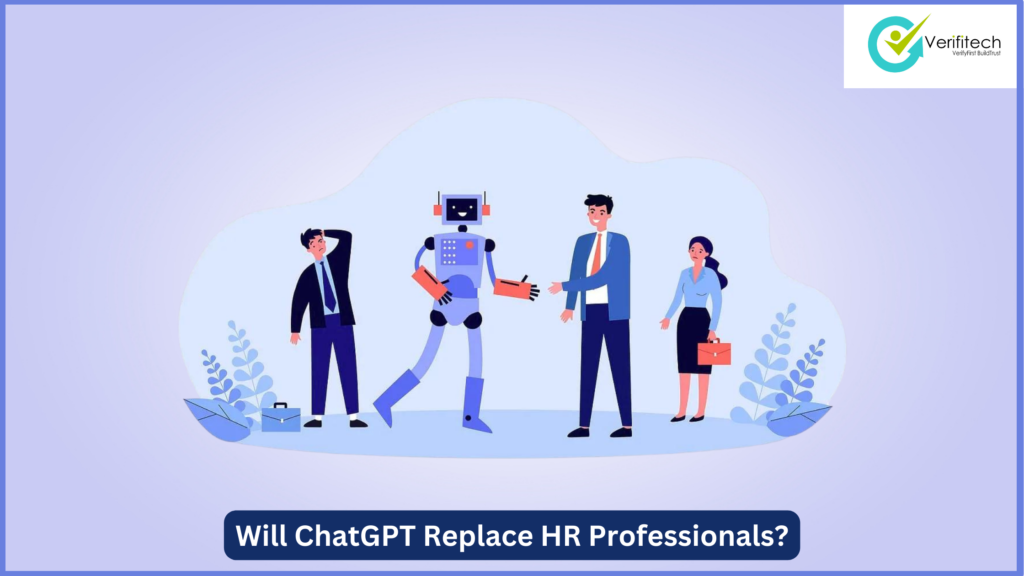
Will ChatGPT Replace HR Professionals?

Will ChatGPT Replace HR Professionals? OpenAI-created ChatGPT is making headlines, and it has become a topic of discussion on many platforms. What attracts people to it is its ability to interact with users in a tremendously realistic manner. From writing a poem to a basic software code and providing information on inquiries, ChatGPT can accomplish many tasks. Hence, it has raised many questions among people regarding its impact on jobs.   Will ChatGPT affect jobs? People have always been skeptical about whether technology will replace human resources. However, HR leaders say that while AI or artificial intelligence will transform human resources departments, it will not replace humans. It’s because the role of human resources is not just shortlisting and interviewing a candidate. The human resources’ role includes many other things comprising providing employee experience. HR is about the intangibles in every aspect, from acquisition to off-boarding, and expecting that ChatGPT will replace the functions is not real. At least in the initial stages, it will only have a limited role.  ChatGPT is indeed a significant shift in artificial intelligence (AI). But to match human intelligence and behavior, it has to go a long way. To begin with, data entry jobs, entry-level copywriting jobs, customer care, and entry-level software developers may be at risk. Major Benefits of ChatGPT for Businesses ChatGPT can be a great tool for knowledge workers to create and work together on preliminary ideas in their creative works. Businesses that benefit from creative writing will be able to use it. For example, sales professionals can use it to write better pitches, HR professionals can use it to create better email communications, and marketing professionals can use it to write better content. ChatGPT can bring speed and efficiency to content generation. So, it is helpful for all functions in organizations. HR experts say that all products that deliver personalized communication can benefit from it. ChatGPT will also aid functions like customer support, employee training, etc. Businesses using chatbots for a long time will benefit from ChatGPT’s technology to improve the existing products in the market. However, they warn that since its accuracy is not yet proven at a high level, it would be better if organizations use it for brainstorming and output validations. But, since ChatGPT is owned by OpenAI, a profit-driven organization, its development will also depend on the company’s investment and product decisions. ChatGPT Vs. HR professionals HR experts opine that machines and technology will not abolish HR jobs but will augment HR jobs. Many HR leaders predict an impressive partnership between AI and human resource in managing issues on time and swiftly. HR experts feel ChatGPT technology can help streamline HR processes by automating certain repetitive tasks, allowing  HR professionals to focus on strategic, more important and high-value activities. Also, human resources teams can leverage ChatGPT to perform the initial screening of candidates. HR leaders are optimistic that ChatGPT may help HR in streamlining recruiting strategy. However, they caution that very specific inputs will be needed to get the desired results. Hence, HR can use ChapGPT to write job descriptions, HR policies, and even draft contracts. However, every output will be based on the input one gives. With ChatGPT, organisations may need lesser HR resources to accomplish the intended work, especially at the entry level.   While ChatGPT will be able to come up with JDs, do initial screening of candidates, and more, HR professionals will still be in demand as they would have to describe to ChatGPT what they want to create. It would trigger demand for smart and driven HR professionals who are adept in what they do.   Though ChatGPT may enhance the functions of HR, a downside may be that it might not understand the context, which will cause bias in the model’s predictions. When HR depends on such decisions, it might cause problems. Similarly, when it is trained on a dataset with an uneven number of resumes from a particular demography, the chances are high that it might recommend candidates from that group. Such issues will lead to creating non-diversity among the candidates and workforce. Similarly, if the input going into the ChatGPT is not correct, it will generate biased job descriptions. Over time, it would deny opportunities to get good talent for the organization. According to HR experts, it will take time for people and companies to fully understand the ChatGPT tool’s capabilities and adopt it in their daily operations because it is still in its early stage of development. They are also concerned about the data privacy risks that must be addressed. Today, every tech person has an opinion on ChatGPT. While some believe it will not have much of an impact, others consider that AI like ChatGPT will soon transform work. However, HR leaders concur that the evolution of ChatGPT won’t happen overnight. It’s like how mobile phones have invaded lives. The first mobile phone was almost two decades ago. But today, no one can imagine a world without a mobile phone. Similarly, the impact of ChatGPT will happen, little by little, in an incremental manner and will engulf us. Collaboration of ChatGPT with HR Technology The scope of ChatGPT in HR technology can be vast. For instance, answering questions from employees during training, developing materials for learning and development, adjusting the automated interactions from HR with candidates, and many other things can be accomplished using it. But for all of these use scenarios, the tool would need to be extremely accurate. But it is in the evolving stage. So, HR will have to wait until the tool evolves. Since ChatGPT and HR are in the early stages of development, HR leaders believe that it cannot replace human touch. There is no substitute for human touch, intuition, and verbal and nonverbal signals/inputs. Recent Verifitech News Leave comments on this post

Others

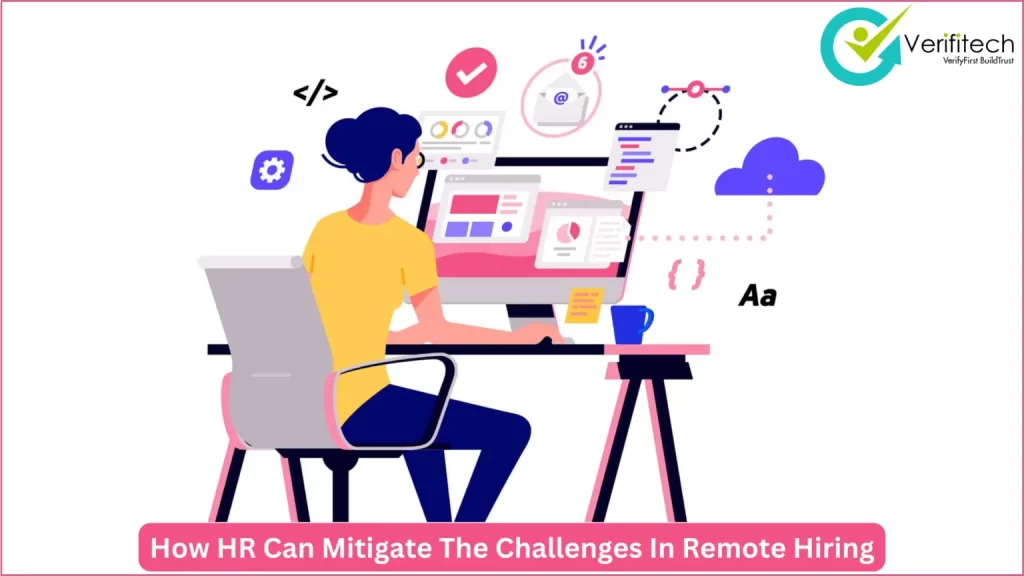
How HR Can Mitigate The Challenges In Remote Hiring

How HR Can Mitigate The Challenges In Remote Hiring Even though the pandemic has eased in most places, remote work will stay. A good number of employees are tuned into working from home/remote work, and organizations, too, are okay with it. While organizations have more or less managed to keep productivity even with remote work, HR is one area that continues to face challenges. While HR managers see a good opportunity with remote work, they agree that remote hiring throws up challenges, and it’s not easy as one thinks. Let’s see what the major challenges HR faces in remote hiring are. A large pool of applicants Remote working offers a chance for every candidate to apply for their dream company. Since there are no compulsions regarding proximity to the workplace, people from different geographical locations can apply for vacancies. While it offers diversity and better talent, HR has to sift through many applications. HR managers must go through thousands of resumes before shortlisting candidates, which is a tedious process. Studies show that remote workers have increased by 160%. To manage the burgeoning number of applications, HR needs to be crystal clear about their expectations. They should create well-written and detailed job descriptions to avoid applications that lack the required qualifications and experience. They can take aid from tech as AI-based application tracking systems helps optimize the remote hiring process. Differences in time zones Remote hiring helps in tapping into a global talent pool. HR managers can now select prospective candidates from far-off places. But the geographical autonomy can be difficult to manage when scheduling interviews and conducting real-time assessments. However, here, HRs can take the help of automatic scheduling tools that help the candidates to choose a time that suits them best and for the company. Using such tools, HR managers can address the productivity gap due to time zone differences. Technical difficulties Sometimes, even after thorough preparation, too, technology can fail you. Software problems, poor internet connection, and inconsistent video or audio quality can hamper the interview process. When such technical issues happen, there is a high chance that the candidate may misunderstand the question or give an incorrect answer. Sometimes the noise from other sources can distract and disturb you. Such issues can influence your judgment of the interview process. It’s better to create a backup plan if your web conferencing technology fails you. You can also reschedule the interviews and work on correcting the glitch. Evaluation of skillsets  HR managers must choose candidates with enough job-specific skills and relevant experience. To ensure the same, whatever the position be, HR Managers conduct a comprehensive evaluation of the skillset. However, skill assessments and evaluations are quite challenging in a remote setting. To minimize the struggle, HRs should take help from the organization. They can create dedicated tests and skill assessments to screen the candidates effectively. Difficulties in onboarding A work-from-office model allows new joiners to interact with the employees in real-time, and it becomes easy for them, as well as the HRs, to align them to the company’s culture and vision. In remote hiring, onboarding is a bit tough. In the initial days, new employees may feel overwhelmed and find it tough to get the hang of things and create a peer group. These can lead to productivity loss, and HR must take measures to tackle it. HR managers will have to put extra effort into creating a smooth onboarding process and should take care to enhance the learning curve. Introductory sessions, orientation programs, and impromptu sessions should be organized, so the new jokiness understands the company and the workflow in a stress-free manner. Contracts In remote work, legal contracts are critical. Though hiring managers might feel it is tedious work, they must understand the labor laws of different countries, so there is no compliance violation. Having a standard template and hiring law and compliance experts can fine–tune and speed up the process. Payment of salaries Proper salary disbursement is vital for employee retention and satisfaction. But, transferring salaries to remote employees is a challenging task. It can be complicated due to offshore issues. Tax laws, international money transfers, and calculations and invoicing can create issues. One way to manage the above is to have payroll solutions. Remote payroll and compliance providers can help solve the challenges and ease the HR team’s pain areas. Conclusion  Although remote hiring throws up its share of challenges, it’s worth the trouble. Remote companies can tackle the challenges with the right remote hiring strategy. While AI-powered application tracking systems can speed up the screening process, automatic meeting schedulers can reduce interview time zone differences. Test projects and customized skill assessments would take care of the evaluation process. Strategically planned introductory sessions can offer a smooth onboarding process. Having standardized templates reduce contractual misinterpretations, whereas remote payroll service providers can ensure punctuality and accuracy in salary disbursement. With the right tools, planning, preparedness, and backup, the hiring team can complete the hiring process with minimal or no stress.   Recent Verifitech News From 150 Sq Ft to a Growing Legacy: Our Foundation Day Reflection June 23, 2025 The Hidden Cost of Trust: Why Background Verification is Crucial for Retail Businesses June 16, 2025 ID Please? Why MeitY’s Scrutiny of Identity Verification Startups Signals a New Era for Background Verification Providers June 10, 2025 TECH ADOPTION PICKS UP IN CORPORATE, SO DO JOB FRAUDS May 30, 2025 AI SOLUTIONS FOR BACKGROUND SCREENING WITH PRIVACY & COMPLIANCE April 23, 2025 Why is Background Verification Important in Healthcare? April 16, 2025 Load More Leave comments on this post Please enable JavaScript in your browser to complete this form.First NameLast Name *Email *Comment * Submit

Scroll to Top
Consent Management Platform by Real Cookie Banner