VERIFITECH – Background Verification Company

Global Redirect Menu

Others

Others

Top HR Skills That Will Be In High Demand In The Future

Top HR Skills That Will Be In High Demand In The Future However, The role of HR managers has undergone a dramatic transition in line with economic and technical advancements. Today, HR professionals are at the intersection, helping the stars and strugglers. As machines are taking over the tasks done by humans, HR managers are now playing the role of championship coaches. They are poised to play bigger roles, supporting and guiding employees in their career journey. However, to equip themselves for that, they need to work more on business analytics and strategy. Today, technology has made it possible for HR to be free from mundane tasks. It enables them to take more challenging roles, which are exciting, demanding, and competitive. To position themselves as advisors, HR managers need to reposition themselves as strategic partners. Future skills for HR teams The world is rapidly shifting with digital transformation. Industries and domains are not immune to digital shifts. New trends have started in human resources, and artificial intelligence, machine learning, people analytics, VR training, and upskilling have become the norm. People analytics HR teams are sitting on a pile of data. They are data-rich but need better insight. Knowingly or unknowingly, HR has been gathering data like recruitment data, training data, career growth, absenteeism figures, productivity data, performance reviews, and staff satisfaction data, and the list is quite long. Besides the traditional HR data sets, companies can now gather much more data – social media data, emails, etc. to understand employee sentiment. HR data is extremely valuable and is one of the greatest assets for HR teams. When organizations use HR data to take better decisions, create better workplaces and optimize processes, it can add immense value to the organization. In the past, most HR data went unused except in the corporate presentation. However, with big data and analytics, companies use their data to develop insights. It helps them to forecast when employees will leave, where to recruit suitable candidates, how to identify and attract the most suitable candidates, and how to keep them happy once they join the organization. Hence, people analytics, also called HR analytics, is one of the crucial skills for most establishments. People analytics is a data-driven method of human resource management. It includes analysing and reporting HR data to measure the effect of HR metrics on business performance. People analytics is an indispensable skill for HR professionals that help them judiciously identify, train, and retain exceptional talent. Besides, it offers them insights based on which actions can be taken and which, in turn, will fuel business growth. For informed decision-making, people analytics enable HRs to rely on data. Soft skills Soft skills are critical for all professionals, and HR is no exception. Communication, persuasion, coaching, advising, assurance, flexibility, and organizational skills are priceless for HR teams in today’s working atmosphere. Soft skills can be built using various methods. While reading and public speaking sessions can improve communication skills, classes are available for learning and conflict management. Also, there are various tools that HRs can use to improve their skill sets. Recruitment marketing Recruitment is one of the major functions of an HR professional. In today’s competitive world, identifying the right candidate is extremely challenging. While plenty of talent is available for certain roles, there are a few candidates for some jobs. Hence, today, an HR has to act like a marketing professional. From projecting the brand image to leveraging culture and goodwill, HR has to market its recruitment to bag the best talent from the pool of candidates. Recruiting marketing is a fine blend of strategy and tools. HRs can achieve this by making the most of appropriate forums to promote the brand’s philosophies and values and rolling out engaging packages to attract potential candidates. If you log on to LinkedIn and scan through, you will see how recruitment marketing functions. Traditional recruiting is reactive and starts when a particular hiring need is identified. But recruitment marketing is proactive and pays attention to promoting the company and its brand to lure job seekers, keeping the organization top of mind. Achieve recruitment marketing skills, HR professionals should establish a strong LinkedIn profile and share content from the organization regularly. HR teams can regularly share content from their organization, post industry news and updates, and promote company events. There are many avenues, from engaging with colleagues to sharing their wins and interacting with potential candidates. Interestingly, the best part of the recruitment marketing tactics comes at no cost. Social media, omnichannel promotions, targeted messaging, and professional forums are suitable platforms to send out brand messages, address hiring needs, and develop employee engagement. HR can combine employer marketing and inbound recruiting to acquire target candidates. AI and VR Several human resource management activities, such as recruitment, training, development, and employee onboarding, are ably supported by advanced technologies. Keeping up with the artificial intelligence and VR training trends will help HR keep an edge in the market over its competitors. Many HR functions rely heavily on technology, and that trend will grow further as the modern workplace keeps evolving. Artificial intelligence (AI) and machine learning are the most popular HR management technologies due to their ability to replicate human thinking closely. Familiarising themselves with the different HR technology areas will help HR teams’ future-proof their skills. Conclusion How people work and conduct the business has changed radically since the pandemic outbreak. While HR will continue to be at the centre of business advancement, better HR skills will facilitate improved career experiences. Better HR skills will foster a supportive workplace centered on development, employee engagement, and retention. It will also pave the way for creating an inclusive and inspiring organization. Organizations must help empower HR with modern skills to play a key role in developing future-ready employees. However, HR’s role in assisting business change has fast-tracked, making it an enabler of change for processes in the new normal. With the backing of new technologies, HR professionals can upskill themselves with digital knowledge

Others

What makes vetting talent and background verification important

What makes vetting talent and background verification important It was a routine review process in the organization, and Rhea helped the external auditor with the relevant documents. After a detailed security review, the external audit team wanted to talk to the leadership team. This wasn’t usual, and Rhea was concerned. However, she checked the availability of the COO and the CHRO. But what happened at the meeting shocked her. At least a dozen workers had duplicate benefit accounts. This meant they had been moonlighting, and the organization was now accountable to the Provident Fund Office. Rhea was shocked to discover that she knew some of them. But she had not known that they were working for other organizations while employed by her company. Imagine the following situation. As a recruiter, you advertise a job, and after a long process, you hire someone you think is a good fit. The person might have a fantastic CV and a great personality, but they might be hiding a criminal record or not providing work records. Sometimes they also lie on CV and make false statements to stand out from the competition. Without background checking, these problems don’t come to light until it’s too late. You may not realize until a few weeks later that you could have hired them better. Now you’ve to start the process all over again. A solid vetting process helps avoid mistakes. A bad hire can cause several problems for your company, from lost productivity to internal disruption to the existing team. There’s also the financial cost of sourcing and training a replacement. The damage can be immense if the person in question becomes involved in illegal activities while working in your company, which can destroy your reputation with your clients and customers. Although it may seem tedious and time-consuming, it’s worth background verification of your applicants before offering them a job. It’s crucial to ensure that an applicant’s credentials justify them in every way so that you can proceed with the recruitment. Screening potential employees are crucial regardless of their experience or position. Why is the vetting process so important? According to a report in the Economic Times, nearly a quarter of large companies in India conduct background checks on IT employees before hiring them. This is because of increasing virtual interview scams, moonlighting, low productivity, and fake experience certificates of employees. Importance of vetting employees Companies use a vetting process to assess an applicant’s background and qualifications and eliminate unqualified candidates from the applicant pool. This includes background checks, phone checks, and virtual and technical assessments. Improves efficiency  Vetting facilitates effective recruitment and helps HR filter out unsuitable candidates. Often candidates use part of the job description to their advantage. But with a good screening process, you can find the right candidate with the right qualifications and experience. A thorough screening process reduces disruption and is a good investment of time and money. When companies hire the right talent the first time, it significantly reduces costs, as most costs go into finding and training new candidates. The vetting process allows recruiters to refine the interview process and get the different stages right. You can use the information from a vetting process to adjust the interviews to ensure an enriching hiring process. There’s a large pool of talent; therefore, companies are inundated with the challenges of the recruitment process. Due to many applications, it isn’t easy to assess candidates on their skills, reliability, and professionalism. A thorough background checking process helps to avoid wrong decisions. Companies that understand the importance of a precise, detailed vetting process turn to reputable background check agencies such as Verifitech to assist them in the recruitment process. The need for a proper vetting system for potential employees is becoming increasingly clear. Although employers don’t assume that potential applicants will lie about their experience or CVs, it’s important to take precautions. Without proper screening, there’s a good chance that you will hire someone who’s not suitable for the job. If the qualifications are wrong or the applicant doesn’t fit into the team, it will cost time, effort, and money to replace the applicant. With the right questions and references, the mess could have been avoided. Today we know that vetting pays off, saving company’s time, money, and disappointment. Why are talent acquisition and retention so important? Now that you have acquired a great talent who fit your organization’s expectation, the next most critical step is retaining him/her. HR managers know that talent acquisition strategies have a vital impact on employee retention. Recruitment and retention are closely linked, and when employee engagement and retention increase, the need for new hires decreases. Satisfied employees are less likely to leave, and this is something that HR should keep in mind in any recruitment process. Talent acquisition and retention are ongoing strategies focusing on long-term resource planning to choose a suitable candidate for the role. Effective employee retention saves the company from productivity losses. Companies with high retention rates have more engaged employees, who get more work done. Engaged employees are more likely to build excellent customer relationships and form teams to become more productive. If you take a company’s success, employee retention is more important than talent acquisition. HR should look for a balance in recruiting and retaining employees. Retaining an employee is cheaper and more cost effective than hiring new employees. Tags: Employee Background, Employee Background verification, Employment Background Verification Companies, Healthy work environment, Human Resource Management, importance of employee background verification Recent Verifitech News From 150 Sq Ft to a Growing Legacy: Our Foundation Day Reflection June 23, 2025 The Hidden Cost of Trust: Why Background Verification is Crucial for Retail Businesses June 16, 2025 ID Please? Why MeitY’s Scrutiny of Identity Verification Startups Signals a New Era for Background Verification Providers June 10, 2025 TECH ADOPTION PICKS UP IN CORPORATE, SO DO JOB FRAUDS May 30, 2025 AI SOLUTIONS FOR BACKGROUND SCREENING WITH PRIVACY & COMPLIANCE April 23, 2025 Why is Background Verification Important in Healthcare? April 16, 2025 Load More Leave comments on this post Please enable

Others

Enabling a fine balance between WFH and Work-From-Office

Enabling a fine balance between WFH and Work-From-Office Candidates are demanding, and they have more options as they can now work for many organizations remotely. Employees preferred working from home because it provided a better work-life balance We all know that hybrid working has become a key to attracting talent. Candidates are demanding, and they have more options as they can now work for many organizations remotely. To win the ongoing recruitment challenge, HRs are focusing on where to take the hybrid model next. Organizations have started thinking on the lines of making workplaces a point for collaboration rather than where people go and work. Now, the challenge for HR managers is how to find the right balance. And there is no one size fits all solution. Rather than formalizing the hybrid working policies or stipulating minimum work days from the office, the focus must be to listen to people and find out what works best for them. Besides, what works for a team may not work well with another team of the same organization. While wellbeing has become a vital criterion, it’s time HR focus on the long-term results and customizes it to suit the employees in the evolving working models.   Recent Verifitech News Welcoming FY 2023: The 7 must-do items for HR professionals. March 23, 2023 Will ChatGPT Replace HR Professionals? February 24, 2023 Leadership And Management Lessons From The FIFA World Cup 2022 December 31, 2022 Top HR Skills That Will Be In High Demand In The Future December 30, 2022 What makes vetting talent and background verification important December 17, 2022 Enabling a fine balance between WFH and Work-From-Office December 16, 2022 Load More Leave comments on this post

Employee Well being in a hybrid work place
Others

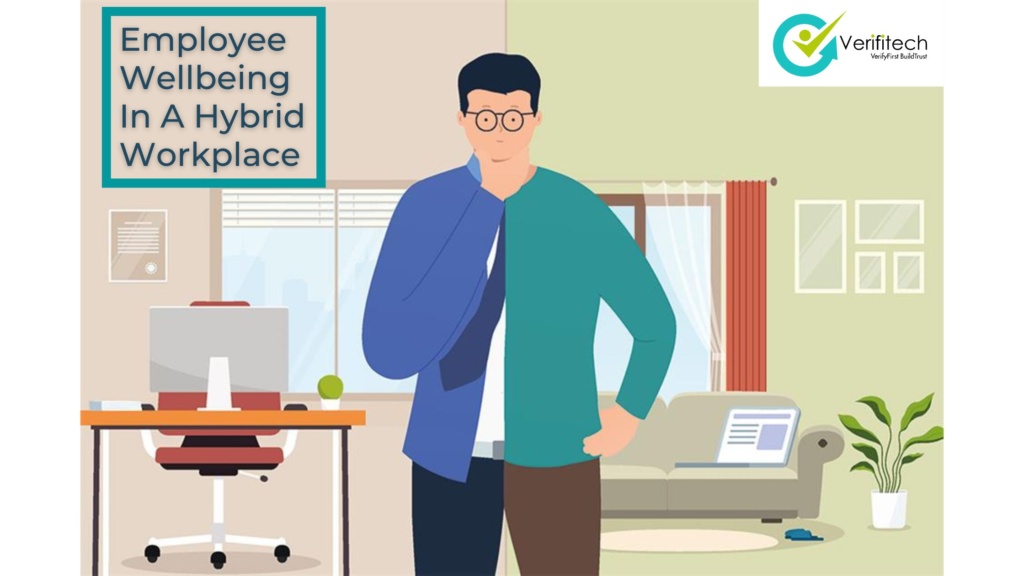
Employee Wellbeing In A Hybrid Workplace

Employee Wellbeing In A Hybrid Workplace Overview “Never let a good crisis go to waste,” said Winston Churchill, Britain’s Prime Minister in the mid-1940s. He was Britain’s PM when World War II broke out and persuaded the nation to fight against a Nazi occupation, knowing well that it would create a new normal, which was not rosy for the British. What is remarkable about Churchill’s quote is that it makes one look for a silver lining during a crisis and discovers opportunities that were not there before. When Churchill said the above, he was apparently referring to the coming together of an unlikely trio, Yalta, and the alliance they forged between himself, Stalin, and Roosevelt. Later it led to the formation of the United Nations. It is an example of how they created an opportunity for a better world in the middle of a crisis. We all know the COVID-19 pandemic created havoc and put the entire globe under lockdown. Since then, the pandemic has brought a new normal in almost all spheres of life. Workplaces globally are experiencing a shift to hybrid work. The hybrid model involves working from the office and choosing remote work. Whether we like it or hate it, the hybrid working model has become the new work culture in the post-pandemic world. There are only two ways-either you get on board or be left behind. When organizations first started working in the hybrid model, their primary concern was how to promote and maintain a company culture rooted in the company’s values. However, in the post-pandemic hybrid scenario, now employee well-being has come to the fore. So, is there an opportunity for HR in this crisis? Employee Well-Being And The Factors Influencing It As per a study conducted by Gartner, “wellness” is the new metric North American companies are using to assess their employees’ mental, physical, and financial well-being. Hence, it’s clear that wellness is the word in hybrid work culture. Surveys show that an investment in employee well-being can increase employee performance, retention, and success in the hybrid work mode. An employee’s mental, physical, emotional, and financial health is called well-being. It is influenced by many factors, their relationships with colleagues and managers, the tools and resources made available to them, and how decisions are made in the organization. Before the pandemic and lockdown, employees had several options for managing work stress, including water cooler discussions and daily commutes. However, hybrid work culture has reduced such opportunities. In the new normal, leaders are forced to create new initiatives to create new options for their employees to reduce stress. Instead of grappling with the overwhelming transformation to the hybrid model, HR should see the opportunity and develop innovative solutions to address employees’ present-day needs. No Old Wine In The New Bottle Repeating the old practices that worked in the office and amending them to the remote work environment is not a workable solution. In a hybrid work culture, repetition has no space. New challenges need new solutions, and to function in today’s environment, HR should adapt and build processes that meet the current needs. Create A Wellness Strategy  In developing wellness strategy for the new hybrid workforce, managers should begin with their people. Talk to them. Find out their hopes, worries, and levels of engagement. Ask them what they want and what they do not wish. With these vital insights, HR can create a roadmap and ensure a flexible workforce wellness plan. Routinely check with your workforce on the state of their well-being and the path to transformation. Since hybrid work is a new landscape for everyone, organizations worldwide are learning as they go. The way to win the game is to take care of the bedrock of your organization – people – physically, emotionally, and financially. To enable organizations to redefine employee well-being in the hybrid work model, the points below are of significance. Train Your Leaders  During the pandemic, many discovered that even seasoned leaders could not manage a remote workforce and keep them engaged. Hence, managers and leaders must be trained to support employees’ mental health and well-being. Leadership training should emphasize innovative ways to keep employees engaged and healthy. Streamline Communication One factor we noticed during the pandemic was the overwhelming communication in which the employers wanted to keep the workforce happy and maintain productivity. However, it had backfired in many instances. Hence there should be a streamlined communication that will allow managers to handle both in-office and remote workers seamlessly. Having the proper tools, strategy and resources will ensure clear communication and instill confidence in employees. Gather Feedback Most employee benefits are created with the workforce that works from the office in mind. For example, subsidized lunch, health checks, and similar ones. But with remote work, these benefits need to be adapted to suit remote employees, too. Else, there are chances that they will feel left out, affecting productivity and increasing attrition. Management should gather employees’ input through surveys or encourage them to speak up to ensure their input is incorporated. Build Trust No organization can create a culture of well-being without developing trust with its employees. Show genuine concern for employees. Practice empathy and encourage a system that prioritizes employee well-being. Be graceful, listen and lead with compassion. Similarly, staff working from the office and remotely should be treated equally. Ensure everyone gets the same respect, support, opportunity, and information sharing. Meeting With A Purpose Without metrics to measure productivity and engagement, it’s easy to fall into the trap of conducting meetings and measuring the employees by their presence. In a hybrid work culture, this doesn’t work, and managers should create a meeting culture focused on preparation and purpose. This helps to reduce the exhaustion employees undergo due to too many meetings. While scheduling meetings, inform the agenda in advance and, after the meeting, publish the minutes. Make it a point to encourage those who could not attend the meeting to review the minutes. Clear And Concise KPIs In a hybrid work culture,

Data Analytics in HR
Others

Data Analytics in HR

Data Analytics in HR Overview Data Analytics in HR is a relatively new tool. Pretty unexplored, the definition given by Heuvel & Bondarouk is widely used as a scientific one. HR analytics, according to them, is the systematic identification and quantification of the people drivers of business outcomes. (Heuvel & Bondarouk, 2016). According to a 2021 People Analytics Trends report, almost 90% of CHROs concluded that data and analytics are essential. Many leading companies are investing more in people analytics, with a 61% growth from the previous year. Significance Of Data Analytics in HR Human Resource Management, or HR, is considered soft and old-fashioned. For example, many say HR decisions are based on ‘gut feeling,’ or they follow things that have been in practice. Since HR is not a revenue-bringing department, they often don’t have numbers to substantiate their side. However, in the past decade, HR has changed radically. From an operational discipline, it has moved to a strategic one. The data-driven approach that exemplifies Data Analytics in HR aligns with this change. The first and foremost benefit is that by using data analytics, HRs no longer have to count on gut feeling. They can now make data-driven decisions. Also, it helps to test the effectiveness of HR policies. Data-based decision-making has great significance in the post-pandemic world. The employment scenario has been witnessing a paradigm shift – whether it is the increasing interest in hybrid work or the use of automation. There is disruption and uncertainty, making it essential for HR to come up with appropriate decisions to navigate the new normal. Employee Retention The great resignation has been a wake-up call for employees and employers. Employees realized they want their employers to address their concerns more than a paycheck. They wanted better work-life balance, benefits, flexibility, and better opportunities for career development. Many employees understand that better options suit them, and they need not necessarily have to be contented with the existing one. Today, the average tenure for employees has plunged to below three years. So, for HRs, it is pretty stressful to retain talent than ever. This has significantly increased the HR department’s workload. They have to invest more time in hiring and training. However, Data Analytics in HR can offer insights into why employees leave an organization. By collecting data from stay and exit interviews and surveys, HRs can utilize the understanding to address the issues. Rightly said, it also helps to develop a company culture that fulfills employee requirements. Employee Experience HRs must create a positive experience and nurture employee relations. This will help to keep employees engaged and productive. However, identifying and addressing the gaps in employee experience is a challenging task. Finally, by collecting the data from surveys, employee listening, and actively responding to their concerns, HRs can sail through the otherwise stormy area successfully. Manage Remote Staff Remote and hybrid work have created several issues. And they include  communication, team collaboration, and employee engagement. HRs can use data analytics to understand remote employees’ productivity, engagement, and well-being. Data from polls and pulse surveys offer insights to HR into what works for remote staff and areas that need attention. Upskilling For Staff We know that this is the  world of automation and AI. It means, many jobs are fast becoming obsolete. However, there are several new avenues opening up. Data analytics can help to build critical skills for employees. First of all, using data analytics, HRs can develop informed workforce planning to address current and future needs. Skills and jobs can be assessed and coordinated through data, and systems can be implemented to train individuals with specific talents. So, this increases the company’s productivity and also keeps employees more engaged. Diversity And Inclusion Across the world, we know that organizations are trying to improve inclusion and diversity.  For example, factors like lack of awareness have been creating difficulties in attracting top talents. However, data analytics can promote innovation and a competitive edge over the competition. To sum up, it offers HRs the opportunity to showcase data to the stakeholders why a diversity program works and what needs to be done further. Conclusion First of all, HR professionals often collect vast amounts of data. Secondly, it mostly remains unused. Once you analyze human resource challenges using the data, you engage in Data Analytics in HR. Now we know that Data Analytics in HR enables HR to make informed decisions and move from an operational domain to a tactical and strategic partner role. To sum up, from recruitment, performance management, employee engagement, learning, and development, Data Analytics in HR can resolve most workplace challenges. Recent Verifitech News Employee Wellbeing In A Hybrid Workplace November 29, 2022 Data Analytics in HR November 29, 2022 How to Retain Valuable Employees November 29, 2022 Change Your Corporate Culture November 29, 2022 Technological Innovations in BGV industry September 29, 2022 What qualities to look when hiring employees September 13, 2022 Load More Leave comments on this post

How to Retain Valuable Employees - Verifitech
Others

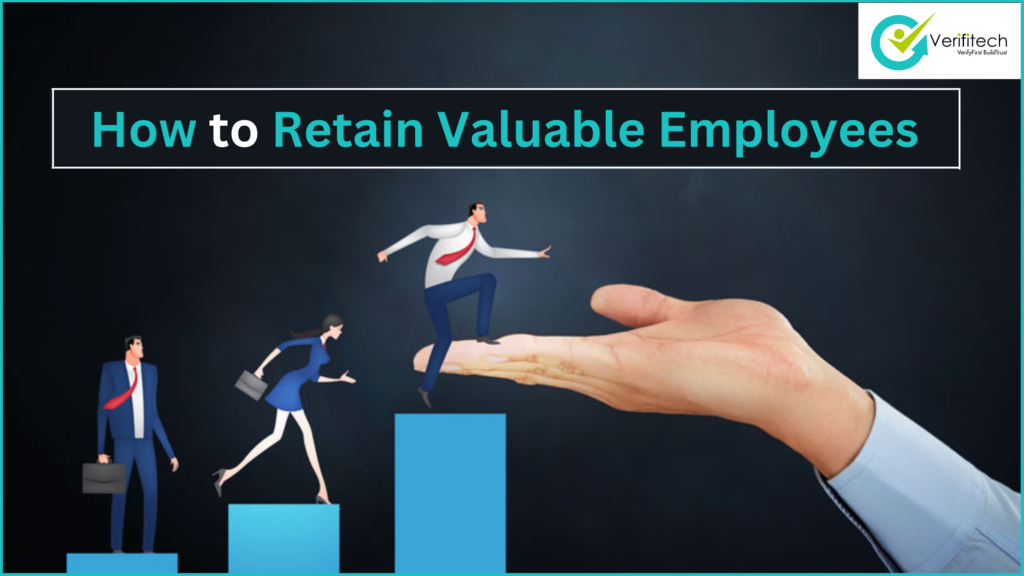
How to Retain Valuable Employees

How to Retain Valuable Employees Smart HR Managers know how critical it is to retain those talents. Keeping the employees happy and loyal to the company may appear simple but a robust plan is needed retain valuable employees. The conference hall was full, but unlike other times, there was pin-drop silence this time. Even the non-stop chatterboxes in the team seemed to have lost their words. It was the farewell day of their beloved John Samuel (JS) joined the company as the 4th employee and grew with the organization. He became a Sales Head, and in every induction and orientation, he told it to the new joiners. John always wore the company name and ID card with great pride. While he guided the company’s branch heads and vice presidents, who came and went, everyone thought that JS contended with his role. Though he loved the senior mentoring and running the branch, the pandemic made him realize that he also needed professional growth and did not want to be stunted anymore in the sales head role. His resignation came as a shocker to the senior management. JS was their go-to person, and Man Friday, and they never thought he would leave. They huddled up and even came up with an attractive package and career growth plan for JS. But it was too late. Companies sometimes need to realize that they must take extra care to retain their valuable employees. HR has to Pivot The COVID-19 pandemic was a stress test for everyone. But the biggest hit was the HR. Businesses had to pivot, make remote work successful and still make profits. In the whole melee, HR had the additional responsibility of keeping the company’s building blocks intact. Making the employees stick around so they can supercharge the company’s growth. HR teams should do things in such a way that they can retain their best people. Tenured employees know what makes your business tick; they know how to get things done. Hence, companies should do everything possible to keep their rock stars. Besides affecting the momentum of growth, replacing such an employee is a time-consuming and costly affair. The Society for Human Resource Management (SHRM) reported that, on average, a company would spend 6 to 9 months of an employee’s salary on recruiting, hiring, and training a new team member. While the company’s CEO might hog the limelight, the fact is that successful businesses are built on the backs of employees. While CEOs are concerned about customer churn, they often overlook employee turnover. Employees who are not engaged or properly compensated move to other organizations looking for better career growth. And when the most competent member of the team leaves, the company is sure to face a disadvantage. Now, let us discuss how to retain your valuable employees. Conducive work environment Companies need to build a conducive work environment. It doesn’t mean a fancy office but an environment where top team members can thrive as they work towards the organization’s goals. Irrespective of their cadre, employees should be happy with their jobs. They should be excited to come to work and feel safe and comfortable. A nurturing and stimulating workplace makes employees stay, and productivity, performance and engagement increase when employees don’t have to be concerned about discrimination or harassment. Conduct team-building activities to forge a genuine bond between colleagues, which will improve communication. When the work relationships are encouraging and employees know their colleagues and managers are there to help them, they can genuinely trust them. It goes a long way to retaining talent. Providing a pleasant and organized physical space ensures less employee turnover. Open communication Encourage employees to disclose their ideas and opinions openly during meetings and personal interviews with their managers. Besides having an environment with equal respect for all employees, companies should also promote a healthy exchange of ideas between bosses and subordinates. Offer employees the freedom to question business models logically, strategies, and managerial decisions – without consequences. This helps team members to develop critical thinking abilities. Those who express their concerns or dissent will likely have the most respect for your business and would like to see it flourish for years to come. HR should ensure that every employee understands their role, tasks, and whom they should approach for what. Investing in internal opportunities. Always recognize hard work. Identify those who go the extra mile and recognize exemplary efforts. Promotions, company stocks, incentives, or an appreciation in public- all matter. Let your most valuable employees know that their efforts are appreciated. Appreciation and recognition go a long way to keep employees’ drive and reduce their inclination to leave. Employees who feel they are treated as assets are less likely to leave, and they will do better when they realize that the company is helping them grow as professionals. To achieve this, offer them suitable internal opportunities. Invest in training and find ways to maximize their potential. When companies provide their employees with ample growth opportunities, whether a promotion, relocation, or continuing education, it shows that they are investing in their employees’ future. This can improve productivity and work engagement. When employees feel happy that they are being taken care of, they tend to stick around for a long. Employee well-being Even the most competitive benefits and salaries fail to keep employees. After the Covid-19 outbreak, health has become the top priority for everyone. Give employees more than just sick leaves and free health check-ups. Craft a comprehensive health plan to take care of the overall wellness of your employees. It can include meals, fitness, travel, and more. You may remember how LinkedIn gave its employees a mental week off to cope with burnout. It would be best if you offer your employees enough free time to enjoy the rewards. Employees need to have a life outside of work, and their employment shouldn’t rob them of time and energy. Promoting work-life balance is critical to prevent burnout and to keep your team members happy. Organize company outings, keep the workload realistic, and embrace individual working styles. Conclusion

Qualities to look when hiring employees - Verifitech
Others

What qualities to look when hiring employees

  What qualities to look when hiring employees Ganesh waited with bated breath. He has lost count of the number of interviews he has attended. A computer engineer, he wanted to become software professional and dreamed of settling down in the USA with a plush job. When it comes to technical skills, Ganesh ticked all the right boxes. But his struggle was in conveying his ideas to others and making them buy his ideas and convince them that he would be the right fit for the job. Ganesh has been waiting in the air-conditioned reception of the MNC for the past 10 minutes. But he felt it had been years he had been waiting. He felt thirsty, and even in the cold, too, he felt sultry. That’s when Mona, the recruiter, came out. Ganesh got up from his seat, and he felt butterflies in his stomach. A candidate’s soft skills like communication, collaboration, and time management are important as they are the qualities recruiters look when hiring employees. In hiring, there is always a disconnect between the requirement and the availability of talent. What are the qualities to look when hiring employees is a critical aspect for both HR and the candidate? While there are debates over the great resignation and the increased attrition, a large pool of candidates cannot find a fit in organizations. They cannot bag their dream jobs in organizations even with suitable education qualifications. An impressive CV may help one reach the interview phase, but for all roles, HR makes sure there are certain qualities to look for when hiring employees. Here are the top seven qualities that can turn a candidate from an applicant to an employee As per a recent National Centre for the Middle Market study, 44% of respondents, recruiters, stated that candidates’ lack of skills is one of the major challenges they face in recruitment. We know now that skills are important — but what skill sets are more important? Is there a way to improve them? When recruiters mention the qualities to look for when hiring employees, they divide the skill sets into hard and soft skills. Hard Vs. soft skills Hard skills are measurable and teachable skills. They are job-oriented and include the technical side of the role. We can learn hard skills through formal education and training. Some examples of hard skills are programming, typing, mathematics, and accounting. However, soft skills are a wide category and tough to measure. It includes personal traits and interpersonal skills. Soft skills focus mainly on how you interact with others. It also includes social skills, emotional skills, communication, and teamwork. It’s not easy to teach soft skills, and they are hard to measure. In the above survey, over 60% of respondents considered soft skills more important than hard skills. What are the top soft skills required to get selected for a job in an interview? According to a Zety study, recruiters and HR managers look for candidates’ teamwork, communication, time management, problem-solving, and creativity. They also look for leadership qualities, emotional intelligence, and the ability to manage stress and take decisions. Let’s see each of the soft skills and how to develop them. Teamwork: We need Teamwork to complete the work in an organization quickly and effectively. Teamwork helps to create a system that can meet deadlines while following high-quality work. When we share work among the members, we can do it quickly, and this, in turn, will improve the organization’s efficiency. Further, to become a team player, a candidate should be flexible. He or she should also give respect to others in the team. They should listen to the team members; whenever required, they should support or help them finish their jobs better. Thus, teamwork ensures productivity and efficiency. Communication: In a 2019 LinkedIn survey in the United States, communication was the most sought-after soft skill. Communication plays an important role in cracking an interview. A candidate with good communication skills can convey his personality and attitude. They can share their ideas very well and share their thoughts. Looking at the job profiles, we know that globally, organizations are giving a lot of importance to communication in their potential employees: “good communication skills.” Hence, even with good degrees and professional skills, candidates should develop good communication skills to get selected for employment. Time Management: In an employee’s life in the office, it’s easy to let the day finish without doing the most important task. Moreover, if a candidate doesn’t know to manage his time, he will often end up not completing his work or project on time. The three P’s of time management- Planning, Prioritizing, and Performing- are critical for employees and organizations to succeed. HR managers say this is one of the important qualities to look for when hiring employees. Hence, candidates should be able to convey and establish that they are good at time management in an interview. Problem-solving skills: This is one of the top skills recruiters look for in job applicants. Logical skills help you understand why an issue is happening and how to resolve it. The journey to finding a solution starts with understanding the issue, coming up with resolutions, executing them, and assessing their efficiency. Creativity: Individuals with a creative mindset can come up with unique solutions for their problems. Another benefit of creative candidates is their enthusiasm, which will assist them in completing tasks and resolving issues. Emotional Intelligence: Researchers point out that emotional intelligence or emotional quotient influences how employees interact with their colleagues. EQ also has a role in how employees manage stress and conflict. Equally important is managing your emotions positively to let go of stress, talk effectively, relate to others, overcome challenges and resolve conflict. To succeed in an interview, it’s not enough to tick all the right boxes. You should understand what are the qualities to look for hiring employees by an organization, too. You should assure the recruiters that you are the best fit for the job. For that, be honest and display your personality. In addition

Human Connect in HR for Better Employee Relationships at Works - Verifitech
Others

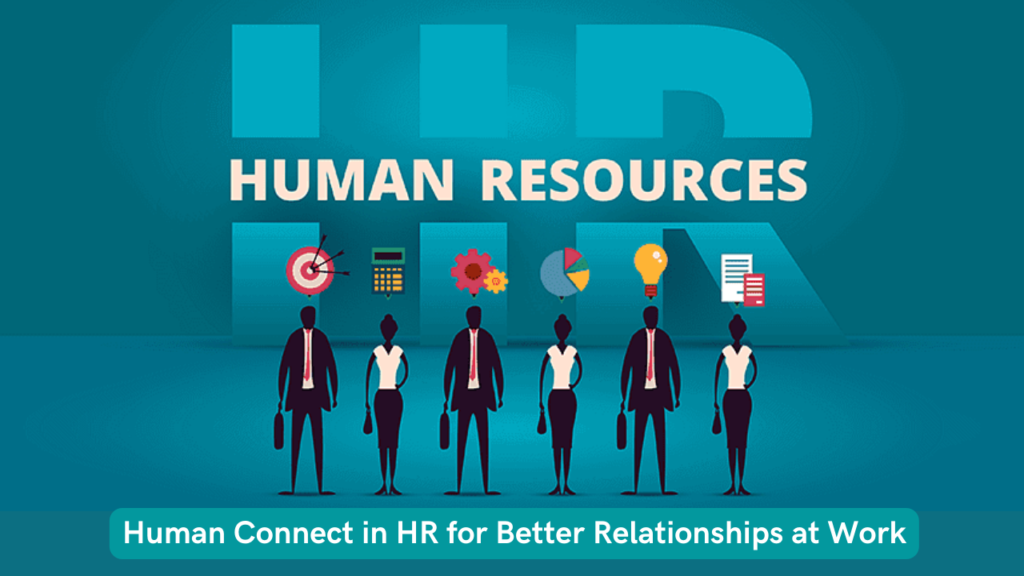
Human Connect in HR for Better Relationships at Work

Human Connect in HR for Better Relationships at Work Overview Jane was sitting in the window side of the train, about to leave her hometown railway station. Her eyes welled with tears. She came to her hometown to meet uncle Rex who was ailing. Uncle Rex was a loyal Accountant in their family business, and her father wanted to meet and spend some time with him and hand over some money for his treatment. Jane saw the station through the rustic grills of the train, the same old newspaper stands waiting for the customers, and the occasional breeze bringing the stinking smell of dry fish. Not much has changed in the railway station. But the people have changed. When she left her hometown 20 years ago, her gang of friends, her cousins, and relatives all came to send her off. Now everyone is busy in their world. And where are the relationships going?  Jane knows she will be back in her busy world tomorrow. She doesn’t know what is going to explode in her office. As she was thinking about her office, her mobile was beeping with a new email, and she felt something was wrong. She clicked open the mail. Jane was a Project Manager with an MNC, one of the top paymasters, and nothing was lacking regarding employee benefits. They are also known for not being pushy to get work done.  Jane’s organization was known for its employee-friendly policies. In the last two years, they automated everything from onboarding to orientation to lure millennials into the workforce. The self-service portals ensure minimum interaction, and one need not have to go behind the HR or Managers to fulfill their requirements. It ensured that employees had more time to focus on work and significantly reduced their dependency on peers and managers for mundane things.  Of late, the attrition has been massive, and not only Jane, but many managers have been struggling to keep up the productivity. Jane decided to meet her friend, Cathy, an HR practitioner. During the conversation with Cathy, Jane realized the following points. Place human relationships at the center of the workplace By making human relations the focus of your organization’s management approach, you can successfully create a culture where your employees can thrive. Human relations are vital for developing and maintaining a positive work environment, retaining employees, and boosting productivity. Relationships between employees and management are important values in any workplace. Human relations include: Training employees. Addressing their needs. Promoting a workplace culture. Solving conflicts between different employees or between employees and management. In a workplace, 93% of information is conveyed through non-verbal expressions. My first tip is rearranging your office space to facilitate and encourage more face-to-face interaction. Don’t make them work in silos. Plan events for them and invite your remote employees, too.  Employee Collaboration Workplace human relations constitute a significant part of a business’s work. Employees must work together on projects, communicate ideas, and offer motivation to get things done. Without a smooth and inviting workplace culture, it will be challenging to manage employees. Businesses with pleasing workplaces and well-trained staff are more likely to maintain and attract qualified employees, nurture customer loyalty, and more quickly adapt to meet the needs of a changing marketplace. Employee Retention The eminence of workplace relations is critical to retaining your employees. In a high turnover organization, employee retention may seem insignificant, but managers should remember that turnover is costly. Every new joiner requires considerable time and energy in their recruitment and training. Besides, managing old employees can be challenging, mainly if they are not engaged. Ensuring quality employees are interested in and engaged in the business requires patience, compassion, and flexibility. However, such activities can make the business more financially sound. Motivation and Productivity Workplace relationships offer a source of employee motivation critical to sustaining productivity. Employees who are interested in their work and the well-being of other employees are more productive than those who are not. The productivity results are obvious financial dividends to the company, as it can get more done in less time with fewer costs. Building relationships by recognizing an employee’s value to the company and a concern for their needs often goes a long way. Nurturing Employee Creativity To sustain in the modern business environment, quick product development is key as one needs to meet the ever-evolving consumer needs. In some industries like technology, for example – employees’ ability to develop practical and innovative ideas is often the differentiator between the entire company’s success and failure. Employees’ creativity often depends on their ability to communicate with other employees and share ideas. Without quality workplace relationships, employees are less likely to be able to develop and share the solutions that a business needs to survive. Most organizations make the mistake of scheduling events around work. But for employees to come together, you need to weave them around their shared interests. Shared commonalities can bring in relatedness and employee bonding. Recognize Efforts  Don’t be frugal when it comes to recognizing their efforts. It’s similar to micro-recognition- acknowledges success frequently, even if small. When it comes from peers and management, employees value it much more than the extensive top-down recognitions.  Power of Co-Creation It would work best if you use the power of co-creation. People love to create. Use co-creation as a powerful tool to build relationships. Include your employees in the decision-making process. Listen to them, take their inputs, and value their share information.  Use Technology to Improve Relationships A major tip is to use technology to improve relationships. Never try to drive performance at the expense of relationships. It will only give negative results and eat into performance. The change must start with the leaders. They should create a culture of engagement and human relationships, so employees feel comfortable joining them. To win over the workforce, relationships at work should move to the forefront for organizations to succeed in this highly competitive and fast-paced world. Organizations need to free up employee time and empower and recognize their

know how to screen out Sexual Harassers in the hiring process
Others

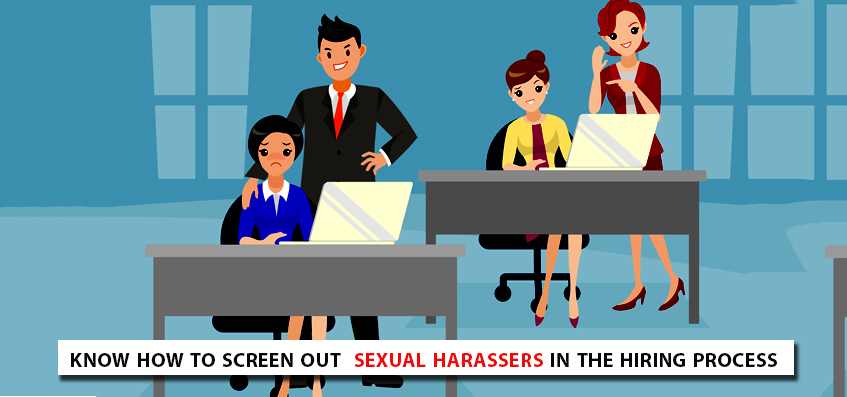
Know how to screen out Sexual Harassers in the Hiring Process

Know how to screen out Sexual Harassers in the Hiring Process Overview Business organizations with negligent or outdated hiring processes are likely exposed to the risk of disrupting their company’s reputation with issues like sexual harassment incidents. Even one incident has the potential to make irreversible damages to both the company and the victim. Hence, recruiters must do everything possible to screen out the candidates in the hiring process itself with the notion to ensure a safe workplace. Unfortunately, most of the companies lack a specific approach to identify toxic minded candidates with the usual screening procedures. Here, I’m introducing the approaches that best proved to be effective in assessing the candidates’ toxic mentality. Following are the best approaches to screen out sexual harassers during a hiring process, Employee Referrals: This procedure should be incorporated in all the organization’s recruitment processes to avoid hiring toxic candidates. This method is proven to be the greatest contributor in the decision-making process as the candidates’ ex-employer or manager gives attestation to their performance and character. Also, the companies can hold candidates liable for the quality of referral to avoid junk or fabricated reviews. Criminal Background Checks: This should be the must-have procedure in all the organizations to hire any resources. Be it a person who is in an organizations’ key role or the security and house-keeping manpower, Criminal background check should be a mandatory procedure in the recruitment process. Drug Abuse Check: Prospective employees should be verified for drugs or alcohol abuse prior to being hired. This measure ensures both the safety and reputation of the company as well as the other employees in the work station. Employers should consider Drug abuse tests to be part of the hiring process to avoid any unforeseen incidents from employees. Hiring process gets even more scrutinized and systematic when every candidate passes pre-employment drug and alcohol abuse verification. Continue the assessment even after hiring: Every candidate will be on their best behavior at the time of the interview but the true colors come to the light only after days pass by. Most of the organizations give the least priority to the check on candidates’ behavior with the co-workers after the hiring process. And most of the issues come to everyone’s knowledge only after such incidents take place. But, every organization’s objective should be to weed out toxic employees while detecting unusual behavior itself. This is only possible when business forms realize the importance of continued character assessments. It is important to ensure that the test we run is done with the best approach to fulfill the objective of hiring only the best fits. Though the internal Human Resources team can run several tests, it is always recommended to opt for Third-party background verifiers who are particularly specializing in the fields of criminal and psychological screening methodologies. As always said, Prevention is better than cure! You can also refer here to know about The Mistakes in Background Screening that Can Affect a Business

The Mistakes in Background Screening that Can Affect a Business. How? - verifitech
Others

The Mistakes in Background Screening that Can Affect a Business. How?

The Mistakes in Background Screening that Can Affect a Business. How? Overview Alongside the goodie-pack that accompanies a third party employment Verification Company, there comes a puddle that organizations thought of venturing onto. Without doubt, this clears a path for incredulity if whether or not Backgrounds screening merits each penny spent against the outcomes guaranteed. New businesses which are aware of background screening fold have come to recognize its significance and its advantages: helps at making contracting expenses and work of reliable, and hiring genuine and capable employees. At some cases as they are new they may be bound to be forced to bear the errors of their verification accomplice. This has direct impact on their business. So let us show you how it can affect your business and how to overcome this. Lack of verification procedures for Background screening: Background verifications, similar to the game of Chinese whispers, move along between the verification organizations, the HR, and also recruiters bringing about it getting excess which eventually needs consistency. After some extent of time, it is inclined to turn out to be less tireless with an ever-increasing number of Loop less surfacing. This effect sly affects an organization’s business with the liability of emotions on hiring “verified” employees. Solution:  Background screening companies in Chennai, Mumbai and all over India must be institutionalized dependent on what type of verification demand with due persistence and guidelines becoming the dominant focal point against all factors that are being considered. This will help in achieving ideal outcomes that eventually stay away from disparities, segregation, and mistakes. Negligence to Vendors, Contractors, Partners, and Temporary Employees  When employees like suppliers, sales team, and brief contractors approach databases, structures, and various workplaces which when dealt with inappropriately can trigger security issues. This issue will cost the business past what one can imagine as they play a vital role in an association for holding its reputation. Trustworthy data, sensitive records, and passwords can fall into a wrong hands, or to the dishonest employee, who can mishandle it against an association and imprint its credibility Solution:                 If the verification is made mandatory for every employees even the existing one, then the company can gain trustworthy employees which they are looking for, brief and outcast laborers move past the screening method leaving a colossal hole of frailty. A company that tied up with any Background Verification Companies in India must ensure that they should never neglect to address even small things, if they lagged at any point then the result will be disastrous. Verification should be equal for all Positions:  From the enlisting procedure to the whole process, Background screening should be directed for all Job positions. Employees hired should be confirmed much in the wake even they are selected and at ordinary interims for consistency, because to update records of any difference in address, educational qualifications, etc. This will keep away from any legitimate concerns. Solution The verification organizations must play it safe to abstain from intersection any close to individual disruption, they should likewise be certain not to step on any secret private data of current employees.                          So hire a verification organization who is smarter in managing the Outcomes and cost, time and effort at the same time but at the end producing suitable employees for the position your company looking for which is the ultimate priority. Tags: Background companies in India

Scroll to Top
Consent Management Platform by Real Cookie Banner