VERIFITECH – Background Verification Company

Global Redirect Menu

Employee Background verification

Case Studies

GST Scams and Fake Vendors: What Every Business Should Know

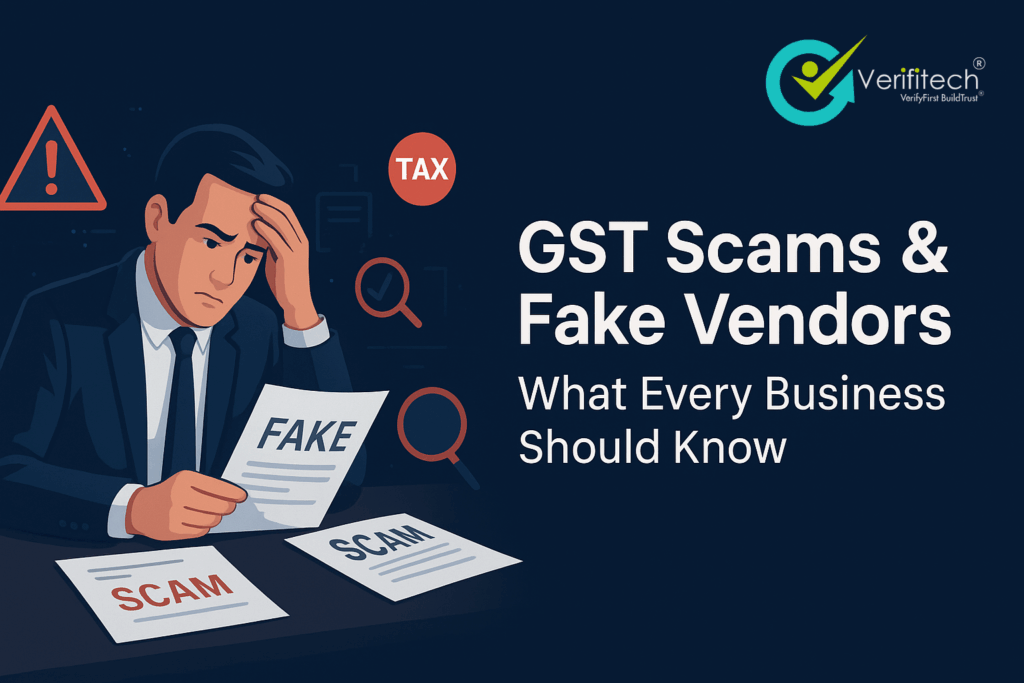
In India, over ₹19,690 crore of fake input tax-credit (ITC) claims were detected by the Directorate General of GST Intelligence (DGGI) in FY 2023-24 (till January alone), a surge of nearly 49% over the previous year’s ₹13,175 crore. Behind that colossal figure are hundreds of “vendors” that exist only on paper issuing invoices for no goods, no services, yet helping real buyers claim fake credits. For companies like yours and ours at Verifitech this poses a critical risk. Because when you engage a vendor who turns out to be a shell, you don’t just lose money you lose trust, face compliance scrutiny, and potentially trigger liability you never anticipated. How the Scam    Works: Let’s walk through the typical fraud chain 1: Fraudsters create a shell company that has a fake address, a bogus PAN/Aadhaar with no real operations. 2: They register under GST, get a GSTIN, and start issuing invoices showing sales of goods or services to buyers. 3: The buyer claims Input Tax Credit based on those invoices, although no genuine  supply took place. 4: Whereby, the shell disappears, or is cancelled, thus leaving the buyer exposed when the tax authorities audit. 5:The government loses out, legitimate business suffers, and confidence in the system wears down. It is a business and compliance issue, not just purely a tax one. If you purchase from a vendor who is black-listed, you may find your ITC reversed or your registration suspended, and face inquiries despite having acted in good faith. Real-World Case: When a Trusted Vendor Was a Phantom Following is a recent example to show just how subtle these schemes can get: In July 2025, the DGGI Bengaluru Zonal Unit busted a fake invoicing racket involving six shell companies. These firms had no actual business activity but generated ₹266 crore in fake invoices and enabled illegal ITC claims of around ₹48 crore. Imagine you’re a mid-sized manufacturing business: you onboard one of those vendors because they seem legitimate on paper, you take their invoices and claim the ITC — only to discover months later that the vendor was non-existent. The knock-on effect: your ITC gets reversed, the tax authorities issue notices, your working capital is tied up, and your reputation suffers. Another case: In Madhya Pradesh, criminal investigations uncovered a scam worth ₹512 crore with fake invoices and ITC of ₹130 crore, operated via over 23 shell companies and more than 150 bank accounts. These aren’t outliers. They show the lengths to which fraudsters will go, and how the victims are often legitimate businesses that simply didn’t verify their vendor adequately. The True Cost of Negligence Being taken in by a shady vendor does not just mean losing a bit of money; it might shake your business from the ground up. 1: Your tax credits can disappear: If the vendor has not filed his or her GST returns appropriately, the tax credit claimed will be invalidated. 2: You could still be fined: Even when you are completely unaware that the vendor was fake, the liability usually falls on you. 3:You might attract unwanted checks: Whenever something doesn’t look right, the tax department opens an audit or even holds up your GST number. 4:Your reputation is compromised: If your name happens to appear in association with a fake invoice, then it becomes difficult to win back clients’, auditors’, or investors’ trust. It takes only one bad partnership to often undo years of great effort-not because you broke the law, but because you didn’t see the red flags in time. In short, a fake vendor doesn’t just cheat the system, they quietly damage every business that touches their invoice trail. How Verification Protects You Verification isn’t just paperwork, it’s your early warning system. a): When done right, it helps you identify inconsistencies such as vendors with unmatched GST returns or non-filers. b:) Confirm business legitimacy by checking address, ownership, and activity before collaboration. c:) Avoid shared liability     ensuring your ITC claims are clean and traceable. d:) Establish trustworthy partnerships because a due diligence process drives honest trust in the supply chain. Think of it this way:  A five-minute verification step can save months of legal headaches and financial   uncertainty later.  The Larger Picture  The Centre has introduced AI-driven checks, e-invoicing, and analytics to track fraud,   but most of these measures react after the scam is committed.That’s why every   company, big or small, needs to create a culture of verification, rather than just   compliance. When every organization takes responsibility in vetting who they work with, the space  for fraud is reduced naturally. Invoices may be convincing, but no fraud stands the test of scrutiny. Before you trust a vendor, stop and check. Because in today’s business world, trust is not immediate-it’s earned through verification. References: Indianexpress.com/articles

Balancing Innovation and Integrity in Justice
Case Studies, Others

 AI in Judiciary: Why Courts Are Being ‘Cautious’ 

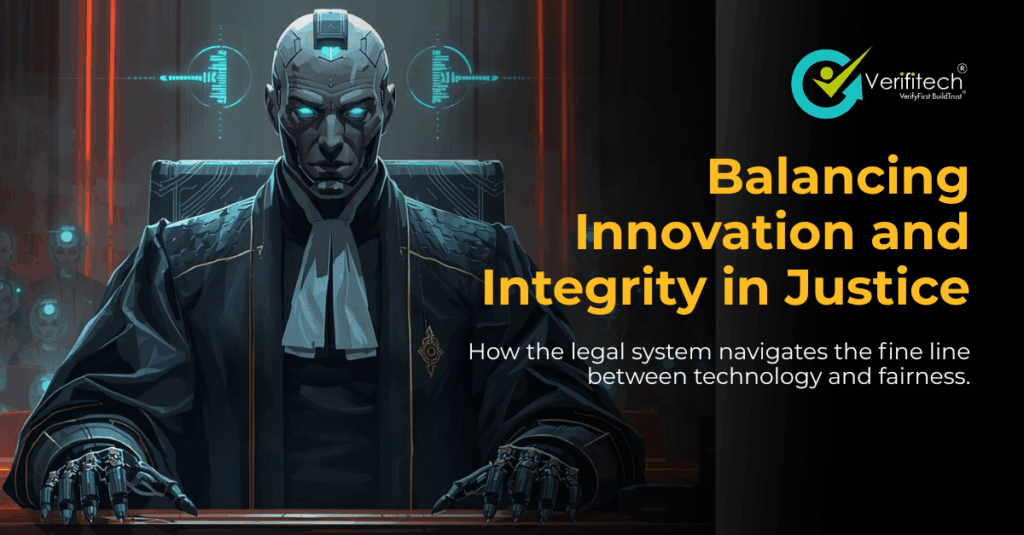
 AI in Judiciary: Why Courts Are Being ‘Cautious’  Can AI Write a Court Order?  What Bengaluru’s Strange Case Teaches Us About Responsible TechnologyWhen Machines Obey, But Humans Forget to Lead. A few months ago, the idea of AI drafting a court order would have sounded absurd, something straight out of a sci-fi movie. But in Bengaluru, that’s exactly what happened. The Income Tax Appellate Tribunal (ITAT) discovered that an order had been written using artificial intelligence. When the case reached the Karnataka High Court, judges called it “an extraordinary instance.” Not because the machine went rogue but because humans allowed it to happen.The question isn’t “Can AI write a court order?” It’s “Why did someone let it?”  When Convenience Replaces Caution  AI was built to assist human judgment, not replace it. But somewhere in our pursuit of convenience, we began to forget where assistance ends and dependence begins. In this Bengaluru case, it wasn’t the machine making a choice. It was a person deciding that a task meant for a judge could be handled by a tool. Maybe it was an innocent shortcut. Maybe it was negligence. But it revealed something big and deep. How easily we allow convenience to take the place of caution. The problem isn’t with AI. It’s that people who misuse power without responsibility.And Mistakes become ethical catastrophes when technology is used as a way to avoid human accountability.  A Case that reflects everyday choices  Imagine a taxpayer who has been anxiously awaiting a decision that could affect their future for months.When it does come, the language is clear and the logic remains sound but something feels odd. It wasn’t written by a person. It was written by a program. No empathy. No context. No understanding of what that decision truly meant. That isn’t an AI failure.It’s a human one. And this pattern extends far beyond the courtroom. From hiring to compliance, from finance to verification — AI now quietly shapes decisions that touch real lives. Every report and algorithm has a person at its core, whose future could be altered by a single click. A biassed dataset, a single incorrect input, or a moment of human error can wrongfully harm someone’s reputation or turn down them an opportunity they deserve. In reality, technology is not biassed.The true risk, however, is in those who create it, train it, or abuse it. People, Not Just Algorithms, Are Needed for Trust AI lacks empathy and transparency, but it can think quickly. As a result, trust comes from responsible humans, not from machines.No matter how sophisticated, a system is only as reliable as its users. That where Background Verifications are essential because they verify that people using sensitive information or powerful tools are not only competent but also ethical, responsible, and reliable. Because technology doesn’t misuse itself. That choice is made by the people. Moreover, the first step to avoid technology misuse is to make sure the right people are in the right roles. The Bengaluru case isn’t a warning against AI. It’s a wake up call for us. Before questioning what machines can do, we must question who is using them and how.  What’s your take?  Should AI misuse be blamed on the tool or the people behind it?

Manfacturing

Preventing Insider Theft in High-Value Retail: Why Background Screening Is Your Strongest Security Shield  

Preventing Insider Theft in High-Value Retail: Why Background Screening Is Your Strongest Security Shield   No retailer wants to say that line. However, the greatest danger in high-value sectors like jewellery, high-end watches, and designer fashion frequently originates internally rather than externally. Industry studies indicate that 30–40% of retail shrinkage globally is caused by insider theft and fraud, with luxury goods and jewellery being particularly vulnerable. One unscreened employee can result in catastrophic losses in a setting where a single piece can be worth lakhs. Because of this, employee screening and background checks are not merely hiring procedures; they are necessary for survival. The Silent Risk Inside High-Value Retail   Hiring in retail usually creates pressure because managers may be forced to make high turnover rates, fast expansions, or holiday rushes. However, in upscale retail, speed without scrutiny can be dangerous. Common risks include: Employee theft – When staff members work with third parties to falsify invoices or returns.. Fraudulent transactions – When staff members work with third parties to falsify invoices or returns. Information leaks – Giving criminal networks access to customer lists, stock data, or security information. Reputational damage – Years’ worth of customer trust can be undermined by a single incident. Even the most secure store may be vulnerable if comprehensive pre-employment and retail background checks are not conducted. A True-to-Life Scenario: When Trust Turns Costly   Ravi, who owned a jewellery store in Chennai, took great satisfaction in operating a moral business. He employed more to control the crowds during the festival and holiday season. One of the new hires appeared to be a diligent and courteous individual—a perfect fit. However, Ravi discovered anomalies in the stock within a few weeks. Tiny bits disappeared. He attributed the disappearance of a whole diamond necklace to accounting errors. The CCTV footage showed that the new employee had been passing items to an outside accomplice while gradually pocketing them. The aftermath? Financial loss running into lakhs. A police case that scared loyal customers. a crisis in team morale. A decades-long reputation was ruined in a matter of days. What was most painful? A basic employee background check would have revealed that the individual had a history of fraud in a different city. Why Employee Screening Is Essential in Jewellery and Luxury Retail   In high-value retail, cameras and alarms aren’t enough. People are the first line of security and they must be thoroughly screened. A background check guarantees that the people on your team are actually reliable. Key aspects of fraud detection screening include: Identity verification: Ensures candidates are who they claim to be. Criminal record checks: Detect prior theft, fraud, or misconduct. Employment history verification: Confirms reliability and integrity. Financial background checks: Identifies monetary stress that could lead to unethical decisions. Reference verification: Provides deeper insights from past employers. When businesses invest in risk mitigation services, they don’t just prevent theft—they protect their brand’s credibility and customer trust. Building a Culture of Trust Through Screening   Effective of employee screening is not just about spotting the wrong hire; it’s about creating a transparent workplace culture where honesty is valued. When employees know their peers have been screened, accountability and professionalism increase, enhancing their value across the team. Turning Screening Into a Strategic Advantage   Here’s how retailers can strengthen their insider theft prevention strategy: Do the background checks early it possible in the hiring process – before training or access to work in the floor. Customize screening depth based on role sensitivity (for instance, inventory handlers to required indepth checks). Educate the hiring managers on recognising red flags during interviews. Use technology for continuous employee verification and document validation. Establish zero-tolerance policies toward dishonesty or fraud. These measures don’t just reduce theft, it reward a brand’s promise of unity. The Human Impact: More Than Just Loss Prevention   Customers won’t buy products; they buy value of the trust. When they walk into a high-value retail space, they expect more security, ethics, and professionalism. If the employees screening fails to do, not only losses of materials but emotional and reputational damage. Customers remember the brand that let theft happen more than the one that prevented it  A Final Thought for Every Retail Owner   Let an unverified stranger into your vault, why let one behind your counter? Prevention starts before hiring.With robust background verification makes safeguard your assets, your brand, and your peace of mind. Take proactive steps today. Implement thorough retail background checks and build a culture where trust is earned, verified, and protected.

IT - ITES

AI-Powered Identity Verification: The Future of Trust and Security

AI-Powered Identity Verification: The Future of Trust and Security In today’s ever-evolving world, we rely on AI-Powered Identity Verification to stay updated in our industry. Here’s how artificial intelligence can help in revolutionising our industry… Identity verification is a critical process across industries, ensuring trust, security, and compliance. In today’s digital age, traditional methods of identity verification are insufficient. However, companies like us are harnessing the power of artificial intelligence (AI) to revolutionise identity verification, reducing fraud risks, and enhancing user experience. The Need for Advanced Identity Verification: In an increasingly digital world, the need for robust identity verification has become paramount. Traditional methods, such as manual document checks, are time-consuming, prone to errors, and unable to keep up with the speed of digital transactions. This has led to a rise in identity fraud and increased compliance challenges for businesses. We at Verifitech recognized these limitations and set out to transform identity verification processes using AI. Harnessing the Power of AI Our Innovative AI-powered solutions leverage machine learning algorithms to streamline and automate identity verification processes. Through the analysis of vast amounts of data, AI algorithms can quickly and accurately verify identities, reducing the risk of fraudulent activities. By continuously learning from new data patterns, our AI models evolve and adapt, ensuring optimal performance and staying one step ahead of fraudsters. Enhanced Fraud Detection: AI-enabled identity verification solutions offered by Verifitech significantly enhance fraud detection capabilities. By analysing multiple data points, including biometric information, behavioural patterns, and historical records, AI algorithms can detect suspicious activities and flag potential fraudulent attempts. This proactive approach helps businesses mitigate risks, protect their customers’ identities, and maintain a high level of security. Improved User Experience: Traditional identity verification methods often lead to a cumbersome user experience, with lengthy manual processes and document submissions. Verifitech’s AI-powered solutions revolutionise this experience by enabling seamless and frictionless identity verification. By leveraging AI, we extract relevant information from documents, automate data entry, and reduce the need for manual interventions. This results in a streamlined and user-friendly verification process, enhancing customer satisfaction and minimising drop-off rates. Compliance and Regulatory Advantages: Compliance with stringent regulations, such as Know Your Customer (KYC) and Anti-Money Laundering (AML) guidelines, is crucial for businesses. Our AI-driven identity verification solutions not only expedite the process but also ensure compliance with these regulations. By automating data extraction, verifying identities against global watchlists, and maintaining comprehensive audit trails, we help businesses meet regulatory requirements while reducing the burden of manual compliance checks. Our AI-powered solutions have emerged as a game-changer in identity verification. By leveraging AI, we streamline processes, enhance fraud detection, improve user experience, and ensure compliance with regulatory frameworks. In an era of increasing digital transactions and sophisticated fraud attempts, Verifitech’s commitment to innovation is reshaping identity verification, making it faster, more secure, and more user-centric.     Recent Verifitech News From 150 Sq Ft to a Growing Legacy: Our Foundation Day Reflection June 23, 2025 The Hidden Cost of Trust: Why Background Verification is Crucial for Retail Businesses June 16, 2025 ID Please? Why MeitY’s Scrutiny of Identity Verification Startups Signals a New Era for Background Verification Providers June 10, 2025 TECH ADOPTION PICKS UP IN CORPORATE, SO DO JOB FRAUDS May 30, 2025 AI SOLUTIONS FOR BACKGROUND SCREENING WITH PRIVACY & COMPLIANCE April 23, 2025 Why is Background Verification Important in Healthcare? April 16, 2025 Load More Leave comments on this post Please enable JavaScript in your browser to complete this form.First NameLast Name *Email *Comment * Submit

WELCOMING FY 2023 THE 7 MUST-DO ITEMS FOR HR PROFESSIONALS
Others

Welcoming FY 2023: The 7 must-do items for HR professionals.

Welcoming FY 2023: The 7 must-do items for HR professionals. As the finance and account departments were burning the midnight oil, Catherine was wondering what it is all about, especially in the month of March. As one of the new joiners, she was curious to know the same. However, she was surprised to understand that even HR look forward to a brand new financial year and keeps their plans ready. One afternoon, Catherine walked up to her HR Manager and asked why a new financial year is significant to the HR team. Lima, the HR Manager was all smiles and amid her tight schedules, too, she addressed the query. As HR professionals, you play a critical role in building and maintaining a productive and engaged workforce. To do this, it is important to stay up-to-date with the latest HR best practices and emerging trends. In today’s rapidly evolving business landscape, it can be challenging to know where to focus your attention and resources. Here we outline 7 must-do-items for HR in the upcoming financial year. Whether you’re looking to improve employee well-being, implement remote work policies, foster diversity and inclusion, or optimize your recruitment and retention strategies, this post has got you covered. Let’s dive in! The 7 must-do-items for HR Focus on employee wellbeing and mental health: Given the ongoing challenges posed by the pandemic and economic landscape, HR professionals should prioritize employee wellbeing and mental health by offering support and resources such as counseling, flexible work arrangements, and training programs to promote resilience and stress management. Implement remote work policies and technologies: Remote work has become a staple of modern work, and HR professionals should work to develop policies and technologies that facilitate remote work and ensure employee engagement, productivity, and safety in virtual environments. Foster diversity, equity, and inclusion (DEI): HR professionals should prioritize DEI initiatives by developing policies and programs that nurture an inclusive workplace culture and address issues of bias and discrimination. Upskill and reskill employees: The rapid pace of technological change and automation means that HR professionals should prioritize upskilling and reskilling programs to help employees acquire the skills needed for the future of work. Develop agile workforce planning strategies: Because of the volatility and uncertainty of the current economic climate, HR professionals should focus on developing agile workforce planning strategies that can adapt to changing business needs. Leverage data analytics and AI: HR professionals should leverage data analytics and AI to inform decision-making, optimize recruitment and retention strategies, and identify areas for improvement in employee engagement and productivity. Build strong employer branding: HR professionals have to work to build strong employer branding by developing a compelling company culture, communicating transparently with employees, and promoting the organization’s mission and values to attract and retain top talent. There are many HR best practices that can help organizations effectively manage their workforce, attract and retain top talent, and create a positive work environment. Most commonly recognized HR best practices Recruitment and selection: Developing clear job descriptions, identifying the most effective sourcing channels, and establishing a structured selection process are key elements for effective recruitment and selection. Onboarding and orientation: Providing an all-inclusive onboarding and orientation program can help new hires feel welcomed, informed, and productive from day one. Performance management: Establishing clear performance expectations, providing regular feedback and coaching, and conducting regular performance reviews are essential components of effective performance management. Compensation and benefits: Offering competitive compensation and benefits packages can help attract and retain top talent while supporting employee engagement and satisfaction. Training and development: Offering opportunities for employee training and development can improve skills, enhance performance, and support career progression. Diversity, equity, and inclusion (DEI): Fostering an inclusive workplace culture and prioritizing diversity, equity, and inclusion initiatives can help build a more engaged, innovative, and effective workforce. Employee engagement: Prioritizing employee engagement through regular communication, feedback, recognition, and wellness programs can help build a positive work environment and foster employee motivation, loyalty, and productivity. Compliance: Ensuring compliance with legal requirements and regulations related to employment, health and safety, and privacy is essential for mitigating legal and reputational risks. Overall, HR best practices are designed to create a workplace that is fair, transparent, and supportive of employee development and success. By implementing these best practices, organizations can improve their HR processes and support the growth and success of their workforce. HR in the era of ChatGPT In 2023, it’s not possible to discuss HR without the mention of ChatGPT and many other AI tools that are going to storm the market. As an AI language model, ChatGPT is not a substitute for human resources professionals, but it can be a valuable tool for supporting HR processes and enhancing the employee experience. Here are some ways that HR professionals can leverage chatbots like ChatGPT to support their work: Recruitment and onboarding: Chatbots are a valuable tool to streamline the recruitment and onboarding process by handling initial screening, scheduling interviews, and answering common questions about the organization and the role. Employee engagement: Chatbots can be used to facilitate communication with employees, answering questions about company policies, benefits, and other HR-related topics. They can also provide real-time feedback and support to employees, improving their overall experience and satisfaction.   Performance management: With chatbots it is easy to facilitate regular check-ins and feedback sessions between employees and their managers, making the performance management process more efficient and effective. Training and development: Chatbots can add a lot of value in delivering training content and providing employees with on-demand support and resources to enhance their skills and knowledge. Benefits management: Chatbots are effective in helping employees understand their benefits packages and make informed decisions about their coverage, improving their overall health and well-being. Data analytics: One of the major benefits of Chatbots is data analysis. It can be used to analyze employee data and identify trends and patterns, helping HR professionals make more informed decisions about workforce planning, recruitment, and retention. Overall, chatbots like ChatGPT can be a valuable tool for HR

Ways to Express Appreciation for Employee Engagement
Others

Ways to Express Appreciation for Employee Engagement

Ways to Express Appreciation for Employee Engagement Who doesn’t love appreciation? Everyone has the desire to be appreciated, praised, and recognized. People want appreciation for their efforts in the workplace too. Organizations that focus on employee appreciation are able to achieve improved employee engagement. When Jane reached her seat, she saw a box of her favorite doughnuts. There was a beautifully written note saying Thank You, mentioning her achievement in the last week. Jane was almost in tears. She had joined the organization just a fortnight ago and had never experienced such recognition in her previous workplace. Her eyes became moist with happiness. Her colleagues hugged her and congratulated her. Studies have shown that employees work harder and stay more loyal if their efforts are recognized. From the annual appreciation certificate, the workplace has come a long way; accordingly, employee recognition programs are also seeing a shift.  Employee recognition has a positive effect not only on the employees but also on the entire organization.  Let’s see the different types and ways organizations can show their appreciation towards employees for better employee engagement. Types of Employee Recognition for Better Employee Engagement  There are many ways to recognize and show gratitude towards employees. There are three key recognition types, and they serve different purposes. Micro recognition Micro recognition is also known as day-to-day recognition. It is an ongoing and frequent recognition. Showing appreciation notes, giving cards, publishing on bulletin boards, or recognizing employees quickly and easily can be considered micro recognition. The biggest advantage of micro recognition is that you don’t require any major resources or time. It is a way to reinstate organizational values regularly and make employees valued consistently.   Informal recognition Remember when you went for a Pizza party or a happy hour outing? Organizations often recognize them informally when individuals or teams reach goals or complete projects. It can be a pizza party, potluck, a trip to a pub, or even an outing. Sometimes small gifts are also included in it. Informal recognition doesn’t occur daily but is not structured as formal recognition. Formal recognition Formal recognition is more organized. Sometimes it’s for the length of the service, or in certain cases, nomination and selection processes are involved. There will be a special ceremony to celebrate the same. However, formal recognition programs are not done frequently and need a lot of planning and a big budget. It doesn’t matter what type of recognition you’re planning for the employees/teams. Ensure that it is meaningful for your employees. Surprise them with treats or eats Who doesn’t like a pleasant surprise amid tight budgets and strict deadlines? Give them some donuts or chilled drinks on a hot day. Allow them to take a short break, enjoy the treat, and return to work. If your treat is blended with a little humor, nothing can match that. They will enjoy such fun treats during busy days or stressful times.   Have an employee wall of fame A Picture Paints a Thousand Words. You can achieve results that a long letter of appreciation cannot achieve with a photo. A wall of fame is a great way to highlight the achievements of both individuals and teams. It’s a distinct method to put your organization’s culture on a show for everyone to see. You can click candid pictures while they are at work and use them to put them on the wall of fame. You can also highlight team wins with photos of the team once they complete projects, achieve sales targets, or win new projects. Leverage social media Use your company’s social media profiles like Facebook, Twitter, or LinkedIn to appreciate your employees. When you recognize your star employees on social media, you showcase your company’s culture and values for everyone to see. Recognizing employees on social media is a major manner to share how proud the company is of its employees. When sharing the success of your employee, make sure to give a small bio with their role, achievement, and how it benefitted the organization. You can be sure that the recognized employees will share the social recognition posts with their followers. Isn’t this a simple way of creating brand ambassadors for your organization? Plan an off-site  A little change of place is sure to boost productivity. You can plan the off-site at a café, a resort, or any location that suits the team. However, it would be best to let them know what they are being recognized or appreciated for. It will ensure to give them a clear focus. There are no hard and fast rules when it comes to off-site. You can also celebrate the halfway of a project with an off-site. Give rotation trophy  Giving a trophy you can pass around the office is a great way to boost employee engagement. You can give it to an employee to demonstrate your organizational values. Allow them to keep it on their desk for a week. Create a note with the trophy mentioning what organizational value the employee showed to earn it. Announce it to your peers. In the next team meeting or the following month, the employee can hand it off to the next employee who deserves it. This is a great way to build employee engagement and a culture of recognition. Employee recognition tees Design various T-shirt designs for different awards and encourage them to wear them each Friday. Either create a T-shirt for each company value and give the team or have the teammates sign a company tee with thank you messages. Cheers for peers  Peer recognition is a sincere expression of praise and appreciation between co-workers. It is based on the concept of employees celebrating each other. Peer-to-peer recognition involves everyone in the organization stepping up and sharing praise. In this program, there is no excessive stress on managers and executives to be the only ones providing praise and recognition. The entire organization can work together to improve team morale and appreciation. Making peer-to-peer recognition a part of your recognition strategy helps

Others

How HR Can Mitigate The Challenges In Remote Hiring

How HR Can Mitigate The Challenges In Remote Hiring Even though the pandemic has eased in most places, remote work will stay. A good number of employees are tuned into working from home/remote work, and organizations, too, are okay with it. While organizations have more or less managed to keep productivity even with remote work, HR is one area that continues to face challenges. While HR managers see a good opportunity with remote work, they agree that remote hiring throws up challenges, and it’s not easy as one thinks. Let’s see what the major challenges HR faces in remote hiring are. A large pool of applicants Remote working offers a chance for every candidate to apply for their dream company. Since there are no compulsions regarding proximity to the workplace, people from different geographical locations can apply for vacancies. While it offers diversity and better talent, HR has to sift through many applications. HR managers must go through thousands of resumes before shortlisting candidates, which is a tedious process. Studies show that remote workers have increased by 160%. To manage the burgeoning number of applications, HR needs to be crystal clear about their expectations. They should create well-written and detailed job descriptions to avoid applications that lack the required qualifications and experience. They can take aid from tech as AI-based application tracking systems helps optimize the remote hiring process. Differences in time zones Remote hiring helps in tapping into a global talent pool. HR managers can now select prospective candidates from far-off places. But the geographical autonomy can be difficult to manage when scheduling interviews and conducting real-time assessments. However, here, HRs can take the help of automatic scheduling tools that help the candidates to choose a time that suits them best and for the company. Using such tools, HR managers can address the productivity gap due to time zone differences. Technical difficulties Sometimes, even after thorough preparation, too, technology can fail you. Software problems, poor internet connection, and inconsistent video or audio quality can hamper the interview process. When such technical issues happen, there is a high chance that the candidate may misunderstand the question or give an incorrect answer. Sometimes the noise from other sources can distract and disturb you. Such issues can influence your judgment of the interview process. It’s better to create a backup plan if your web conferencing technology fails you. You can also reschedule the interviews and work on correcting the glitch. Evaluation of skillsets  HR managers must choose candidates with enough job-specific skills and relevant experience. To ensure the same, whatever the position be, HR Managers conduct a comprehensive evaluation of the skillset. However, skill assessments and evaluations are quite challenging in a remote setting. To minimize the struggle, HRs should take help from the organization. They can create dedicated tests and skill assessments to screen the candidates effectively. Difficulties in onboarding A work-from-office model allows new joiners to interact with the employees in real-time, and it becomes easy for them, as well as the HRs, to align them to the company’s culture and vision. In remote hiring, onboarding is a bit tough. In the initial days, new employees may feel overwhelmed and find it tough to get the hang of things and create a peer group. These can lead to productivity loss, and HR must take measures to tackle it. HR managers will have to put extra effort into creating a smooth onboarding process and should take care to enhance the learning curve. Introductory sessions, orientation programs, and impromptu sessions should be organized, so the new jokiness understands the company and the workflow in a stress-free manner. Contracts In remote work, legal contracts are critical. Though hiring managers might feel it is tedious work, they must understand the labor laws of different countries, so there is no compliance violation. Having a standard template and hiring law and compliance experts can fine–tune and speed up the process. Payment of salaries Proper salary disbursement is vital for employee retention and satisfaction. But, transferring salaries to remote employees is a challenging task. It can be complicated due to offshore issues. Tax laws, international money transfers, and calculations and invoicing can create issues. One way to manage the above is to have payroll solutions. Remote payroll and compliance providers can help solve the challenges and ease the HR team’s pain areas. Conclusion  Although remote hiring throws up its share of challenges, it’s worth the trouble. Remote companies can tackle the challenges with the right remote hiring strategy. While AI-powered application tracking systems can speed up the screening process, automatic meeting schedulers can reduce interview time zone differences. Test projects and customized skill assessments would take care of the evaluation process. Strategically planned introductory sessions can offer a smooth onboarding process. Having standardized templates reduce contractual misinterpretations, whereas remote payroll service providers can ensure punctuality and accuracy in salary disbursement. With the right tools, planning, preparedness, and backup, the hiring team can complete the hiring process with minimal or no stress.   Recent Verifitech News From 150 Sq Ft to a Growing Legacy: Our Foundation Day Reflection June 23, 2025 The Hidden Cost of Trust: Why Background Verification is Crucial for Retail Businesses June 16, 2025 ID Please? Why MeitY’s Scrutiny of Identity Verification Startups Signals a New Era for Background Verification Providers June 10, 2025 TECH ADOPTION PICKS UP IN CORPORATE, SO DO JOB FRAUDS May 30, 2025 AI SOLUTIONS FOR BACKGROUND SCREENING WITH PRIVACY & COMPLIANCE April 23, 2025 Why is Background Verification Important in Healthcare? April 16, 2025 Load More Leave comments on this post Please enable JavaScript in your browser to complete this form.First NameLast Name *Email *Comment * Submit

News Events

Leadership And Management Lessons From The FIFA World Cup 2022

Leadership And Management Lessons From The FIFA World Cup 2022 With the spectacular win of the Argentina team in the FIFA 2022 World Cup under the captaincy of Lionel Messi, the management world is trying to decipher the great leadership lessons the captain has shown on and off the field. The concluding workweek of 2022 was filled with cheer for the team. The team had a relaxed week as the world was busy preparing to welcome the New Year. On top of that, Johnson, Manager of the off-shore team, has arranged for a buffet lunch to celebrate the historic win of Argentina against France in the FIFA 2022 World Cup. But the teams were divided. While many rooted for Ronaldo, others were jubilant as Messi had led the Argentina team to victory. As the arguments were going on, Ravi Ram, an ardent footballer, and Strategy Manager of the team, made an announcement. He said, “The debate of Messi Vs. Ronaldo seems eternal. But I would like to quote Arsene Wenger, FIFA’s Chief of Global Football Development, here. In 2020, he came with an excellent insight into the players and their game. He had said that while the Portuguese is an athletic footballer, the Argentine is a touch artist.”  Ravi continued, “I go with what Arsene Wenger said. He often says that Cristiano Ronaldo is an athlete-footballer, and Lionel Messi, is an exceptional artist. This is the difference between the two. Everyone prefers one or the other. When we like the game, we prefer the artist. The creative makes you discover things you do not see or have not even considered from the stands.” The entire team broke into thunderous applause. Ravi added, “If you can spare a few minutes, I would like to share some of the valuable lessons the 2022 FIFA World Cup has taught us.” Everyone cheered Ravi and asked him to continue. Leadership Lessons the Corporate World Can Learn from Football On December 18, Lionel Messi created history by leading Argentina to a World Cup victory. Argentina encountered France in the finals and won the final soccer match by 2 goals. Messi recreated the late Diego Maradona’s magic when Argentina won the World Cup in 1986. Messi displayed a thrilling set of skills and helped the team create history. Besides, like a true leader, Messi carried the goods by being unassuming and unfazed by the initial failure. He understood the true value of a team game and displayed it. Throughout the tourney, Messi notched seven goals and assisted the team on three others. Most outstandingly, when the stakes were high, he achieved his best. Messi scored one goal and assisted a wonderful goal that changed the game against Croatia in the semi-finals. In the finals, the soccer star scored two goals and had the opening goal in the shootout. Learn from failures  Argentina’s loss to a relatively small team in their first match in Qatar did not deter their spirits. The team, headlined by Messi, returned to defeat stronger teams in the latter matches. This is one of the major lessons for every company. Take failure to learn. Every failure discloses your strength and weakness. It would be best if you took it to galvanize your confidence to thrive in your ensuing efforts. Teamwork pays The Argentina-Netherlands quarterfinal had a nail-biting finish in the last 10 minutes. Argentina’s goalkeeper Martinez saved two penalties, and Lautaro Martinez scored the winning penalty. While all the players ran to congratulate Lautaro, Messi, the captain, rushed to celebrate it with the goalkeeper. That moment was one of the best leadership lessons. Messi recognized the hidden team member. Instead of creating heroes in a team, as a captain, Messi focused on collective ownership in win and loss. Achieving under pressure It is said that when the pressure is high, great leaders deliver big. Managers can take this lesson from Messi. He showcased his ability to execute and shine under pressure. Focus on the common goal Football is all about showcasing the team’s abilities. Playing football at the world level and winning requires a combination of effort, skill, and talent. The game is not about individual performance. Players should align themselves to the common goal and coordinate their efforts. When individual players forego their personal goals and play towards realizing the common goals, victory follows. HR managers would agree that the employees’ personal goals need to be aligned with the common organizational goals. Just like how Messi directed his team’s efforts, it is vital for the company’s leadership to channel their employees’ efforts towards a common purpose. Without this, organizations won’t be able to achieve success. Messi displayed his focus and determination right from the start of the World Cup. Despite the defeats in the initial matches, his team never lost momentum. As the captain, the credit goes to Messi, who steered the team from the front when the situation was difficult. Performing at the peak level in high-pressure situations takes work. But Messi displayed that perfect leadership skills can achieve the same in a better manner. Execution is key When performing under pressure to achieve big, one must trust the preparation and execute it. They should not get bogged down by thinking about the consequences. Argentina, headlined by Messi, meticulously executed everything. Facing the likes of Kylian Mbappe, who scored four goals in the finals, was not easy. Led by Messi, the Argentina team battled it out and won the game. Fight to reach your dream Messi did not rest on his past laurels. Just like how a leader should not rest on past glory but should perform at the moment, Messi, too, considered every game a new one. He did not get distracted by the hype or media. With single-minded focus and determination, he helped his team lift the FIFA World Cup. Earlier, Messi had said, “You have to fight to reach your dream. You have to sacrifice and work hard for it.” No organization can attain glory without the hard work

Others

Top HR Skills That Will Be In High Demand In The Future

Top HR Skills That Will Be In High Demand In The Future However, The role of HR managers has undergone a dramatic transition in line with economic and technical advancements. Today, HR professionals are at the intersection, helping the stars and strugglers. As machines are taking over the tasks done by humans, HR managers are now playing the role of championship coaches. They are poised to play bigger roles, supporting and guiding employees in their career journey. However, to equip themselves for that, they need to work more on business analytics and strategy. Today, technology has made it possible for HR to be free from mundane tasks. It enables them to take more challenging roles, which are exciting, demanding, and competitive. To position themselves as advisors, HR managers need to reposition themselves as strategic partners. Future skills for HR teams The world is rapidly shifting with digital transformation. Industries and domains are not immune to digital shifts. New trends have started in human resources, and artificial intelligence, machine learning, people analytics, VR training, and upskilling have become the norm. People analytics HR teams are sitting on a pile of data. They are data-rich but need better insight. Knowingly or unknowingly, HR has been gathering data like recruitment data, training data, career growth, absenteeism figures, productivity data, performance reviews, and staff satisfaction data, and the list is quite long. Besides the traditional HR data sets, companies can now gather much more data – social media data, emails, etc. to understand employee sentiment. HR data is extremely valuable and is one of the greatest assets for HR teams. When organizations use HR data to take better decisions, create better workplaces and optimize processes, it can add immense value to the organization. In the past, most HR data went unused except in the corporate presentation. However, with big data and analytics, companies use their data to develop insights. It helps them to forecast when employees will leave, where to recruit suitable candidates, how to identify and attract the most suitable candidates, and how to keep them happy once they join the organization. Hence, people analytics, also called HR analytics, is one of the crucial skills for most establishments. People analytics is a data-driven method of human resource management. It includes analysing and reporting HR data to measure the effect of HR metrics on business performance. People analytics is an indispensable skill for HR professionals that help them judiciously identify, train, and retain exceptional talent. Besides, it offers them insights based on which actions can be taken and which, in turn, will fuel business growth. For informed decision-making, people analytics enable HRs to rely on data. Soft skills Soft skills are critical for all professionals, and HR is no exception. Communication, persuasion, coaching, advising, assurance, flexibility, and organizational skills are priceless for HR teams in today’s working atmosphere. Soft skills can be built using various methods. While reading and public speaking sessions can improve communication skills, classes are available for learning and conflict management. Also, there are various tools that HRs can use to improve their skill sets. Recruitment marketing Recruitment is one of the major functions of an HR professional. In today’s competitive world, identifying the right candidate is extremely challenging. While plenty of talent is available for certain roles, there are a few candidates for some jobs. Hence, today, an HR has to act like a marketing professional. From projecting the brand image to leveraging culture and goodwill, HR has to market its recruitment to bag the best talent from the pool of candidates. Recruiting marketing is a fine blend of strategy and tools. HRs can achieve this by making the most of appropriate forums to promote the brand’s philosophies and values and rolling out engaging packages to attract potential candidates. If you log on to LinkedIn and scan through, you will see how recruitment marketing functions. Traditional recruiting is reactive and starts when a particular hiring need is identified. But recruitment marketing is proactive and pays attention to promoting the company and its brand to lure job seekers, keeping the organization top of mind. Achieve recruitment marketing skills, HR professionals should establish a strong LinkedIn profile and share content from the organization regularly. HR teams can regularly share content from their organization, post industry news and updates, and promote company events. There are many avenues, from engaging with colleagues to sharing their wins and interacting with potential candidates. Interestingly, the best part of the recruitment marketing tactics comes at no cost. Social media, omnichannel promotions, targeted messaging, and professional forums are suitable platforms to send out brand messages, address hiring needs, and develop employee engagement. HR can combine employer marketing and inbound recruiting to acquire target candidates. AI and VR Several human resource management activities, such as recruitment, training, development, and employee onboarding, are ably supported by advanced technologies. Keeping up with the artificial intelligence and VR training trends will help HR keep an edge in the market over its competitors. Many HR functions rely heavily on technology, and that trend will grow further as the modern workplace keeps evolving. Artificial intelligence (AI) and machine learning are the most popular HR management technologies due to their ability to replicate human thinking closely. Familiarising themselves with the different HR technology areas will help HR teams’ future-proof their skills. Conclusion How people work and conduct the business has changed radically since the pandemic outbreak. While HR will continue to be at the centre of business advancement, better HR skills will facilitate improved career experiences. Better HR skills will foster a supportive workplace centered on development, employee engagement, and retention. It will also pave the way for creating an inclusive and inspiring organization. Organizations must help empower HR with modern skills to play a key role in developing future-ready employees. However, HR’s role in assisting business change has fast-tracked, making it an enabler of change for processes in the new normal. With the backing of new technologies, HR professionals can upskill themselves with digital knowledge

Others

What makes vetting talent and background verification important

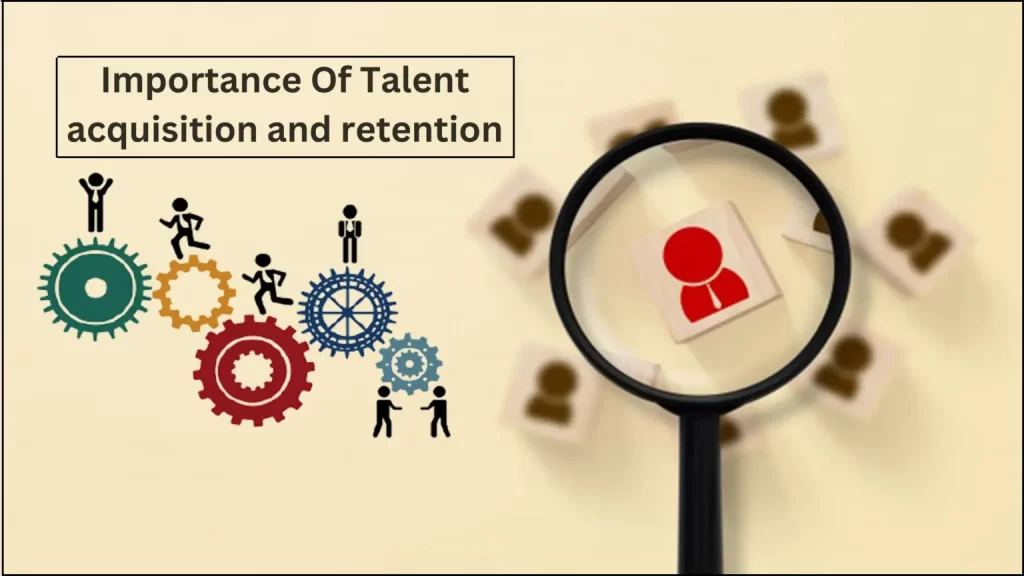
What makes vetting talent and background verification important It was a routine review process in the organization, and Rhea helped the external auditor with the relevant documents. After a detailed security review, the external audit team wanted to talk to the leadership team. This wasn’t usual, and Rhea was concerned. However, she checked the availability of the COO and the CHRO. But what happened at the meeting shocked her. At least a dozen workers had duplicate benefit accounts. This meant they had been moonlighting, and the organization was now accountable to the Provident Fund Office. Rhea was shocked to discover that she knew some of them. But she had not known that they were working for other organizations while employed by her company. Imagine the following situation. As a recruiter, you advertise a job, and after a long process, you hire someone you think is a good fit. The person might have a fantastic CV and a great personality, but they might be hiding a criminal record or not providing work records. Sometimes they also lie on CV and make false statements to stand out from the competition. Without background checking, these problems don’t come to light until it’s too late. You may not realize until a few weeks later that you could have hired them better. Now you’ve to start the process all over again. A solid vetting process helps avoid mistakes. A bad hire can cause several problems for your company, from lost productivity to internal disruption to the existing team. There’s also the financial cost of sourcing and training a replacement. The damage can be immense if the person in question becomes involved in illegal activities while working in your company, which can destroy your reputation with your clients and customers. Although it may seem tedious and time-consuming, it’s worth background verification of your applicants before offering them a job. It’s crucial to ensure that an applicant’s credentials justify them in every way so that you can proceed with the recruitment. Screening potential employees are crucial regardless of their experience or position. Why is the vetting process so important? According to a report in the Economic Times, nearly a quarter of large companies in India conduct background checks on IT employees before hiring them. This is because of increasing virtual interview scams, moonlighting, low productivity, and fake experience certificates of employees. Importance of vetting employees Companies use a vetting process to assess an applicant’s background and qualifications and eliminate unqualified candidates from the applicant pool. This includes background checks, phone checks, and virtual and technical assessments. Improves efficiency  Vetting facilitates effective recruitment and helps HR filter out unsuitable candidates. Often candidates use part of the job description to their advantage. But with a good screening process, you can find the right candidate with the right qualifications and experience. A thorough screening process reduces disruption and is a good investment of time and money. When companies hire the right talent the first time, it significantly reduces costs, as most costs go into finding and training new candidates. The vetting process allows recruiters to refine the interview process and get the different stages right. You can use the information from a vetting process to adjust the interviews to ensure an enriching hiring process. There’s a large pool of talent; therefore, companies are inundated with the challenges of the recruitment process. Due to many applications, it isn’t easy to assess candidates on their skills, reliability, and professionalism. A thorough background checking process helps to avoid wrong decisions. Companies that understand the importance of a precise, detailed vetting process turn to reputable background check agencies such as Verifitech to assist them in the recruitment process. The need for a proper vetting system for potential employees is becoming increasingly clear. Although employers don’t assume that potential applicants will lie about their experience or CVs, it’s important to take precautions. Without proper screening, there’s a good chance that you will hire someone who’s not suitable for the job. If the qualifications are wrong or the applicant doesn’t fit into the team, it will cost time, effort, and money to replace the applicant. With the right questions and references, the mess could have been avoided. Today we know that vetting pays off, saving company’s time, money, and disappointment. Why are talent acquisition and retention so important? Now that you have acquired a great talent who fit your organization’s expectation, the next most critical step is retaining him/her. HR managers know that talent acquisition strategies have a vital impact on employee retention. Recruitment and retention are closely linked, and when employee engagement and retention increase, the need for new hires decreases. Satisfied employees are less likely to leave, and this is something that HR should keep in mind in any recruitment process. Talent acquisition and retention are ongoing strategies focusing on long-term resource planning to choose a suitable candidate for the role. Effective employee retention saves the company from productivity losses. Companies with high retention rates have more engaged employees, who get more work done. Engaged employees are more likely to build excellent customer relationships and form teams to become more productive. If you take a company’s success, employee retention is more important than talent acquisition. HR should look for a balance in recruiting and retaining employees. Retaining an employee is cheaper and more cost effective than hiring new employees. Tags: Employee Background, Employee Background verification, Employment Background Verification Companies, Healthy work environment, Human Resource Management, importance of employee background verification Recent Verifitech News From 150 Sq Ft to a Growing Legacy: Our Foundation Day Reflection June 23, 2025 The Hidden Cost of Trust: Why Background Verification is Crucial for Retail Businesses June 16, 2025 ID Please? Why MeitY’s Scrutiny of Identity Verification Startups Signals a New Era for Background Verification Providers June 10, 2025 TECH ADOPTION PICKS UP IN CORPORATE, SO DO JOB FRAUDS May 30, 2025 AI SOLUTIONS FOR BACKGROUND SCREENING WITH PRIVACY & COMPLIANCE April 23, 2025 Why is Background Verification Important in Healthcare? April 16, 2025 Load More Leave comments on this post Please enable

Scroll to Top
Consent Management Platform by Real Cookie Banner