VERIFITECH – Background Verification Company

Global Redirect Menu

jewellery store security

Others

Smart Ways HR Can Reduce Screening Costs Without Reducing Compliance

Smart Ways HR Can Reduce Screening Costs Without Reducing Compliance:    It’s 6:30 p.m., and you’re still at your desk. The hiring numbers look good—but your budget doesn’t. Background verification expenses are climbing, finance is asking tough questions, and compliance risks keep you up at night. You want faster hiring, safer onboarding, and cost-effective background checks—but without cutting corners. Sound familiar? For many HR leaders, the tension between speed, safety, and spending feels constant. One wrong hire can cost far more than a screening program ever will. Yet overspending on unnecessary checks drains resources that could be invested elsewhere. The real challenge isn’t choosing between cost and compliance. It’s finding smarter ways to balance both. Because when screening costs spiral—or compliance slips—your entire organization feels the impact. For many HR leaders, the tension between speed, safety, and spending feels constant. One wrong hire can cost far more than a screening program ever will. Yet overspending on unnecessary checks drains resources that could be invested elsewhere. The real challenge isn’t choosing between cost and compliance. It’s finding smarter ways to balance both. Because when screening costs spiral or compliance slips —your entire organization feels the impact. Detailed Issue Exploration: Let’s start with a truth most HR professionals quietly acknowledge: background screening costs don’t rise overnight. They creep up. A new role requires an additional check.A vendor adds a premium service.A last-minute compliance requirement forces urgent processing fees. Before you know it, your screening line item has ballooned—without a clear strategy behind it. Why Screening Costs Get Out of Control One of the biggest reasons organizations struggle with screening cost reduction is over-standardization. Many companies apply the same screening package to every employee—interns, executives, contract staff, and remote freelancers alike. It feels safe. It feels consistent.But it isn’t always smart. Not every role carries the same level of risk. Screening a warehouse associate should not cost the same as screening a CFO. Yet many HR teams use blanket policies because they’re easier to manage. Another factor? Reactive compliance. Instead of proactively designing compliance-friendly checks aligned with regulations, some teams add layers of verification after audits or incidents. This “add-on culture” creates complexity and cost. Then there’s vendor fragmentation. Working with multiple background verification providers often leads to duplicate checks, inconsistent pricing, and hidden administrative expenses. Without centralized oversight, HR budget optimization becomes nearly impossible. The Real Cost of Cutting Corners When budgets tighten, the temptation is obvious: reduce checks, choose the cheapest vendor, or eliminate certain screenings. But here’s the problem. A single negligent hire can cost far more than your annual verification budget. Legal penalties. Reputational damage. Productivity loss. Internal disruption. Suddenly, what looked like savings becomes a liability. That’s why the goal isn’t just screening cost reduction. It’s smarter spending. The smartest HR leaders focus on cost-effective background checks that protect the organization while preserving financial health. So how do you actually do that? 1. Implement Role-Based Screening Tiers This is one of the simplest and most powerful strategies. Create screening tiers based on job risk levels: Low-risk roles: Basic identity, address, and criminal verification. Medium-risk roles: Add employment and education verification. High-risk roles: Include financial checks, global database searches, or regulatory screenings. By aligning verification depth with job risk, you immediately control unnecessary expenses while maintaining compliance-friendly checks tailored to the role. This structured approach also strengthens documentation. If regulators ever ask why certain checks were conducted, your policy clearly shows risk-based reasoning. That’s compliance and HR budget optimization working together. 2. Audit Your Current Screening Stack When was the last time you reviewed your screening package? Many organizations continue paying for services they no longer need. Outdated checks. Duplicate reports. Premium turnaround times for non-urgent hires. Conduct a quarterly review: Which checks are legally required? Which are role-specific? Which are “just in case”? Eliminating redundancy doesn’t weaken compliance. It strengthens clarity. And clarity leads to better screening cost reduction decisions. 3. Consolidate Vendors for Efficiency Working with a single reliable screening partner often reduces administrative costs, improves data consistency, and enables negotiated pricing. Bulk hiring? Volume discounts.Seasonal recruitment? Flexible packages. Vendor consolidation is one of the fastest paths to cost-effective background checks without sacrificing quality. More importantly, centralized tracking improves reporting—making compliance-friendly checks easier to document and defend. 4. Automate Where Possible Manual verification processes drain both time and money. Automated workflows reduce back-and-forth communication, accelerate turnaround times, and minimize human error. Faster processing doesn’t just improve candidate experience—it also reduces hidden operational costs. Automation also supports HR budget optimization by giving you data visibility. You can track: Cost per hire Turnaround times Re-screening frequency Vendor performance Data-driven HR teams don’t guess. They adjust strategically. 5. Avoid Over-Screening Through Policy Clarity Sometimes the issue isn’t vendors—it’s unclear internal policy. If hiring managers request additional checks “just to be safe,” costs will spiral. Establish clear approval processes for additional screenings. Define: What’s mandatory What’s optional Who approves exceptions This ensures screening cost reduction happens systematically—not accidentally. 6. Stay Proactive About Regulatory Changes Compliance isn’t static. Regulations evolve. Instead of reacting to penalties or audit findings, assign responsibility for monitoring legal updates related to employment screening. A proactive approach prevents last-minute compliance expenses. When your checks are intentionally designed to be compliance-friendly checks from the start, you avoid costly rework. And that’s where real HR budget optimization happens. 7. Measure ROI—Not Just Cost Here’s a mindset shift: don’t only track what you spend. Track what you prevent. How many hires were flagged due to discrepancies?How many risks were identified before onboarding? When you connect screening outcomes to business protection, cost-effective background checks become an investment—not an expense. This perspective changes internal conversations. Instead of defending spending, you demonstrate value. Building a Sustainable Strategy Smart HR leaders understand something crucial: screening cost reduction is not about reducing safety. It’s about reducing inefficiency. It’s about asking: Are we screening smartly? Are we aligning checks with risk? Are we leveraging data? Are we negotiating strategically? When your screening program is intentional, structured,

Case Studies

How a Startup Achieved 100% Onboarding Accuracy on a Limited Budget

How a Startup Achieved 100% Onboarding Accuracy on a Limited Budget   How a Startup has reached 100% Onboarding Accuracy without a Large Budget.Speed was the most important when Arjun started his 18member SaaS business. All hires were urgent, all positions critical. However, when he brought onboard his third operations executive, an unwanted reality began to emerge, papers did not add up, addresses were not verified and compliance loopholes were silently accumulating. In the case of a small firm that is attempting to attract enterprise customers, a single error during the onboarding process may ruin confidence. Arjun was not neglecting compliance, he was just of the opinion that strong checks were costly and timeconsuming. Similar to most founders, he thought accuracy of HR compliance was the privilege of large companies with immense pockets. However, as audits approached and client contracts were at stake, the threat of making an incorrect onboarding decision was horrifyingly tangible. The next thing that ensued was an unforeseen onboarding success story- one that has revealed that accuracy does not necessarily have to be premium. Six months ago, one of the other peers startups in the network of Arjun taught him a lesson on what happens when corners are cut during onboarding. They boarded fast, did not go through their checks well, and made use of self-proclaimed data on employees. At first all appeared well. Until it wasn’t.When carrying out an audit commissioned by a client, inconsistency began manifesting itself in the form of fake addresses, uncheckable job histories, and unfinished ID checks. The fallout was brutal. The client put hold, internal inquiries ensued and social media gossip cast doubt on the credibility of the company. Two of the major deals failed in a matter of weeks.The most painful part? Such failures were not caused by fraud only, and they were connected with inaccuracy of HR compliance. The top management had assumed that verification was costly and unnecessary to a small business. Such an assumption cost them revenue, reputation and months of recovery.Arjun watched this happen, and came to realize that not taking onboarding risks was not a non-choice, but a bet. There were low cost screening solutions but fear of cost and complexity continued to keep start ups off. The issue was not whether errors in the onboarding process would occur, but it was when. The above realization became the turning point- one that made Arjun reconsider how obedience could be accomplished without wasting scarce resources.Discovering the underlying Problem.Arjun started by auditing his onboarding process. Offer letters were then issued promptly, documents were processed through email and verification was greatly based on trust. Intents were fine, but the process was not well organized, consistent, or had an accurate measurement of HR compliance. Three common issues pointed out by the HR manager of the startup were: 1. Verification of the documents manually was time consuming. 2.There was no standard compliance checklist. 3.The prices of conventional verification providers were prohibitive.In the case of a small business that is growing, scaling up this failed process would further increase risk.The Search towards a Practical Solution.Instead of using enterprise-tier solutions, the team considered using less expensive screening systems that focused on startups. The criteria were clear: · Pay-per-check pricing · Online validation procedures.· Real-time status tracking · Audit-ready reports Above all, the solution needed to provide quantifiable HR compliance accuracy without reducing the hiring speed.The New Onboarding Framework Implementation.In two weeks, a structured onboarding workflow was launched in the startup: · Address and ID checks (Advertising) automation.· Employment and education checks were announced after the offer.· HR visibility dashboards.Rather than following emails, HR would watch the progress in real time. All the candidates were processed through a standardized funnel which made the process consistent across departments. This change raised the compliance accuracy of HR right away, minimizing the human factor and guesswork.Conquering internal Resistance. First, the managers concerned with hiring were afraid that the new process would slow down the onboarding process. To deal with this, HR provided information on average turnaround time of verification reduced to 48 hours, as opposed to 5 days. The rapid clarity resulted in rapid decisions on joining- another unlikely productivity triumph.Measurable Results In three months the effect was not to be denied: · One hundred percent accuracy of HR compliance to all new hires. · Onboarding time decreased by 62 percent. · The zero audit observations of one of the client compliance reviews.· 40% less expensive than the standard verification agencies.Started as a risk-reduction project, it transformed into an actual onboarding success story.Lessons for Other Startups This experience pointed at an important fact: the accuracy of HR compliance is not a matter of the scale; it is systems. Even a small company can become enterprise level compliant with small business expenses as long as it has the proper tools.Key takeaways include: · Costly mistakes will be avoided by investing in low cost screening at an earlier stage.· Automation enhances precision and saves on HR workload.· Client trust and finalization of deals increases with compliance preparedness.When it comes to startups seeking to strike a balance between speed and risk, it is not an option but a strategic choice to be accurate.Conclusion It is through this experience of Arjun, that HR compliance accuracy need not be compromised because of budgetary limitations. His startup was able to turn risk into resilience by adopting low-cost screening solutions and revamping onboarding processes. Conclusion The compliance burden turned into a competitive edge – and an effective onboarding success story that other small businesses can emulate.Precision instills confidence, and confidence nurtures development in the current job market. In the case of any small business that wants to grow responsibly, it is not only prudent to get onboarding onboard on the first day, but it is a necessity.If you want, I can also: · Adapt to Verifitech branding.· Optimise it as a backlink outreach.· Redraft case study in LinkedIn or on web format.· Include CTA in lead generation.

Others

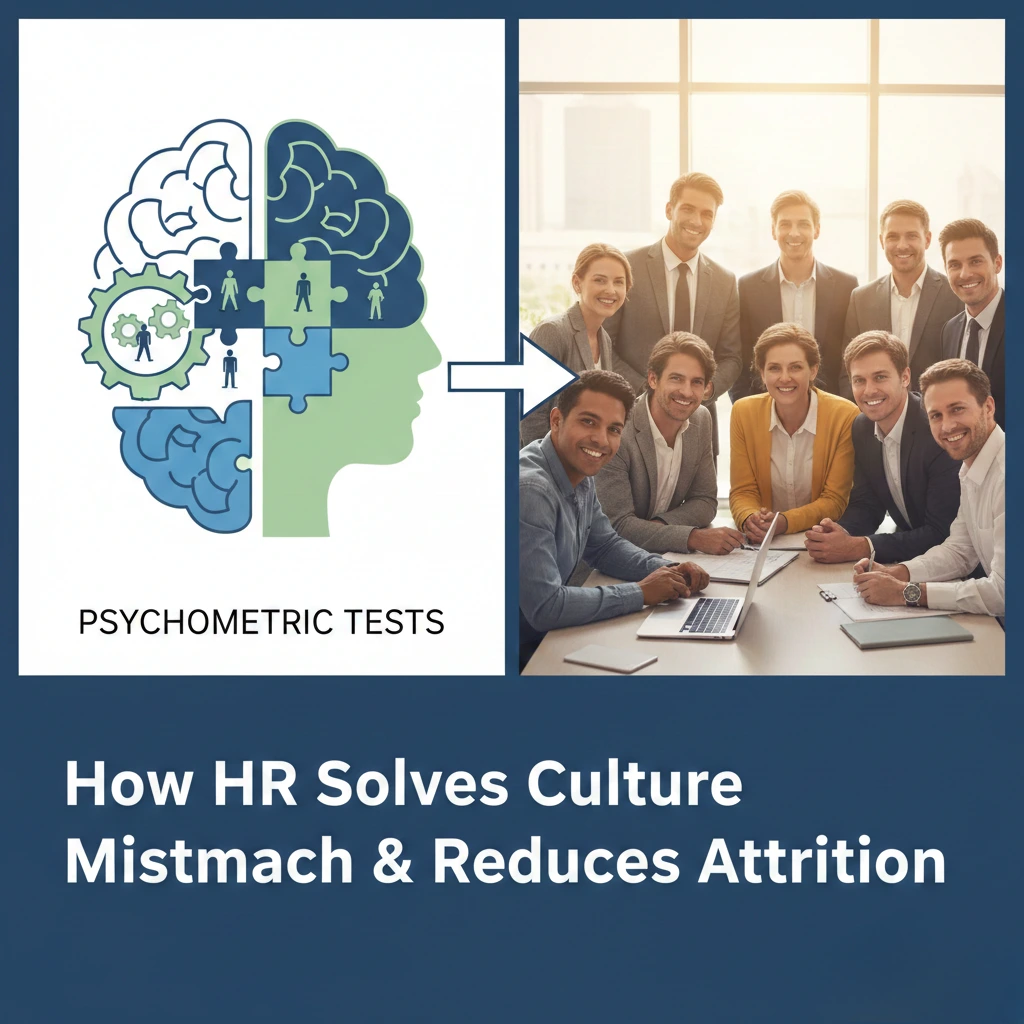
How Psychometric Tests Help HR Solve Culture Mismatch & Reduce Attrition

How Psychometric Tests Help HR Solve Culture Mismatch & Reduce Attrition   You hire someone who looks perfect on paper. Great resume. Solid interview. Impressive references.Three months later, they’re disengaged. Six months later, they resign. Sound familiar? For many HR leaders, this isn’t a one-off problem—it’s a pattern. The real issue often isn’t skill gaps or compensation. It’s culture mismatch. When employees don’t align with how your organization thinks, works, and behaves, performance drops and attrition rises. Traditional hiring methods rarely uncover this risk. That’s where psychometric assessment, culture fit hiring, employee behavior analysis, and predictive hiring tools are quietly changing the game. These tools help you see beyond resumes and interviews—into how people actually behave, adapt, and thrive at work. And in today’s high-attrition market, that insight matters more than ever. Why culture mismatch is costing you more than you realize Culture mismatch isn’t always loud. It doesn’t show up as immediate conflict or poor performance reviews. Instead, it appears subtly—missed collaboration, resistance to feedback, lack of ownership, or quiet disengagement. An employee may be competent, even talented, but if their values, working style, or decision-making approach clashes with your organization’s culture, friction is inevitable. Over time, that friction turns into burnout, poor morale, and eventually attrition. The hidden cost?Recruitment expenses. Training time. Team disruption. Lost productivity. Employer brand damage. This is exactly why many HR teams are rethinking how they define “the right hire.” The limitation of resumes and interviews Resumes tell you what someone has done.Interviews tell you what someone says they’ll do. Neither reliably tells you how someone behaves under pressure, responds to authority, collaborates with peers, or adapts to change. Interviews are especially vulnerable to bias—conscious and unconscious. Candidates present their best selves. Hiring managers rely on gut feel. Culture fit becomes a vague judgment rather than a measurable insight. This is where psychometric assessment, culture fit hiring, employee behavior analysis, and predictive hiring tools offer a structured, objective alternative. What psychometric tests actually measure (and why it matters) Psychometric tests are not about intelligence alone. Modern assessments focus on behavioral tendencies, personality traits, emotional intelligence, motivation, and work preferences. They help answer questions like: Does this person thrive in structured or flexible environments? Are they naturally collaborative or independent? How do they respond to stress, conflict, or ambiguity? What motivates them—recognition, stability, autonomy, growth? When used correctly, employee behavior analysis reveals patterns that interviews simply can’t uncover. For example, a fast-growing startup may need employees who are comfortable with ambiguity and rapid change. A highly regulated industry may require individuals who value structure, compliance, and consistency. Hiring against these realities—without realizing it—is a recipe for early exits. Culture fit hiring without the bias Culture fit hiring often gets misunderstood. It’s not about hiring people who “look like us” or “think like us.” That approach leads to homogeneity and limits innovation. True culture fit is about alignment with values, behaviors, and ways of working—not personality cloning. Psychometric tools help HR teams define culture objectively. Instead of vague labels like “team player” or “self-starter,” you get measurable traits and behavioral indicators. This clarity reduces bias and supports fairer, more inclusive hiring decisions. In the middle of the hiring journey, psychometric assessment, culture fit hiring, employee behavior analysis, and predictive hiring tools act as a reality check—confirming whether a candidate’s natural tendencies align with your actual work environment. Predicting attrition before it happens One of the biggest advantages of psychometric testing is its predictive power. By analyzing behavioral data across high-performing, long-tenured employees, organizations can identify patterns linked to success and retention. These insights then feed into predictive hiring tools, helping HR anticipate which candidates are more likely to stay, grow, and perform. For instance: A role with high customer interaction may require emotional resilience and patience. A leadership role may demand assertiveness combined with empathy. A sales role may succeed with competitiveness balanced by adaptability. When candidates lack these core behavioral drivers, the risk of disengagement—and eventual attrition—rises sharply. Real-world impact: from reactive to strategic HR Organizations that integrate psychometric testing early in hiring report measurable outcomes: Lower early-stage attrition Faster onboarding and role adjustment Improved team dynamics Stronger leadership pipelines HR teams move from reactive hiring—constantly replacing leavers—to strategic workforce planning. Decisions are backed by data, not just intuition. Most importantly, employees feel understood. When people join roles that align with how they naturally think and work, engagement increases. And engaged employees don’t leave easily. Making psychometric tools work for you Psychometric tests aren’t magic bullets. Their value lies in how they’re used. Best practices include: Combining assessments with structured interviews Using them as decision support, not decision replacement Aligning test frameworks with your actual organizational culture Communicating results transparently with candidates When implemented thoughtfully, psychometric assessment, culture fit hiring, employee behavior analysis, and predictive hiring tools become a long-term investment in people—not just a hiring filter. Conclusion:  Skills can be trained. Culture alignment is harder to fix. In a competitive talent market, reducing attrition isn’t about hiring faster—it’s about hiring smarter. By understanding how candidates think, behave, and adapt, HR teams can prevent costly mismatches before they happen. That’s why psychometric assessment, culture fit hiring, employee behavior analysis, and predictive hiring tools are no longer “nice to have.” They’re essential for building teams that stay, grow, and perform.  

Case Studies

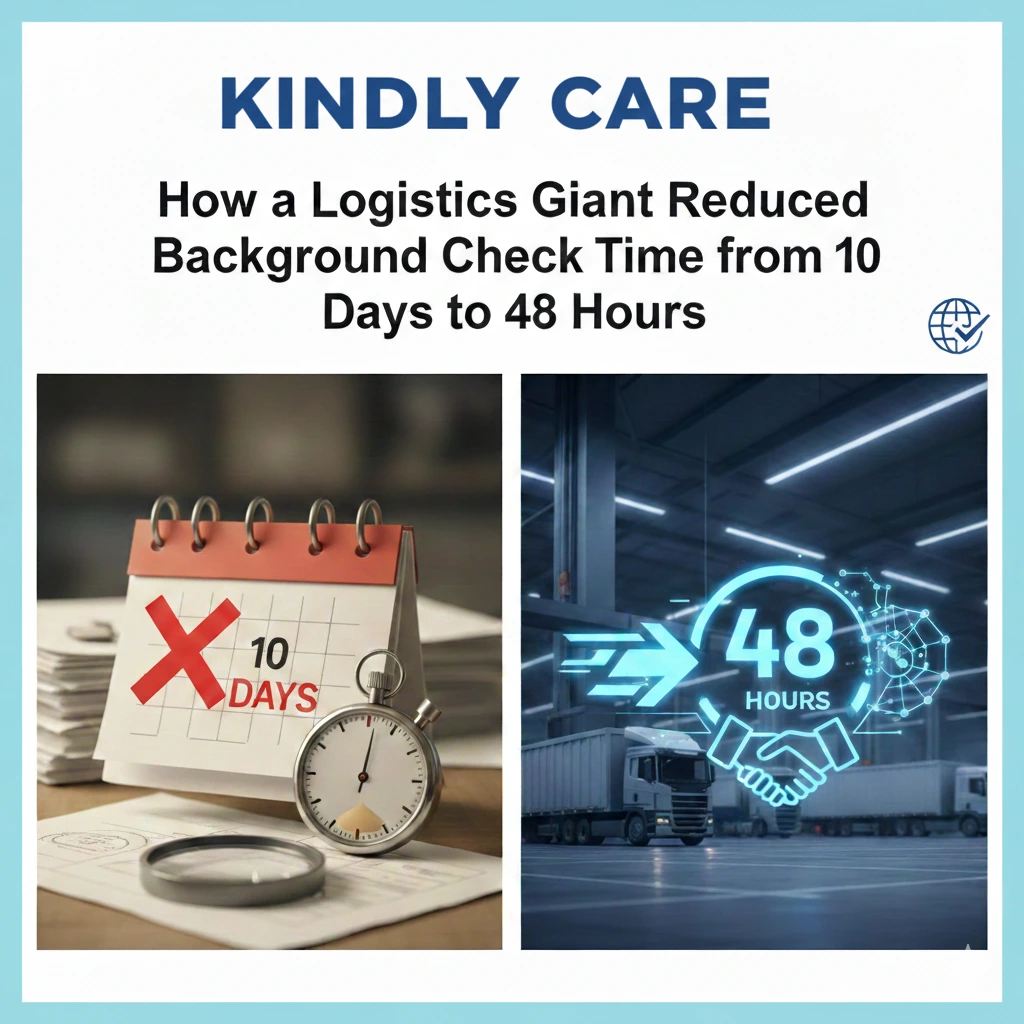
How a Logistics Giant Reduced Background Check Time from 10 Days to 48 Hours

How a Logistics Giant Reduced Background Check Time from 10 Days to 48 Hours    Challenge for Business:   Logistics companies in India are having a time hiring people. This is because they are getting a lot of orders and many businesses are making their warehouses bigger at the time. Logistics companies in India are facing this problem. When new employees are hired by logistics companies in India they have to wait for 10 days after their background checks are finished before they can start working. This is a delay for logistics companies, in India. In the logistics industry the speed at which logistics companies hire people, which is also known as logistics hiring speed or TIM is very important. Fast verification or FV is also crucial. The time it takes to hire someone, known as TAT needs to be as short as possible. Logistics companies also need to have screening tools. All these things help a company deliver things on time which is known as the service level or SLA. If a company takes long to get new employees started, which is called onboarding the company will have problems, such, as: – staff shortages during peak season – Some people who are trying to get a job are giving up because they have to wait long to actually start working. This is happening with the candidates in the hiring process for these jobs. The candidates are dropping out of the hiring process. The reason is that the wait times to begin their jobs are very long. This is a problem, for the candidates. The candidates want to start their jobs soon as possible.. The long wait times are causing the candidates to drop out of the hiring process. – increasing stress on the remaining operational workforce – increasing regulatory and reputational risk. The company had to find a way to hire logistics employees quickly. They had to do this because a lot of people were needed to work in logistics. The company wanted to make sure that the people they hired were trustworthy. They also had to follow the rules that the government made. So the company needed a way to hire people that still checked the backgrounds of the new employees and made sure everything was done correctly. This was important for the company to meet the growing demand, for logistics employees. The Consequences of Not Acting The holiday season is a busy time for hiring new people. We need to move and get things right when we check the backgrounds of new hires. There were a lot of people applying for jobs during this time.. We took too long to get new employees started and that caused some problems. Some people who applied to work with us got tired of waiting. Decided to take jobs with other companies instead. This happened because we were slow to get the employees, on board. The backgrounds of hires need to be checked quickly and accurately. The company had to hire a lot of people really fast. So they brought in staff who did not go through a very thorough background check. This caused a problem when one of the employees made a mistake with the companys inventory. The clients were very unhappy about this. The company had to do a lot of internal audits. In the end the company and its clients did not trust each other much as they used to. The companys inventory issue was a deal and it made the clients lose faith in the company. The company had to deal with the consequences of hiring staff who did not go through a very thorough background check. The companys relationship, with its clients was damaged because of the inventory mistake made by the staff. If we do not speed up the logistics hiring process and do not provide background checks for logistics hiring it can be a problem. The logistics hiring process needs to be fast. We want to reduce the time it takes to hire someone for logistics. We want to make sure they are a good fit. Logistics hiring should have screening tools. If we ignore these things it could lead to problems, with logistics hiring. Logistics hiring is very important. We need to get it right. – operating disruption – financial losses – erosion of customer trust – increased compliance exposure The people in charge at the organization realized that as the logistics operations get really big and complicated the old way of doing background checks by hand is not going to work. The organization needs a way to do background checks because the logistics operations at the organization are expanding a lot and the old method is just not good enough for a big logistics organization, like the organization. Solution Approach: The company is one of the logistics companies in India. They had a problem when they needed to hire people quickly. This happened when a lot of orders were coming in. They were making their warehouses bigger.. They could not get new employees started on time. The reason for this was that it took ten days to check the background of employees. This was a delay, for Indias leading logistics company. In an industry where logistics and hiring speed’re really important fast verification and reducing the time it takes to do things are key to success. Instant screening tools have an impact on delivery times. When onboarding is delayed it causes problems with logistics and hiring speed. Also affects the time it takes to deliver things, which is a big deal for logistics companies and their hiring processes. Logistics companies need to be able to hire people and get them started right away or it can cause problems, with delivery times and logistics hiring speed. Staff shortages during peak seasons  1: Candidate drop-offs due to long waiting periods 2: Increased pressure on existing workforce 3: Rising compliance and reputational risks The company needed to find a way to hire people faster without making mistakes in checking

Why HR Struggles With Fake IDs & Address Mismatches—and How Verification Solves It
Case Studies

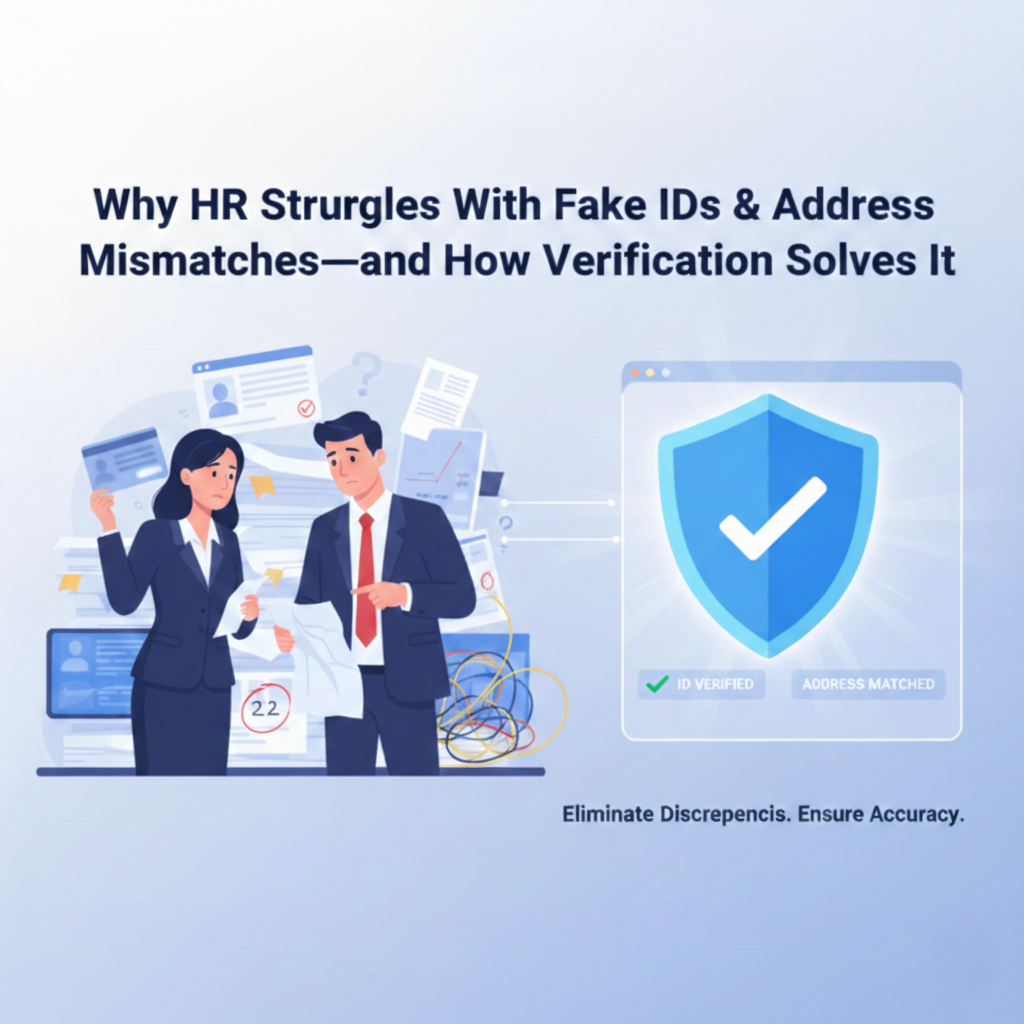
Why HR Struggles With Fake IDs & Address Mismatches and How Verification Solves It

Why HR Struggles With Fake IDs & Address Mismatches and How Verification Solves It  In an era of remote hiring, global talent pools, and rapid onboarding, HR teams are under pressure to move fast. Unfortunately, speed often comes at the cost of security. Fake IDs, address mismatches, and employee impersonation are no longer rare edge cases—they’re growing risks that directly impact compliance, payroll, and organisational trust. The Growing Problem: Fake Documents in HR Onboarding HR departments increasingly encounter fake documents during the hiring process, including: Forged government-issued IDs Edited utility bills or bank statements Synthetic identities created using real and fabricated data These documents are often sophisticated enough to pass manual checks, especially when onboarding is remote. As a result, fake documents in HR workflows can slip through undetected, exposing companies to fraud, legal penalties, and reputational damage. Address Mismatches: A Hidden Red Flag Address discrepancies are one of the most overlooked indicators of identity fraud. Common issues include: IDs showing outdated or unverifiable addresses Mismatches between ID documents and tax or payroll records Addresses linked to multiple identities While these may appear to be simple data errors, they are frequently tied to employee impersonation or payroll fraud schemes. Without reliable address verification, HR teams struggle to distinguish honest mistakes from intentional deception. Why Traditional HR Checks Fall Short Many HR teams still rely on manual or semi-manual processes such as visual ID review or basic database lookups. These methods fail because they: Can’t detect high-quality forged documents Don’t validate addresses against authoritative sources Are inconsistent across locations and hiring managers Don’t scale for high-volume or global hiring As fraud tactics evolve, traditional checks simply can’t keep up. How Identity Verification Changes the Game Modern identity verification solutions use technology to close these gaps. By combining document authentication, biometric checks, and data validation, they enable HR teams to verify candidates with greater accuracy and speed. Key benefits include: Real-time detection of fake IDs using AI and forensic analysis Address verification against trusted databases and postal records Biometric matching to prevent employee impersonation Automated workflows that reduce manual errors and bias These tools not only strengthen onboarding security but also create a smoother experience for legitimate candidates. Stronger Onboarding Security, Lower Risk By integrating identity and address verification into onboarding, HR teams can: Prevent fraudulent hires before they enter the system Ensure compliance with labor, tax, and KYC regulations Protect payroll and internal systems from misuse Build trust with stakeholders and regulators In a world where digital hiring is the norm, verification is no longer optional—it’s foundational. Final Thoughts HR struggles with fake IDs and address mismatches not because of negligence, but because legacy processes weren’t designed for today’s threat landscape. Investing in robust identity verification and address verification solutions allows organizations to stay agile without sacrificing security. The result? Safer onboarding, reduced fraud, and a workforce you can trust.

bgv services in chennai for companies
Case Studies

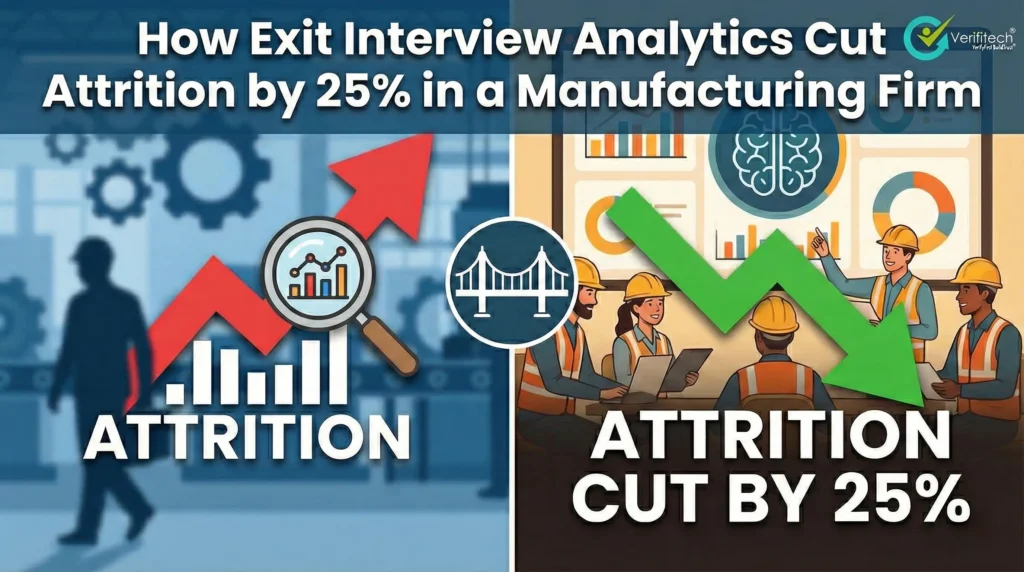
How exit-interview analytics cut attrition by 25 in a manufacturing firm

How exit-interview analytics cut attrition by 25 in a manufacturing firm  Imagine walking into your plant on a Monday morning and realizing three experienced technicians won’t be coming back. Again. You didn’t lose them to a competitor with flashy perks—you lost them quietly, one resignation at a time. If you’re in HR or leadership, this situation probably feels uncomfortably familiar. High attrition in manufacturing doesn’t just affect morale; it disrupts production schedules, inflates hiring costs, and drains hard-earned expertise.This is where an exit analytics case study, employee turnover reduction, HR insights, retention strategy becomes more than just a buzz phrase it becomes a lifeline. Understanding why employees leave is the first step toward fixing what’s broken. And when done right, exit interview analytics can turn painful goodbyes into powerful lessons that reshape your workforce strategy. The Hidden Cost of Attrition in Manufacturing: Manufacturing firms often accept attrition as “part of the industry.” Long shifts, physically demanding work, and tight margins make turnover feel inevitable. But inevitability is a dangerous assumption.In this exit analytics case study, employee turnover reduction, HR insights, retention strategy, the firm was facing a 38% annual attrition rate far above industry benchmarks. Replacements were expensive, onboarding took months, and supervisors were stretched thin. Yet exit interviews were treated as a formality. Forms were filled, files were stored, and insights were lost.The problem wasn’t a lack of data—it was a lack of analysis. Why Traditional Exit Interviews Fail: Most exit interviews ask generic questions:“Why are you leaving?”“What could we have done better?” Employees often give safe answers. “Personal reasons.” “Better opportunity.” These responses feel final but reveal very little. The firm realized that without structure and analytics, exit interviews were just polite conversations, not decision-making tools. That realization became the turning point in this exit analytics case study, employee turnover reduction, HR insights, retention strategy. Turning Conversations into Data: The HR team decided to redesign the exit process. Instead of unstructured interviews, they introduced: Standardized questionnaires with rating scales Clear categories (pay, supervision, safety, growth, work-life balance) Anonymous digital submissions to encourage honesty More importantly, they aggregated the data. Patterns began to emerge. This is where HR insights truly came alive. Over 60% of exiting employees cited shift scheduling and supervisor communication as key frustrations. Surprisingly, compensation ranked much lower than expected. The “Aha” Moment: What Employees Were Really Saying: When HR layered exit data with tenure, department, and manager-level information, the picture became clearer. Attrition wasn’t random—it was concentrated. New hires under specific supervisors were leaving within six months. Certain production lines had double the turnover of others. This exit analytics case study, employee turnover reduction, HR insights, retention strategy proved that people don’t leave companies—they leave experiences. The firm shared these findings with leadership, not as blame, but as opportunity.From Insight to Action: Building a Retention Strategy Armed with real data, the company implemented targeted changes: Supervisor training focused on communication and feedback Predictable shift rotations to reduce burnout Early check-ins at 30, 60, and 90 days for new hires       These actions weren’t expensive. They were intentional. And they were guided directly by exit analytics.                              This is the heart of any successful retention strategy—listening, learning, and acting.                         Measuring the Impact Within 12 months, attrition dropped from 38% to 28%. By the end of the second year, it reached 25%. That’s a 25% reduction in turnover—without increasing salaries across the board, In this exit analytics case study, employee turnover reduction, HR insights, retention strategy, the ROI was clear:Lower hiring and training costsImproved productivityHigher morale on the shop floorMore importantly, employees felt heard—even those who left. Why This Approach Works for You You don’t need advanced AI tools to start. What you need is commitment. Exit interview analytics work because they replace assumptions with evidence. They help you stop guessing and start fixing. If you’re struggling with churn, ask yourself: Are we actually analyzing exit data? Are we connecting insights to action? Are we using exits to protect those who stay? This exit analytics case study, employee turnover reduction, HR insights, retention strategy shows that answers are already in your organization—you just need to listen differently. Conclusion: Attrition will always exist, but unmanaged attrition is a choice. This exit analytics case study, employee turnover reduction, HR insights, retention strategy proves that when you treat exit interviews as strategic assets—not paperwork—you can transform loss into learning. By capturing honest feedback, analyzing patterns, and acting with intention, the manufacturing firm didn’t just reduce turnover by 25%. It rebuilt trust, strengthened leadership, and created a more resilient workforce. If you want real employee turnover reduction, start where the story ends—with your exits. Because every goodbye carries a lesson, and every lesson is a chance to build a stronger retention strategy for your future.

Case Studies, IT - ITES

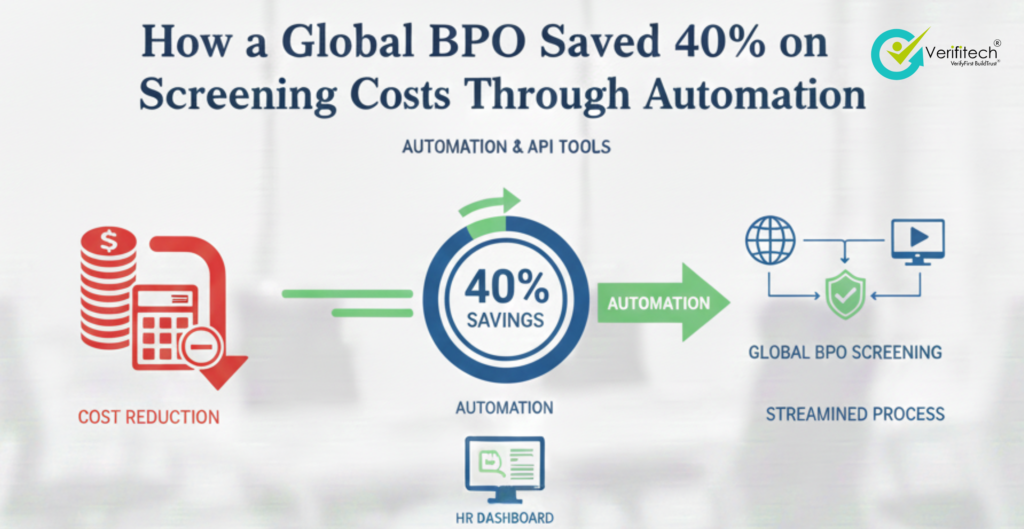
How a Global BPO Saved 40% on Screening Costs Through Automation

Client Overview A big company that does business operations for companies all around the world was hiring thousands of new employees every month. This company needed to do this to meet the demands of its clients. The company was growing fast.. There was a problem. The cost of checking thebackgrounds of employees was going up and it was taking a long time to verify everything. This was affecting the companys profits. How quickly it could get new employees started. The company was spending a lot of money on background checks for employees and it was taking too long to finish these checks. This was slowing down the process of getting employees on board. The company was a leading BPO with operations, in many regions and it was hiring thousands of employees every month. The Challenge The company really needed people to do a lot of things by hand. They had to depend on vendors to check things. This meant that they had problems with: High and unpredictable screening expenses Long turnaround times delaying candidate onboarding Limited visibility into verification status and costs Increased compliance and audit risks The Human Resources team and the operations team were looking for a way to do things that would work for a number of people. They wanted to find a solution that could help the Human Resources team and the operations team save money without making mistakes or breaking rules. The Human Resources team and the operations team needed this solution to be good, at keeping track of things and following the law. The Solution The BPO company put in place a computer system to check things automatically. This system brought together all the steps to check people into one process. The BPO solution made it possible to do a things. The BPO solution enabled the BPO to do these things The BPO made the whole process easier for the BPO The BPO is happy, with the system that the BPO is using. Automated identity, employment, and education verification Rule-based checks to eliminate redundant screenings Real-time dashboards for tracking progress and costs Seamless integration with existing HR systems The automation really helped to cut down on the work that people had to do and it also made sure that everything was done in the same way in all the different regions. This automation made things easier and more consistent for the automation, across all the regions. The Results Within six months of implementation, the impact was significant: 40% reduction in screening costs 65% faster verification turnaround time Improved candidate experience with real-time updates Enhanced compliance readiness with automated audit trails The results show that using BPO screening can save money. This is because the process is automated and the way it works is improved. The BPO screening savings are real. We can see them. The automated verification and smart process optimization are what make BPO screening savings happen. Business Impact The organization changed its screening process to make it more modern. This change turned background verification into a benefit for the organization of just a cost. The organization was able to get employees on board faster which helped them meet the requirements of their clients. At the time the cost of screening went down which directly improved the organizations profitability. This is an example of how the organization was able to reduce its human resources costs and it is especially useful, for companies that do a lot of hiring. The background verification process is a part of the organizations human resources and making it more efficient is a big part of reducing human resources costs. Key Takeaway Automation isn’t just about speed it’s about control, visibility, and sustainable growth. For BPOs managing high-volume hiring, automated verification can deliver meaningful cost savings without compromising trust or compliance.

Others

How HR Can Reduce Background Check Delays Using Automation & API Tools

  You’ve finally found the perfect candidate. The offer is accepted. The joining date is locked. Then comes the silence.   Days pass. Follow-ups pile up. The hiring manager grows impatient. The candidate starts exploring other offers—all because the background check is stuck somewhere in the process. If this sounds familiar, you’re not alone. For many HR teams, delays in verification are the biggest bottleneck in hiring. Manual follow-ups, disconnected vendors, and outdated workflows quietly derail even the best recruitment plans.  In today’s talent-driven market, fast background checks, screening automation, API verification, reduce TAT, HR efficiency are no longer “nice to have”—they’re critical. Because when background checks slow you down, they don’t just delay onboarding. They cost trust, talent, and time. Let’s talk honestly about why background checks take so long. In most organizations, verification still runs on emails, spreadsheets, PDFs, and human follow-ups. HR teams send documents to vendors. Vendors manually validate data. Status updates come late—or not at all. Every missing detail restarts the clock. The result? TAT stretches from days into weeks. And here’s the uncomfortable truth: candidates don’t wait anymore. A delay of even 3–5 days can be the difference between a successful hire and a dropout. This is where fast background checks, screening automation, API verification, reduce TAT, HR efficiency start becoming strategic priorities rather than operational concerns. The Real Causes Behind Background Check Delays First, manual dependency.  Every manual step—emailing documents, verifying IDs, coordinating with multiple agencies—introduces friction. One missed follow-up can stall the entire process. Second, lack of system integration.  HRMS, ATS, and background verification platforms often operate in silos. Recruiters update one system. Vendors work in another. There’s no real-time visibility. Third, inconsistent data quality. Incomplete candidate information leads to rework. HR teams chase candidates. Vendors pause checks. TAT quietly increases. Fourth, volume pressure. During bulk hiring or seasonal recruitment, manual processes simply don’t scale. HR teams burn out. Accuracy drops. All of this directly impacts HR efficiency, even though the root problem isn’t effort—it’s process design. The Hidden Cost of Delayed Verification Delayed background checks don’t just slow hiring. They affect the business in deeper ways. Candidates lose confidence in your organization Offer-to-join ratios drop Recruiters spend more time tracking than hiring Hiring managers lose trust in HR timelines Compliance risks increase under pressure to “speed things up” When leadership asks HR to reduce TAT, the answer isn’t working longer hours. It’s changing how verification works. This is exactly where screening automation enters the picture. How Screening Automation Changes the Game Screening automation removes repetitive, manual tasks from the verification lifecycle. Instead of chasing emails, systems trigger actions automatically: Candidates receive instant verification requests Documents are validated digitally Status updates sync in real time Exceptions are flagged immediately What once took days now takes hours. Automation ensures consistency. No steps are skipped. No follow-ups are forgotten. And HR teams finally regain control over timelines. This is why organizations that adopt fast background checks, screening automation, API verification, reduce TAT, HR efficiency see immediate improvements—not just in speed, but in accuracy and candidate experience.   The Power of API Verification Automation alone is powerful. But APIs are what truly accelerate verification. API verification allows background check platforms to integrate directly with: Government databases Education institutions Employment records Global watchlists Criminal databases Instead of manual verification, data is fetched securely and instantly. Think of it this way:APIs remove human waiting time from the process. For HR teams, this means: Real-time verification status Predictable turnaround times Fewer manual escalations Seamless ATS and HRMS integration When APIs are embedded into your hiring workflow, background checks stop being a “separate process.” They become part of hiring itself.  And that’s how organizations truly reduce TAT. A Real-World Hiring Scenario Consider a fast-growing IT company hiring 50 developers in 30 days. Earlier: Manual document collection Vendor follow-ups Average TAT: 7–10 working days Dropouts due to delays After implementing screening automation with API verification: Candidate self-service portals Automated document validation Real-time dashboards for HR Average TAT: 24–48 hours The hiring team didn’t grow. The pressure didn’t increase. The process simply became smarter. That’s the real promise of fast background checks, screening automation, API verification, reduce TAT, HR efficiency—doing more without burning out your HR team. What HR Leaders Should Focus On If you’re evaluating automation, focus on:   End-to-end digital workflows API-ready verification partners Real-time reporting and alerts Data security and compliance Candidate-friendly experience  Automation should simplify your work, not complicate it. When done right, HR shifts from “tracking status” to “driving hiring outcomes.”   Conclusion: Faster Checks, Smarter Hiring In a competitive talent market, speed is trust. And trust wins hires.   Background verification delays are no longer just operational issues—they’re strategic risks. By embracing fast background checks, screening automation, API verification, reduce TAT, HR efficiency, HR teams can transform verification from a bottleneck into a competitive advantage.   The future of hiring isn’t about working harder.  It’s about building systems that work faster—for you and your candidates.   And the faster you adapt, the faster your best talent joins you.

Case Studies

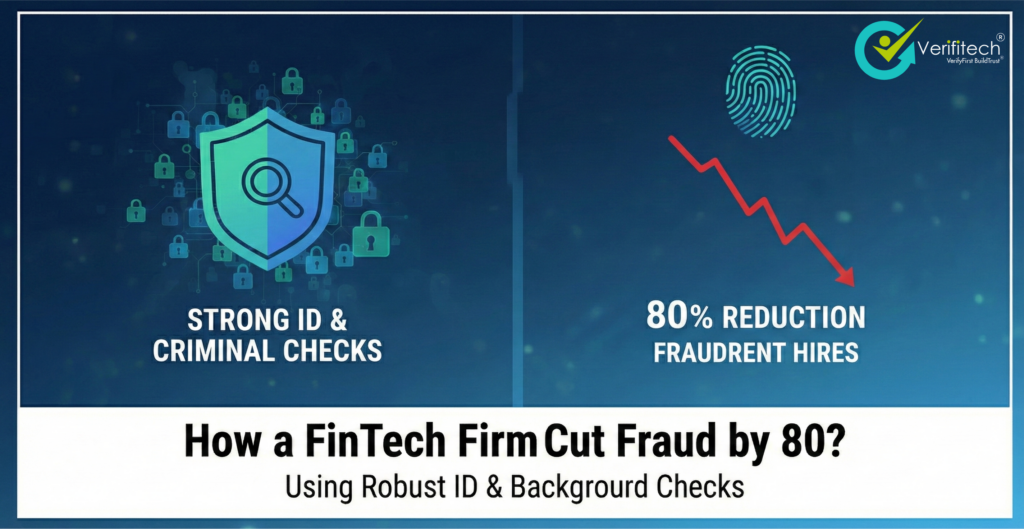
How a FinTech Firm Cut Fraudulent Hires by 80% Using Strong ID & Criminal Checks  

In 2024, a fast-growing FinTech company found itself facing an invisible threat—one that could collapse years of trust built with investors, regulators, and customers. Despite having a modern hiring process, they were unknowingly onboarding candidates with fabricated identities, manipulated credentials, and hidden criminal histories. What initially seemed like isolated negligence soon revealed a deeper pattern of fintech hiring fraud, putting their financial integrity and customer data at risk.HR leaders felt the pressure mounting: regulatory audits were tightening, employee vetting standards were rising, and internal teams lacked the tools to validate identities with precision. Their reputation—built on transparency and trust—was on the line. This HR compliance case study explores how a single turning point transformed their approach and why strong ID verification became the non-negotiable foundation of safe FinTech hiring. Fear-Based Narrative It began with what looked like a simple mistake. A mid-level analyst, hired during a rapid expansion cycle, was discovered submitting odd financial reports—numbers didn’t match, internal checks failed, and audit trails kept circling back to him. At first, HR assumed it was poor training. But further review unveiled something worse: the employee had been terminated from two previous companies for financial misconduct. He had concealed his history using forged documents and a cleverly fabricated ID. This wasn’t just a compliance miss—it was the wake-up call no FinTech wants. The leadership team imagined the nightmare scenario: if regulators uncovered this, it could trigger penalties in the millions. If customers found out, trust would evaporate overnight. Worst of all, the analyst wasn’t the only one. A deeper internal audit revealed that nearly 12% of new hires showed discrepancies—fake degrees, mismatched addresses, and questionable employment history.This was fintech hiring fraud in full force. The HR team realized that without a strong identity verification process, they weren’t hiring employees—they were inviting risks into the heart of their financial ecosystem. This moment became the turning point. It inspired a search for a stronger background screening partner—one capable of delivering trustworthy ID verification results and ensuring true criminal record check success. What happened next reshaped the company’s hiring standards forever. 1. Discovering the Depth of the Problem   Once the internal audit exposed the extent of fintech hiring fraud, the company launched a comprehensive review. HR, Legal, IT Security, and Compliance teams gathered to map vulnerabilities in their hiring pipeline. They found three critical gaps: This HR compliance case study quickly revealed that the company’s risk exposure was far higher than estimated. For a FinTech firm handling sensitive consumer data, the lack of verification rigor posed legal, financial, and operational threats. 2. Choosing a High-Accuracy Verification Partner   The leadership team partnered with a specialized BGV provider known for automated identity checks, API-based verification, and global database access. Their goal was to achieve measurable criminal record check success while maintaining a smooth candidate experience. The solution bundle included: This approach aligned with industry expectations for fraud prevention and helped eliminate guesswork from hiring decisions. 3. Implementing the New System   The transition unfolded in three phases: Phase 1: Integration & Training   The HR team integrated the verification platform into their ATS. Automated triggers ensured every candidate underwent identity, criminal, and document checks before shortlisting. Teams were trained on interpreting reports and escalating red flags. Phase 2: Live Screening of All New Hires   Every new candidate—regardless of seniority—went through multi-layer screening. Early results were shocking: The firm had unknowingly been on the verge of onboarding high-risk individuals again, proving the severity of fintech hiring fraud exposure. Phase 3: Retroactive Screening of Existing Workforce   This required careful execution. Over 200 employees were screened discreetly to avoid internal panic. The findings: These discoveries validated why reliable ID verification results and global database checks were essential for long-term protection. 4. Results Achieved   Within six months, the transformation was undeniable: These outcomes weren’t just operational wins—they restored leadership confidence, strengthened investor trust, and positioned the company as a compliance-first FinTech employer. Throughout the project, keywords like fintech hiring fraud, ID verification results, and criminal record check success became internal metrics. This real-world transformation is what makes this an exceptional HR compliance case study for modern FinTech firms looking to fortify their hiring process. 5. Key Lessons for the Industry   This journey offered valuable takeaways for HR and Compliance teams: By embracing these principles, any organization can replicate the same ID verification results and secure their workforce against fraud. Conclusion: This HR compliance case study proves one thing: in FinTech, trust is the currency that matters most. With rising cases of fintech hiring fraud, companies can no longer rely on traditional verification methods. Strong identity validation and thorough criminal checks aren’t just procedural—they’re transformational. For this FinTech firm, the combination of automated workflows, stringent ID verification, and global criminal screening led to remarkable outcomes: reliable ID verification results, consistent criminal record check success, and an 80% drop in fraudulent hiring attempts. Any FinTech organization seeking to protect its people, processes, and reputation can achieve similar success by strengthening their verification framework today.  

Others

The Hidden Risks HR Faces When Background Checks Are Skipped:

The Hidden Risks HR Faces When Background Checks Are Skipped:        Imagine this: You hire someone who seems perfect on paperconfident, experienced, and exactly what your fast-moving team needs. A few months later, unexpected issues begin to surface. A mismanaged project, a complaint from a client, or a sudden drop in team morale. You dig a little deeper, only to discover that the employee had a history no one checked—something that a simple verification would have revealed. This is where the background check importance, HR challenges, employee fraud conversation becomes more real than theoretical. HR professionals are continually encouraged to employ swiftly, keep prices down, and fill pressing skill gaps. However, ignoring background checks in a hurry might have much more serious and expensive repercussions. And these consequences rarely stay hidden for long. Why Skipping Background Checks Is More Common Than You Think   Many HR teams assume that “gut feeling,” strong communication skills, or referrals are enough to validate a candidate’s trustworthiness. In reality, recruiting without due diligence has quietly become one of the major HR concerns in today’s competitive climate. Sometimes the hiring manager is adamant about “closing the position tomorrow,” or deadlines are pressing, so the skip is deliberate. Sometimes it’s inadvertent—for example, the company doesn’t yet have a formal background check procedure, or HR is handling ten things at once and verification gets overlooked. But regardless of the rationale, the risk remains the same: you’re making decisions in the dark.  The Invisible Cost of a Bad Hire   A bad hire doesn’t just disrupt workflow—it ripples into multiple layers of the business. Industry statistics state that bad hiring choices can cost businesses up to 30% of an employee’s yearly compensation. That includes productivity loss, rehiring fees, retraining expenses, and potential legal difficulties. The repercussions increase when employee fraud is involved. Fraudulent personnel may function silently for months, even years, before the organisation detects the red signals. Fake educational certificates, forged experience letters, undisclosed criminal history—these are ticking time bombs that explode when the company least expects it. This is exactly where the background check importance becomes evident—not just as a compliance formality but as a strategic shield. Real-World Scenarios HR Teams Face   Consider a tech company that hired a “senior developer” after a quick interview loop. Once onboarded, the employee struggled with basic tasks. Only later did the company realize that the experience certificate he provided was entirely fabricated. Or take the HR executive who hired a finance manager without verification due to urgent hiring pressure. Within six months, internal audits revealed misappropriation of funds—classic employee fraud that could have been prevented. These examples aren’t rare—they happen in organizations of all sizes. And in most cases, HR ends up absorbing the blame, even though the root cause is simply a missing screening process. Reputational Damage: The Silent Killer   Beyond financial or operational damage lies the biggest threat: your company’s reputation. One bad hire with a questionable record can easily become a PR nightmare.Imagine an employee with a concealed criminal background managing critical client data. One complaint or event can damage client confidence, impact long-term business relationships, and even lead to contract losses. This makes skipping verification not just an HR oversight—it becomes a business risk. Compliance Risks You Shouldn’t Ignore   Industries like IT, healthcare, fintech, and logistics have strict compliance requirements. Failing to verify a candidate’s identity, qualifications, or criminal record can lead to legal liabilities. In severe instances, organisations face regulatory penalties for permitting unverified persons to handle key information or operations. These compliance gaps are one of the growing HR challenges companies struggle with. HR teams must now balance speed, quality, and compliance—three elements that rarely coexist without structured background screening. Why Employees Sometimes Lie—And How Screening Protects You   It’s uncomfortable but true: candidates lie. Sometimes it’s small—adjusting job dates, exaggerating skills. In other circumstances, it’s important—false IDs, police clearance certificates, bogus experiences, or concealing continuing criminal cases. A comprehensive background check throws a light on these disparities before they evolve into workplace calamities.It ensures: Identity verification Education and credential validation Past employment confirmation Criminal and legal checks Address verification Every layer strengthens your hiring process and filters out risks that are invisible during interviews. Addressing the Speed vs. Accuracy Dilemma   One common argument HR teams make is, “Background checks slow down hiring.”But modern verification tools and agencies have dramatically changed that. Today, checks can be completed within 24–72 hours, even for complex verifications. This means no more compromising speed for safety. In fact, integrating screening into the hiring workflow actually saves time—because you avoid rework, rehiring, and damage control caused by poor selections. When viewed through this lens, the background check importance is undeniable. How HR Can Strengthen Their Hiring Process   To reduce the risk of employee fraud and other costly consequences, HR teams should: Make background screening mandatory for all roles, not just senior positions. Create a standardized checklist for verification to avoid inconsistencies. Partner with a trusted background verification provider to ensure accuracy and speed. Educate hiring managers about why these checks matter. Automate wherever possible using CRM or HRMS integrations. Document every screening step for compliance purposes. Small improvements in process can prevent massive future conflicts. The Psychological Safety Factor   Employees feel safer when they know their organisation screens everyone equally. It establishes a culture of trust and makes it very evident that “this workplace is safe, secure, and professional.”This is especially crucial in businesses where employees handle confidential data, financial transactions, customer interactions, or vulnerable populations. At the end of the day, ignoring background checks isn’t simply a little oversight—it’s an open invitation to risk. Whether it’s operational disruption, regulatory concerns, reputational damage, or employee fraud, the long-term repercussions far outweigh the short-term convenience. That’s why understanding the background check necessity, HR issues, employee fraud is crucial for any modern HR worker. By employing structured screening, you’re not only protecting your company—you’re establishing a stronger, trustworthy, and more confident team. Background checks aren’t optional in a world where every

Scroll to Top
Consent Management Platform by Real Cookie Banner