
Why HR Struggles With Fake IDs & Address Mismatches and How Verification Solves It
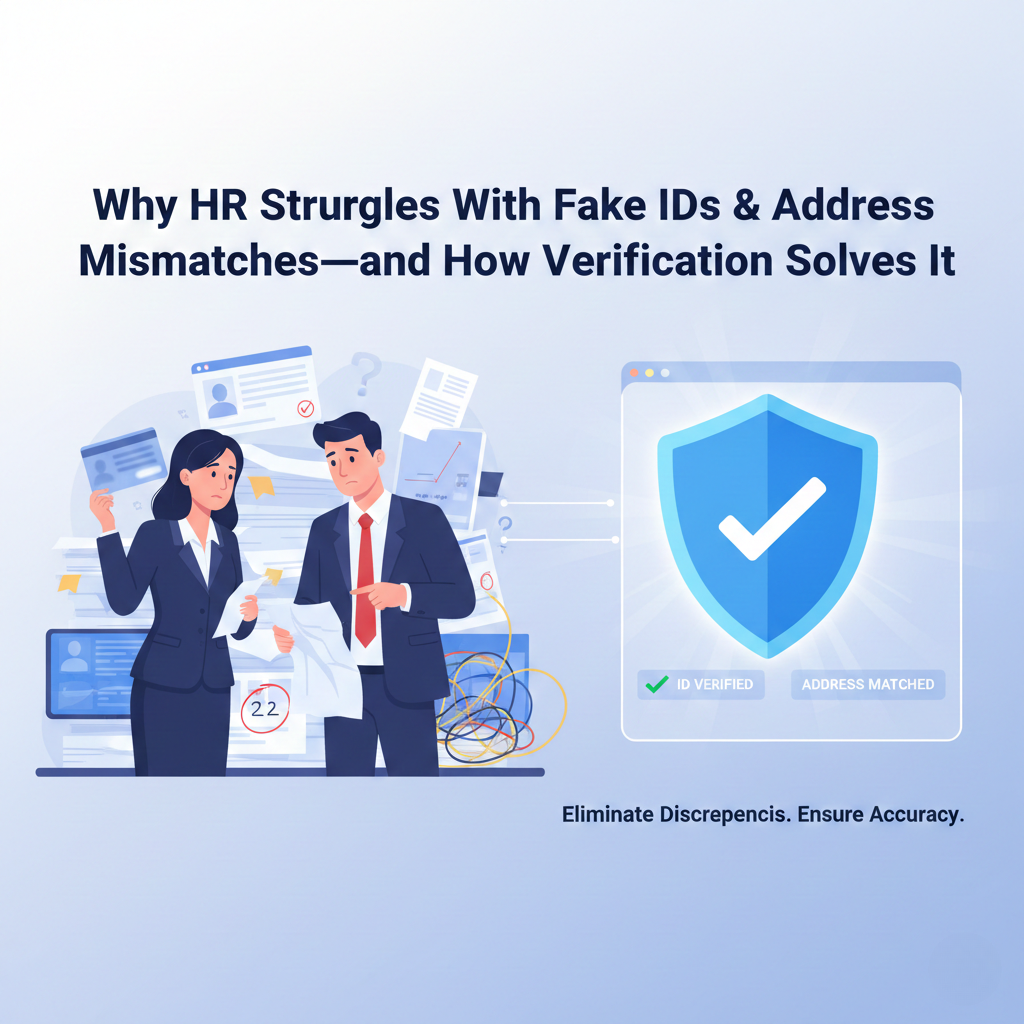
In an era of remote hiring, global talent pools, and rapid onboarding, HR teams are under pressure to move fast. Unfortunately, speed often comes at the cost of security. Fake IDs, address mismatches, and employee impersonation are no longer rare edge cases—they’re growing risks that directly impact compliance, payroll, and organisational trust.
The Growing Problem: Fake Documents in HR Onboarding
HR departments increasingly encounter fake documents during the hiring process, including:
Forged government-issued IDs
Edited utility bills or bank statements
Synthetic identities created using real and fabricated data
These documents are often sophisticated enough to pass manual checks, especially when onboarding is remote. As a result, fake documents in HR workflows can slip through undetected, exposing companies to fraud, legal penalties, and reputational damage.
Address Mismatches: A Hidden Red Flag
Address discrepancies are one of the most overlooked indicators of identity fraud. Common issues include:
IDs showing outdated or unverifiable addresses
Mismatches between ID documents and tax or payroll records
Addresses linked to multiple identities
While these may appear to be simple data errors, they are frequently tied to employee impersonation or payroll fraud schemes. Without reliable address verification, HR teams struggle to distinguish honest mistakes from intentional deception.
Why Traditional HR Checks Fall Short
Many HR teams still rely on manual or semi-manual processes such as visual ID review or basic database lookups. These methods fail because they:
Can’t detect high-quality forged documents
Don’t validate addresses against authoritative sources
Are inconsistent across locations and hiring managers
Don’t scale for high-volume or global hiring
As fraud tactics evolve, traditional checks simply can’t keep up.
How Identity Verification Changes the Game
Modern identity verification solutions use technology to close these gaps. By combining document authentication, biometric checks, and data validation, they enable HR teams to verify candidates with greater accuracy and speed.
Key benefits include:
Real-time detection of fake IDs using AI and forensic analysis
Address verification against trusted databases and postal records
Biometric matching to prevent employee impersonation
Automated workflows that reduce manual errors and bias
These tools not only strengthen onboarding security but also create a smoother experience for legitimate candidates.
Stronger Onboarding Security, Lower Risk
By integrating identity and address verification into onboarding, HR teams can:
Prevent fraudulent hires before they enter the system
Ensure compliance with labor, tax, and KYC regulations
Protect payroll and internal systems from misuse
Build trust with stakeholders and regulators
In a world where digital hiring is the norm, verification is no longer optional—it’s foundational.
Final Thoughts
HR struggles with fake IDs and address mismatches not because of negligence, but because legacy processes weren’t designed for today’s threat landscape. Investing in robust identity verification and address verification solutions allows organizations to stay agile without sacrificing security.
The result? Safer onboarding, reduced fraud, and a workforce you can trust.